All posts by Alex Rampell

Bretton Woods / End of Gold Convertibility

Originally posted as a Twitter thread on August 15, 2021


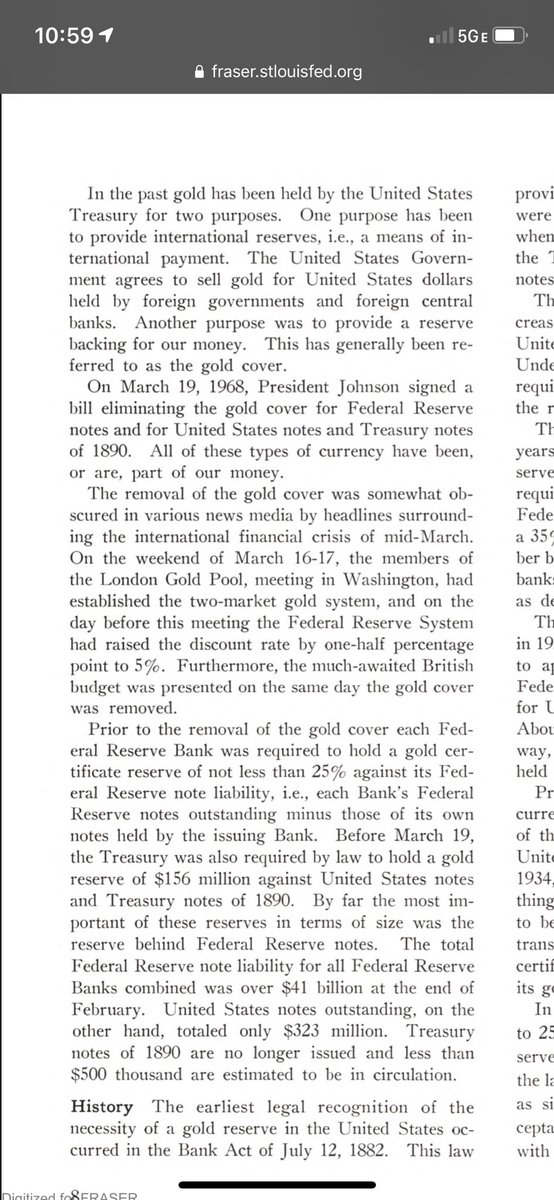
While Bretton Woods and USD gold convertibility formally ended on August 15, 1971, the writing was on the wall for years, particularly once LBJ suspended the 25% Gold Cover for Federal Reserve Notes (and 1890 Treasury Notes) in March 1968:

https://fraser.stlouisfed.org/files/docs/publications/frbrichreview/pages/65585_1965-1969.pdf

And more on the final nail in the coffin, and how this is related to Bitcoin:

https://x.com/arampell/status/1294880378147094530?s=21

Bureaucracy, Wokeness, and Sabotage

Originally posted as a Twitter thread on July 29, 2021


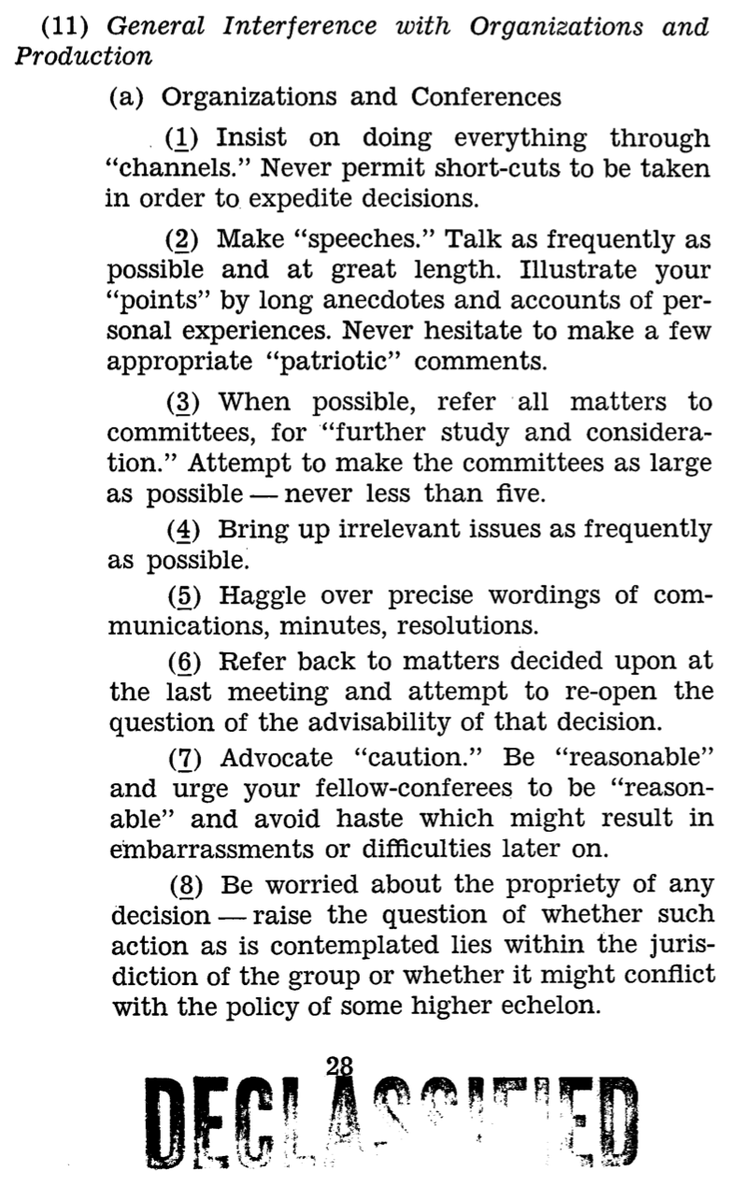
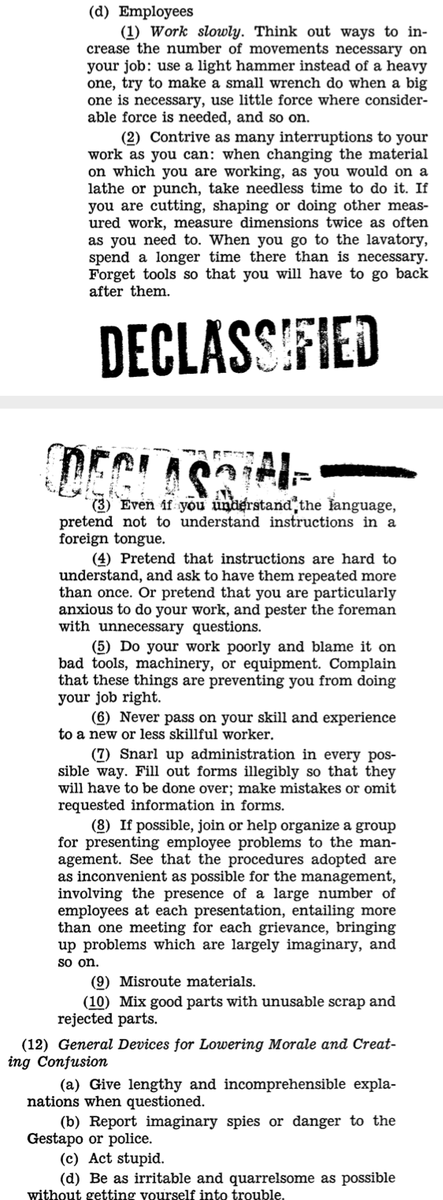
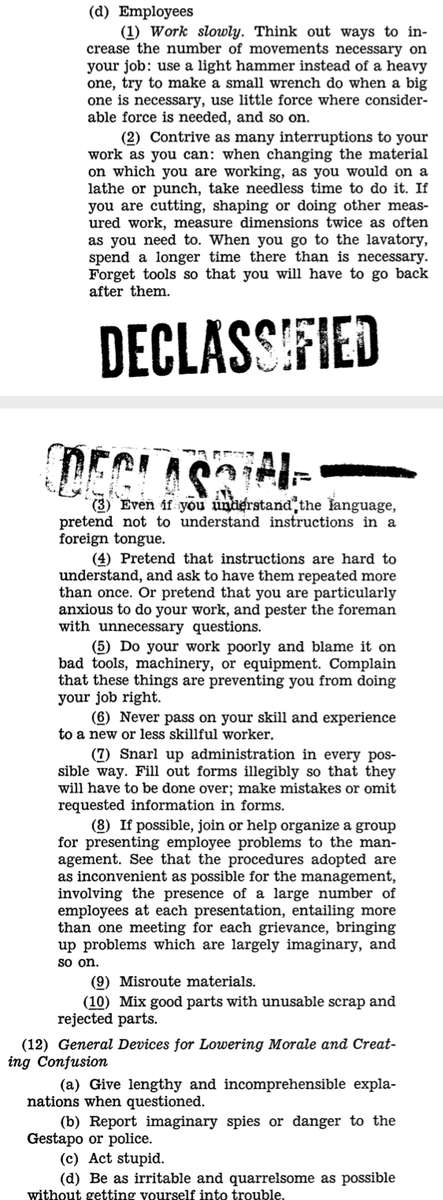
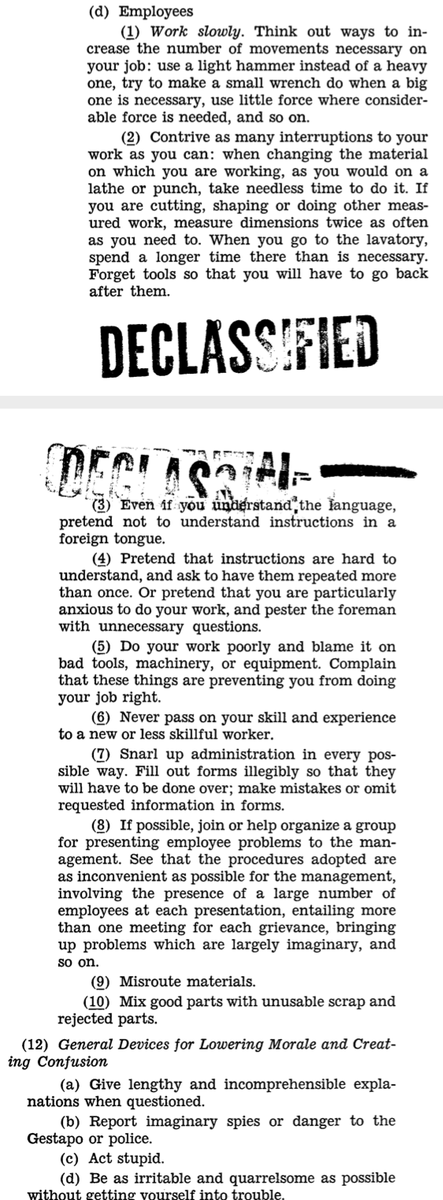
In 1944, the Office of Strategic Services, the predecessor of the CIA, produced a (real) guide to “simple sabotage” that spies and ordinary citizens could use to hurt the Axis powers. It’s remarkable to read given some of the Woke things happening within companies today…

The full declassified guide is here (https://www.gutenberg.org/files/26184/page-images/26184-images.pdf). The first 30 pages are devoted to physical sabotage, but page 32 is where the “wait this is really happening in 2021” starts.

If you’re building a startup, read this — don’t let this happen at your company šŸ™‚

Productivity Gains

Originally posted as a Twitter thread on March 07, 2021


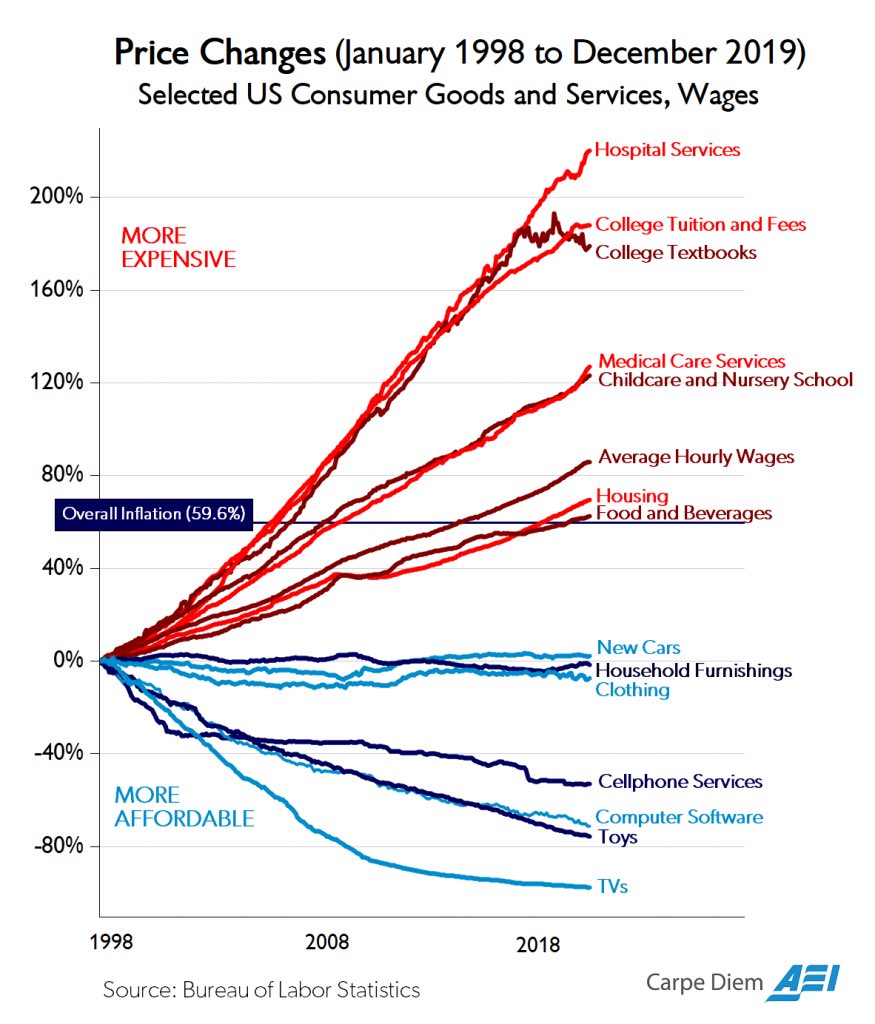
Productivity gains due to technology are the largest source of deflation. $1 buys less today than 1993, but productivity gains offset that for many goods

Technology+transparent pricing+competition =magic

We just lack this in (much of) education, medicine, and construction https://x.com/HumanProgress/status/1368565855571808260

There’s no doubt that medicine has better outcomes today than, say, 1935. But most other technology-fueled productivity gains make products better AND cheaper…

COVID Insanity and Religion

Originally posted as a Twitter thread on February 20, 2021


Covid rules, beliefs, and passions are a 21st century religion, with orthodoxy, heretics, and apologists.

Religion once incorporated ā€œall answers to the unknown.ā€ Why does the sun rise? Where did we come from? What is right and wrong? What happens when we die?

Then came science, which is about falsifiable, testable, reproducible hypotheses. ā€œI like the color blueā€ isn’t falsifiable/testable, nor are questions of morality. ā€œThe earth rotates due to preservation of angular momentumā€ is. So is ā€œthe earth is flatā€ (it was falsified).

ā€œYou can’t sit on a park benchā€ or ā€œYou can’t eat inside unless it’s at an airportā€ isn’t science without *setting and testing a hypothesis.* It’s an insult to science. Some follow these rules blindly. Some fight them blindly. Some make them blindly. It’s religion.

America is a land of many religions and levels of observance. It’s remarkable how these psychographic traits manifest in terms of calls for enforcement (ā€œhe’s not wearing a mask over his nose! Call the cops!ā€), calls for denial (ā€œBill Gates vaccine mind controlā€) etc

What I find fascinating is how many secular people have embraced orthodox Covid religion, whereas how many very religious people have wholly rejected it. What is the reason?

Conformists and skeptics are but two types — there are also those who craft the laws, those who hypocritically violate while endorsing them, those who pretend to believe out of fear, etc. All this has tons of past precedent through our millennia of experience with religion…

My biggest concern is that when ā€œscienceā€ is thrown around without being science, it casts doubt on other things that emerge as part of the actual scientific method. Throw in probability and it gets even worse/easier for people to throw out anything coming from ā€œscienceā€

There ARE a lot of fake claims out there. Vaccines and autism. 5G and cancer. Those on the side of actual science should be offended — and fight hard! — against the bastardization of the term science and ā€œCovid Religionā€…because we are heading towards ā€œboy who cried wolfā€

SPACs in 2021

Originally posted as a Twitter thread on February 14, 2021


Why are there so many SPACs?

Answer 1: Great economics for sponsor (average of 20% of money raised upon deSPAC / merging with a target, Eg $400M SPAC = $80M). It’s like a separate carried interest pool for each company and liquid since already public!

Answer 2: Great economics for investors assuming 0% interest rates (get 100% of your money back if you don’t like the deal! Get warrants just in case you do!). There is no reason NOT to invest in every SPAC at IPO if your alternative is a Bank of America checking account.

Answer 3: TINA (There Is No Alternative), especially given investor inability to access private companies.

However, it’s clear there are way more SPACs than targets (b/c answer #1 in particular). In which case the beneficiary will be…investment bankers who raise the SPACs šŸ™‚

Bureaucracy is a Regressive Tax

Originally posted as a Twitter thread on February 11, 2021


Bureaucracy – in government, the medical system, and more – is a HIGHLY regressive tax in that rich people can pay to solve problems, and the poor must use their time, miss work and lose income…and more.
This is why I love @DoNotPayLaw + @jbrowder1

This is not hyperbole…

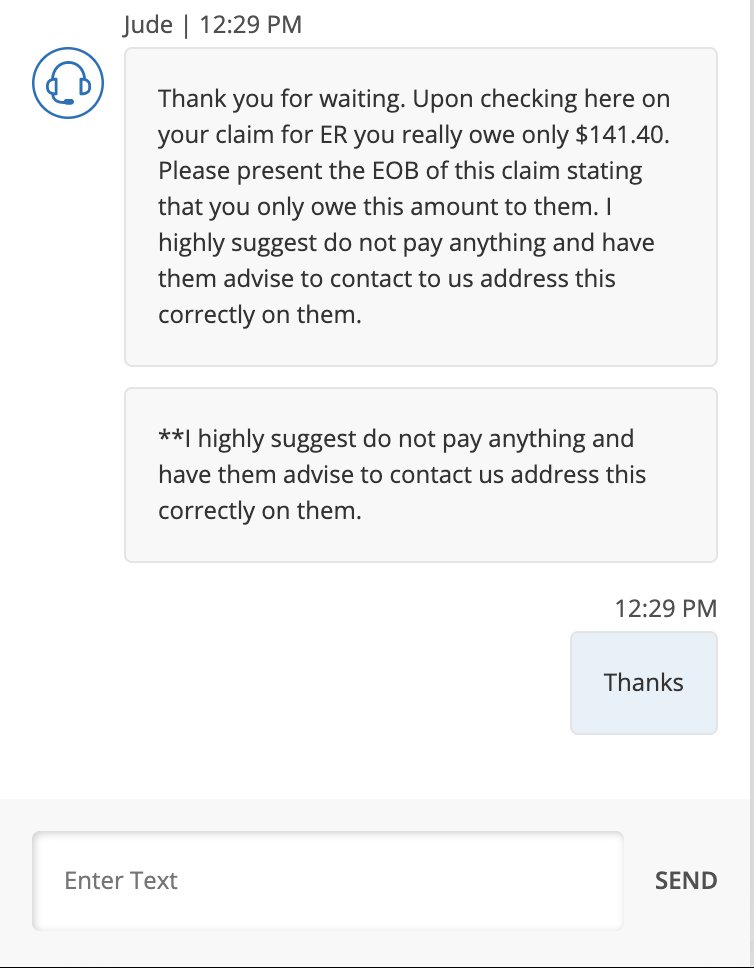
I had to go to the ER a few months ago. My bill didn’t match my insurance statement. Insurance company tells me not to pay. Provider threatens to report me to collections. This consumes HOURS of times and damages credit, making borrowing (and living!) more expensive

I am lucky to be able to say “it’s not worth my time” and do just fine — either pay it or deal with the consequences, which are insignificant to me. Millions cannot.

Why I don’t believe in conspiracy theories

Originally posted as a Twitter thread on January 19, 2021


Why I don’t believe in conspiracy theories, summarized in a Ben Franklin quote:
ā€œThree can keep a secret, if two of them are dead.ā€

When talking about large scale hiding of ANYTHING + the auditability of electronic records + human stupidity, natural path is exposure

It’s why there are not aliens stored in Area 51, it’s why the election wasn’t stolen, and it’s why the idea that Florida is wholesale fabricating numbers is nuts. Occam’s Razor and Ben Franklin.

But a counterpoint to this is: can you trust ā€œconsensus but unfalsifiableā€ conclusions? I’m increasing a No. No experiments, not replicable, but social stigma and no funding to oppose:

https://www.nature.com/articles/s41562-018-0399-z

Incentives matter, too.

Old Soviet joke

Originally posted as a Twitter thread on January 18, 2021


Old Soviet joke:
-ā€œTell me, how many people work in that factory over there?ā€
-ā€œAbout halfā€

Found the original (slightly different from the above) for fellow Russian speakers:

ŠŸŃ€Š¾Š²ŠµŃ€ŃŃŽŃ‰ŠøŠ¹: – Дкажите, сколько человек работает на вашем завоГе?
Директор: – Если честно, то Ń‚Š¾Š»ŃŒŠŗŠ¾ половина…

Directly Accessing Government: Fintech’s Final Frontier

Originally posted as a Twitter thread on January 15, 2021


The Internet has many legacies, but its greatest one is disintermediation — taking out the middleman. And the biggest ever disintermediation — of financial services — is coming to an app near you. This is where government should focus:
https://a16z.com/2021/01/15/fintechs-final-frontier/

Governments have monopolies on money and law-enforcement (only the gov’t can legally do those two things, crypto aside!). But there’s almost no way for consumers to interact with central banks! Just like there was no way for consumers to buy airplane tickets w/o travel agents

Want to send a wire? Get access to your PPP loan? Earn interest from the Fed (as banks do via “Interest on Excess Reserves”)? Got to be a bank. Consumers have to go through a travel agent, versus direct. Why can’t your SSN or FEIN be an “account” that can send/receive money?

This is not arguing for “postal banking” or any DMV-style nationalization of banking — which is a terrible idea. But monetary and fiscal policies that require intermediation are simply not as effective as “going direct” — which the internet and fintech allow.

Take interest rates and monetary policy in emerging markets. The Central Bank can/does hike rates to prevent capital flight. Doesn’t really work because banks “intermediate” and don’t provide that rate to consumers…who sell the depreciating currency in favor of USD/EUR.

In many emerging markets, banks hardly make unsecured loans to consumers. They just take deposits and loan to the government. Which is bad for the government, bad for their citizens, bad for their economy, bad for their currency.

More here. Fintech alone can’t solve this — but every single Central Bank should be thinking: how do I go direct? And I would love to see companies and tools (painful as the gov’t “sale” may be) that help facilitate this:
https://a16z.com/2021/01/15/fintechs-final-frontier/

Geopolitical Risk x Networks

Originally posted as a Twitter thread on January 10, 2021


The internet drove instant, rich, free communication in a form humans have never before seen. With that comes good and bad.

*Right or wrong*, when the leader of a country is kicked off a massive communication network, it creates a geopolitical risk that will…

…likely undo this trend and create many regional, more siloed networks. It has to. It’s simply too much risk for another country to allow a foreign private company (or the US Govt which controls this particular private company!) to ā€œcontrolā€ the means of communication.

I had previously written about this re: payment networks (when I was at Visa, we stopped payment processing in Crimea…per US law). Again, right or wrong, friend or foe, it is TOO MUCH GEOPOLITICAL RISK for countries to allow their networks to be domiciled elsewhere. Fin. https://x.com/arampell/status/1158952157137297410