All posts by Alex Rampell

OS Wallets are an Existential Threat to PayPal

Originally posted as a Twitter thread on June 19, 2018


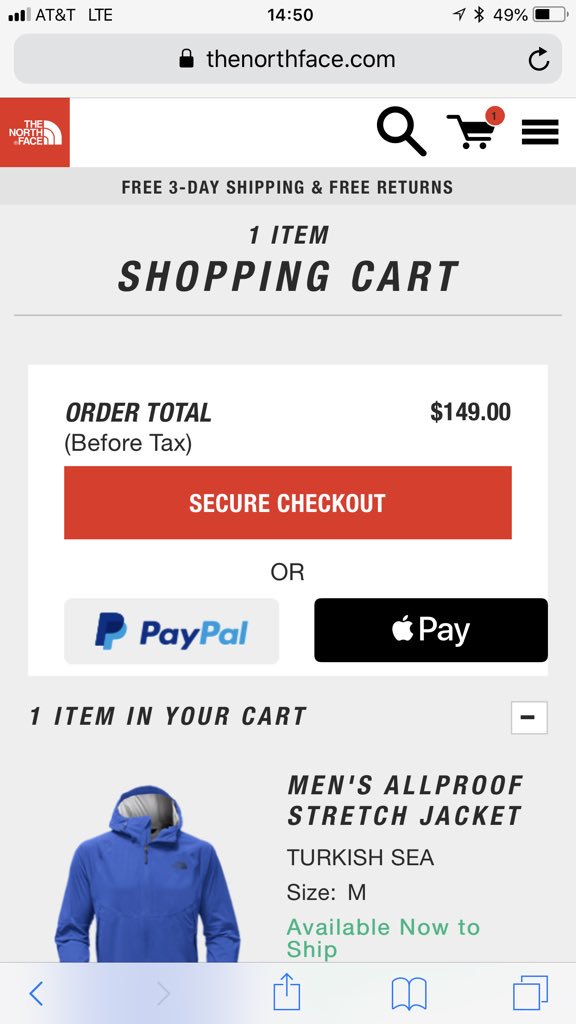
OS-based wallets like ApplePay pose an existential threat to cloud wallets like PayPal. Compare the experience at TheNorthFace with PayPal vs ApplePay. Eventually HomeDepot, Walmart, etc will embrace. PayPal smart to diversify. Let’s tweet this experience…

Ok, I have the jacket I want. Should I pay with PayPal or ApplePay?

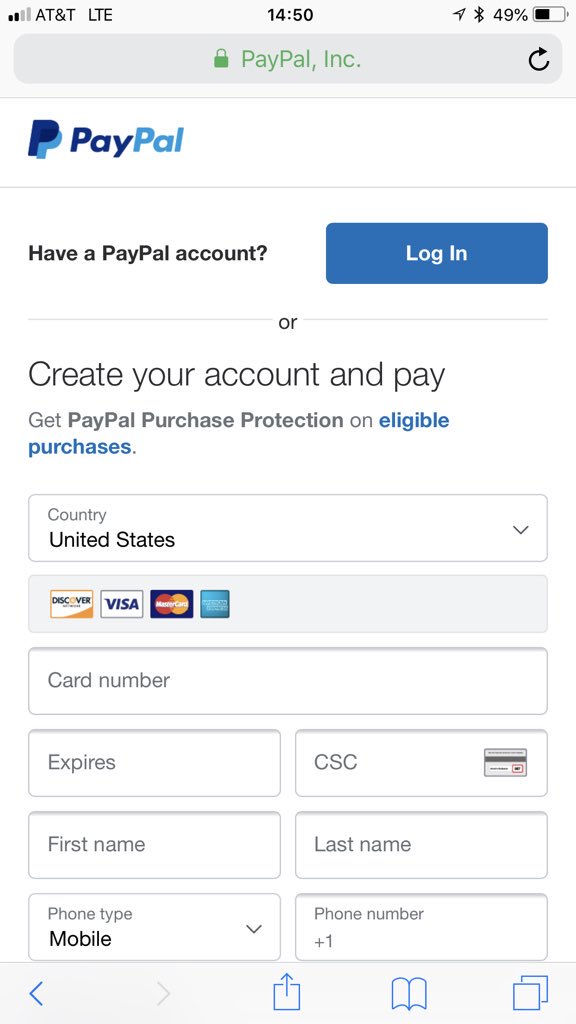
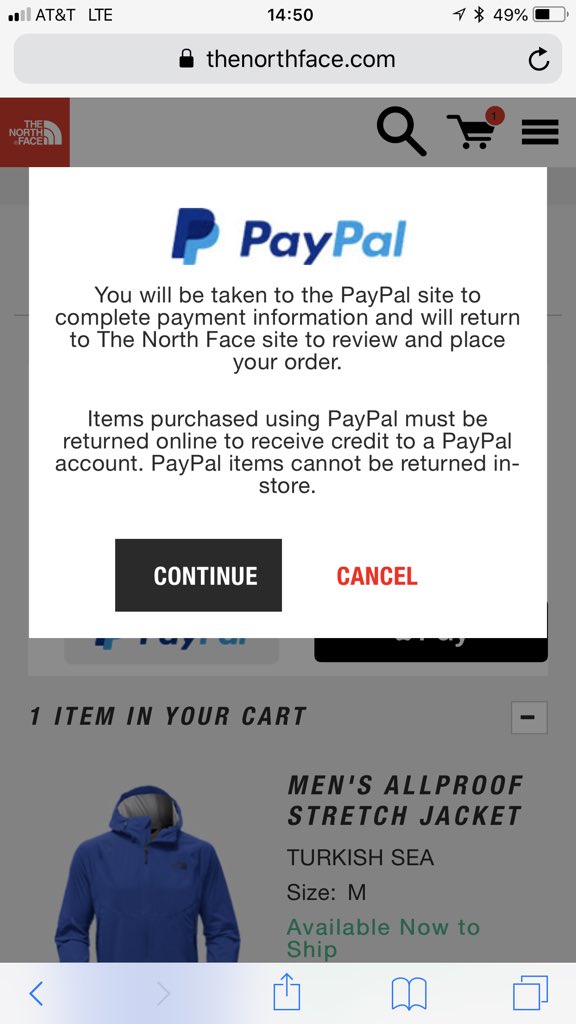
Let’s pay with PayPal! Ok, step 1, leave the website I was just on…

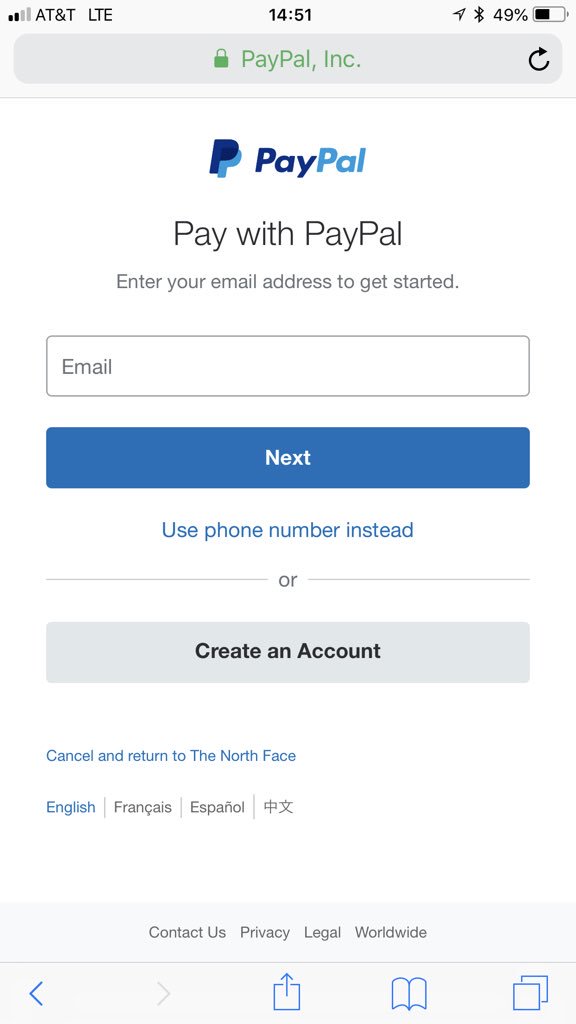
Step 2, now login…

More logging in, step 3

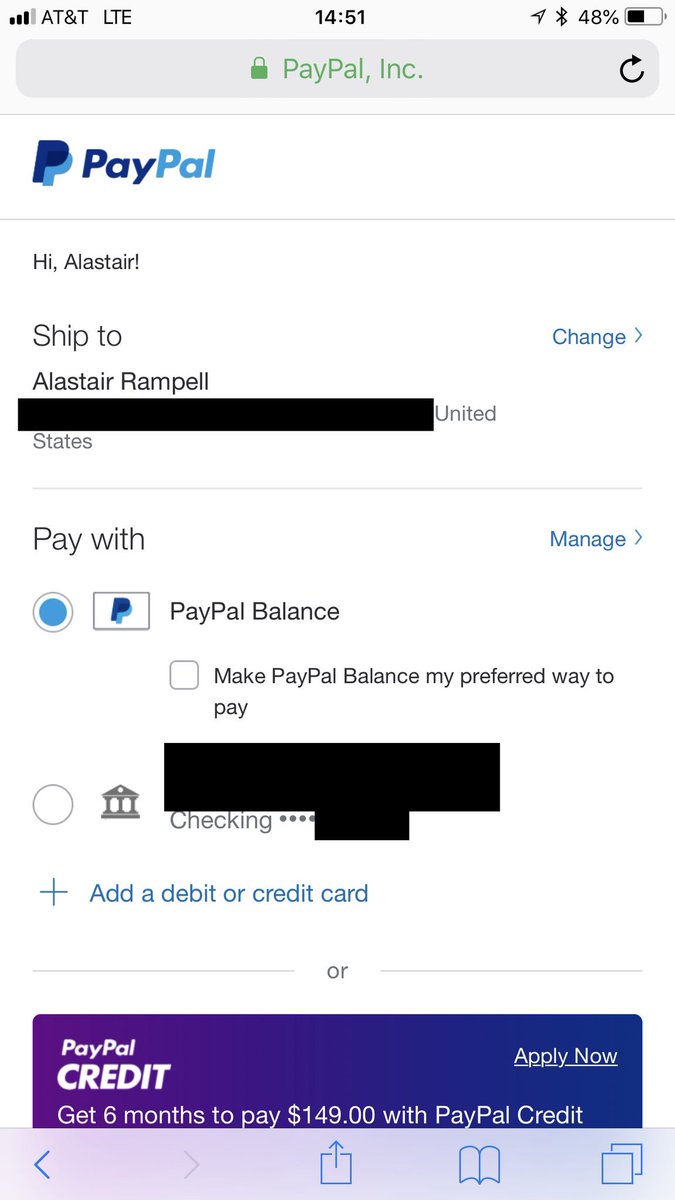
Step 4, more…logging in

Step 5, more!

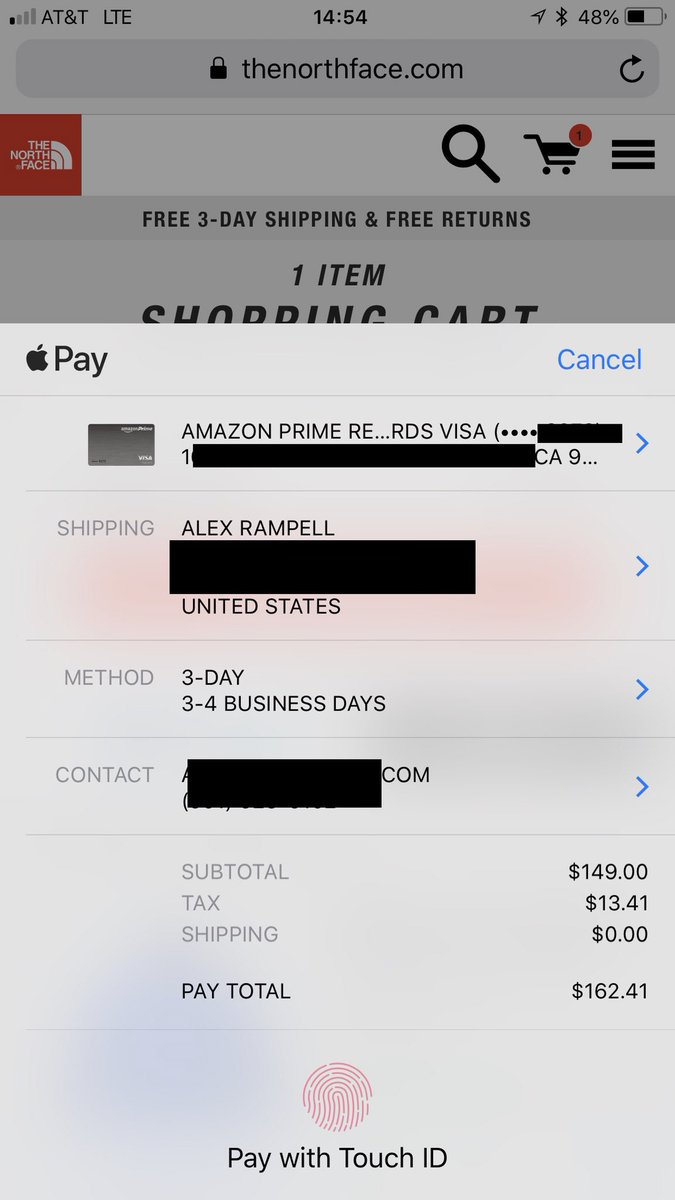
And there are still more steps. Now compare that to ApplePay, one step, built into the browser — and done

PayPal is hardwired into the checkout flow at many top retailers like http://HomeDepot.com, but unless they build their own mobile OS it will be impossible to bundle this as seamlessly as Apple

Expect widespread adoption of ApplePay *on the web* and for this to have a game changing effect

B2B2C

Originally posted as a Twitter thread on May 18, 2018


The reason B2B2C models are so interesting: when we look at fintech investments, the questions of “how do you get distribution” and “how do you make sure somebody else doesn’t outbid you” are paramount. If you can nail a B2B2C model, you lock down both:
https://a16z.com/2018/05/17/b2b2c-business-models-rampell/

I like to joke that the best way of investing in fintech is to buy Google stock and Facebook stock (or even CreditKarma private stock!) — that’s where all these companies go to acquire customers

It’s because it’s REALLY hard to have an organically adopted product in financial services. Do you rave about your once-every-10-years mortgage? Will your raving be remembered by the friend who needs it in 5 years?

Some companies have solved this (eg @TransferWise). But for others, you need a quasi-proprietary distribution model to prevent all the economic rent from flowing to a FB or GOOG. And B2B2C is uniquely well suited to fintech since it’s often a horizontal layer (see post)

Don’t Just Sell to the CEO!

Originally posted as a Twitter thread on January 13, 2018


There are a broad range of products/services that you CANNOT sell to the CEO or senior exec of a company — too irrelevant to them. You either need to figure out how to position your service against EXISTING top priority to CEO, or you are better off selling “lower” in org

But sell too low, and at a company where the principal-agent problem is at its peak (employees are agents, corporation is the principal), and “saving the company money” or “making the company money” are totally irrelevant.

So for most products and services, you need to find somebody in the “middle” and figure out how to make the agent, not just the ethereal principal, win.

Some of the most valuable companies operate in the “zone of irrelevance” because there is no impetus to switch them out (think: payroll, janitorial services, etc) and costs are not SO high, so not as much margin/competitive pressure

In many cases you need to wait for a fundamental shift to challenge one of these companies, or get very, very creative (and very determined) selling into “the middle.” But it’s ironically much stickier to be in the “zone of irrelevance, yet necessary” for clients

CEOs, Please Educate Yourselves about Crypto

Originally posted as a Twitter thread on September 13, 2017


Put another way: CEOs, please educate yourselves properly about cryptocurrency. Side effect is you’ll understand some basic cryptography.

I have personally met Chief Security Officers at major public companies who did not know what a hash function is

And yet CEOs — desperate not to be the Target CEO fired for a security breach — don’t know diff between competence and big talkers

it’s no surprise, then, that these security incidents keep happening — and these are just the ones that are known

There’s a difference between “susceptible to hacking” and “thinking that Bitcoin is a fraud” but cryptographic ignorance at heart of both

And ignorantly saying “it’s a scam” will turn away true cryptographic security experts from wanting to work at your company

Funny thing: true cryptography people tend to like cryptocurrency 😉

Medicine feels like the taxi industry pre Lyft/Uber

Originally posted as a Twitter thread on July 09, 2017


Medicine feels like the taxi industry pre Lyft/Uber — no price transparency, no real reviews, “once and done” for all but primary care

And it’s much worse for procedures…want controlled longitudinal data for, say, allograft vs autograft in ACL repair? Good luck

For me, it’s personal – need major ankle surgery, data do not exist, many surgeons are offended when asked, all “reviews” adversely selected

And stakes are till-death-do-us-part permanent. The consensus, when scientific method applied, is often dead wrong:
http://www.nejm.org/doi/full/10.1056/NEJMoa1305189

Past data = *qualitative* observations and musings. Post-op data = adversely selected, sparse, and also qualitative

Distribution v Innovation

The battle between every startup and incumbent comes down to whether the startup gets distribution before the incumbent gets innovation.

The TiVo Problem

In 1999, ReplayTV and TiVo invented the Digital Video Recorder (DVR). It was an incredible innovation — allowing you to “pause” live television.

But TiVo had no value without “content” to pause. That content, by and large, was distributed via cable and satellite TV networks.

And because TiVo was separate from your cable box, using it was far from simple. If you wanted your TiVo to “know” what shows were on (and consequently record them), you’d have to have it connect (via modem/phone line — remember, TVs were not placed near phone jacks) to a TiVo server to download them.

Clearly TiVo had an enormous channel opportunity. What if Comcast, Adelphia, Cox, and other large cable companies simply distributed TiVo to their customers? Wouldn’t that be a home run for TiVo and the cable companies — a new service that would delight customers with a massive new revenue stream to boot? And, integrated with the cable box, the TiVo product itself would get better, too.

But — and this is what I call the TiVo problem — that doesn’t normally work out well, and if you look at your cable box today (with a generic DVR function, I would bet, built-in), you know how this story ends.

If you’re TiVo trying to cut a deal with a Comcast, one of the below normally happens:

  1. You partner with Comcast, but Comcast dominates the economics of the deal, in some cases restricting your cooperation with its competitors. (rare to partner)
  2. You sell your whole company to Comcast, but you’re not selling a company, you’re selling an awesome product…and somebody else might have an awesomer product (or a worse one that is deemed better by the technology team at Comcast). Moreover, if you already have commercial deals with Comcast, Adelphia, Cox, et al…, Comcast won’t value your ex-Comcast revenue (because it will disappear upon acquisition by Comcast!), dramatically reducing your independent valuation. (rare to sell)
  3. You get screwed by Comcast. Comcast builds a crappy version of your product, but because they have the distribution, they can and will beat you. (common)

TiVo did not fail, but it became a patent troll of sorts. It has a market cap of less than $1B today, despite having collected more than $1.6B in patent settlement funds from the “Comcasts” of the world.

The Winning Strategy: Go Boring

Given that the common outcome to the “TiVo problem” is getting clobbered by Comcast, how do you deal with this situation?

The answer is often to “go boring and be patient. This was a big mistake I made at TrialPay, which put relevant offers around the payment flow. We built a great product/service/business on top of payments, but it wasn’t core — merchants didn’t start off looking for or needing our product. They started off looking for what I thought was boring, cheap, commoditized payment processing. Going back to the analogy: Consumers want/need Comcast more than they want/need TiVo. Or at the very least, the chronology starts off with Comcast.

In 2006, I thought “Why build a ‘boring’ commodity payment business like Stripe or Square (that did not yet exist), when we could build the lucrative feature missing from all the commoditized payment processors?” We had insanely better unit economics than they did.

But these payment processors had the customer relationships, and they had the starting product that the customer wanted. Eventually we sold TrialPay to Visa, and I think a lot of value will be created for Visa from that deal, but not nearly as much for TrialPay shareholders had we owned the channel.

This is the flaw with looking at Square and Stripe and calling them commodity players. They have the distribution. They have the engineering talent. They can build their own TiVo. It doesn’t mean they will, but their success hinges on their own product and engineering prowess, not on an improbable deal with an oligopoly or utility.
Being Judged on the Present

There are two ways somebody can interpret this video.

-“I’m much better than that kid at golf! [says a 33 year old]. I have a 12 handicap and can outdrive that joker by 200 yards!”

-“Wow, that’s remarkable for somebody of that age…if he continues like that, he could someday win 14 Majors.”

Both assessments are logically correct. But as a young company selling into enterprises, you will often get the first reaction.

In my experience, a lot of larger corporations (and people who work at them) can generally only see the present — the present capabilities, the present revenue (or trajectory), the present limitations. In startups, you need to see the future. Not as a fortuneteller would (impossible) but to judge teams and ideas on their future potential / adjacencies.

There is a natural lesson here for an entrepreneur — which is to beware showing “leanness” of product when interacting with a large company. Saying “we can/will add that later” unfortunately lacks credibility, because large companies are often incapable of building anything quickly, and hence their employees tend to doubt this statement. “Blockers” in the large organization will try to scrap any deal with a “deficient” startup.

The right way to build a typical startup is “lean.” Overbuilding before product-market fit can be catastrophic; building sophisticated management and operational processes before you need them is normally a vast misallocation of resources and actually prevents learning of what the market wants.

But present your lean startup to a large company and you’ll hear “where’s the beef?” When selling a product to a large company, or even selling your OWN company to a large company, you’ll be thoroughly evaluated on the present — which sometimes is good in, say, M&A when you are on an unsustainably high growth rate. The hard part of a company is generally making the whole thing work; it’s not the sophistication of a set of algorithms, but having the whole product perform at scale with an organization that can support it.

I saw this firsthand at TrialPay, which was, at its simplest level, an advertising technology company. An early potential deal with a large company did not materialize because said company was displeased with our optimization systems, even though we could add a better optimization algorithm in a few days (GitHub shows 329 collaborative filtering projects). But we were judged on the present, and if we had the opportunity to do it over, I would have actually invested those few days to look “fatter” — even if it had no impact on our business.

The End of Brand Advertising (Part I)

This is an update to a post I originally wrote in 2008 on Seeking Alpha.

The internet has witnessed the conversion of analog advertising dollars into digital advertising pennies (credit due to Jeff Zucker when at NBC for “coining” that metaphor). Despite the fact that a viewer is always just a “click away” on the internet, online advertisements command only a fraction of the cost of far less measurable media – like print, radio, and television. Consider this: an advertisement on Facebook might cost $.25 to show to 1,000 people ($.25 CPM), versus $25 for 1,000 readers of Time magazine ($25 CPM).

In the good old days of performance-less advertising, engagement didn’t really matter because you generally couldn’t quantify it. Studies on Reach, Frequency, and Recall aside, General Motors had no way of measuring the marginal benefit (much less revenue!) of a particular advertisement. But on the internet, it is quite clear that if nobody is clicking on your ad, then nobody is noticing it, much less “connecting” with it. Proctor and Gamble has likely spent millions of dollars on Facebook advertisements that attract a few dozen active “followers” – probably the same hit rate they had in Time magazine 20 years ago, but with one key difference: Now anyone can prove that people don’t engage with the advertisement! If only Facebook (and internet advertising agencies) hid such pitiful data, perhaps the pennies would somehow metastasize back into dollar form. When there’s no way to measure the marginal benefit of an advertising unit, it’s very easy to get ripped off.

Pundits will argue that with increased ad targeting, profiling, and all sorts of other algorithmic alchemy, online ad revenues will be boosted. Such talk is nonsense insofar as brand advertising (not direct response) is concerned. Rather, a seismic shift is underway – one that will not only change the nature of advertising, but will also show that the last century of offline advertising witnessed a tremendous amount of money being flushed down the toilet. We are a lot smarter than we were 50 years ago, and those analog dollars really should have been analog pennies all along.

The result of this peculiar wastefulness was (and, for the moment, still is) a “private” consumption tax for the funding of “public” content. If the BBC is funded by the British government (i.e. taxpayers), NBC is funded by Proctor & Gamble, Coca-Cola, General Motors, et al (i.e., consumers of those brands). If you happen to watch your favorite sitcom without transacting with any of those brands, then you are free-riding off of those who do spend – a remarkable corollary to the piracy of paid content. The “free content” system of the past century is no different than forcing people to buy NBC content from iTunes, but instead of the cost being charged to their Visa cards, it is tacked onto the cost of their Tide, Cherry Coke, and Chevy Malibu.

Don’t expect it to last, though. As the brands recognize that they are being bilked – rather, that there is at best a tenuous link between consumption of their goods and consumption of the free content they are sponsoring, they will be less likely to foot the bill. For the beneficiaries of free content, the internet is unraveling this whole ecosystem with unwavering speed.

If you are a media company, or a shareholder in a media company, there is a good reason to worry about what the next ten years hold in store. The enemy is not Google or the internet, but rather increased intelligence and analysis of advertising spend, which will irrevocably change the way advertisers allocate their dollars.