Category Archives: Customer Acquisition

Software Clone Wars of 2004, meet AI Cloning of 2026

History doesn’t repeat, but it rhymes.

Before SaaS, and before freemium, there was “shareware” — try before you buy software. This was a concept dating back to the 1980s, where software would be freely distributed on floppy discs attached to PC magazines…dozens of products on one floppy! Written by hobbyists and even upstart companies.

id Software of Doom fame started out like this, as did McAfee. As did I!

As things like BBSs, AOL, Compuserve, and eventually the Internet grew in the 1990s, one of the main use cases was downloading shareware.

And it eventually started becoming a big business. The biggest download site was the appropriately named Download.com, owned by CNET.

Around the same time, more people in more countries got access to the internet. And this little site called Elance (now Upwork!) survived the dotcom bust and ended up being a leading outsourcing site for everything from translation to, you guessed it, software engineering.

So now there was a huge opportunity. You pick the number one or even number twenty product on Download.com that’s printing money. You go to Elance. You get dozens of predominantly Indian and Eastern European outsourcing shops to compete / bid on “cloning” it.

I had a pop-up blocker (how I met @jonoringer), a couple of security products, and a bunch of utilities like a cool macro tool, an email tracker, etc.

But now I could hire somebody for $500 and have them replicate anything on the top download site on the Internet! It was incredible.

But it wasn’t. There is such much complexity under the hood that you never see merely by using the product. You see it when designing the product, when receiving hundreds of customer complaints, when realizing how much you could improve your conversion funnel, etc.

You can replicate something “skin deep” but miss most vital organs. Who knew you needed a Pancreas or two kidneys?

Elance fundamentally changed the shareware business. Anyone with agency could now hire somebody to clone a product or build a product.

But here’s what I noticed:

-cloning almost never worked, because there was too much “dark matter” in these products to be understood or seen when the goal is just rote replication

-coming up with a NEW idea — much better path, since you have to conceive of all of the myriad corner cases. No free ride to rest on. -technical people still reigned supreme, since they could edit the resulting code from the outsourced shops

-distribution > product. Now that it was so easy to build (or hire to build!), the advantage went to those with a real knack for acquiring customers. And it couldn’t just be “I uploaded it to the file library” like it used to be in the good old days of the 90s

Now replace Elance with Claude or Cursor, and repeat this exercise Distribution will rule supreme. Original thought and insight will rule supreme. “Cloning” things at a shallow depth is a fool’s errand.

Good luck.
The Goldilocks Zone of Cost Irrelevance

Originally posted as a Twitter thread on December 08, 2022


“The Goldilocks Zone of Cost Irrelevance”

Some of the most valuable companies provide a crucial service, but don’t charge enough to have customers care enough to switch/think about switching

Janitorial services, payroll services, etc. Hard to be displaced / hard to get in.

At TrialPay I called this the “Janitorial Services Problem” — imagine writing a BigCo CEO: “I will make your toilets 19% cleaner for 7% less cost!”
CEO likely won’t care or even care enough to *find the person who DOES care*
It’s actually possible nobody does!

There really is a Goldilocks Zone here. If you represent a giant cost, it’s worth optimizing/RFPing. If you’re too cheap you likely can’t afford a sales team to sell in. But if you’re “just right” — irrelevant to COGS, but you have high margins and a large n of customers…wow

For many of our clients we were a small % of their revenue. Nice, but not crucial. Unlike janitorial services (which every office needs), we were doing something new — so category creation in a zone of irrelevance (eventually it became a category, though)

Moreover, put yourself in the shoes of the CEO…who likely only cares about 1-3 BIG things/KPIs that will move revenue, profits, stock price, save their job, secure their bonus, etc

So if you have a “janitorial services” type product — hard to get in, hard to displace, not incredibly relevant — how do you start? Some things we tried to do…

If leading with your product — do not just try to “go high” — selling to the CEO, board, whatever. They likely will not care! They will not care to find the person who cares! This is a rookie mistake I see many entrepreneurs make.

HOWEVER, if you do get a high level connection, try to lead with something they care about, and link it to your service. I would always try to figure the key priorities of the company and try to lead with that, versus “we’ll make/save you some small incremental dollars”

As an example, they might have (strategically) cared about showing they were ramping up Facebook customer acquisition (in 2011). Or mobile. Optics — if linked to a “braggable” KPI — almost always trump small dollars.

One other clever thing we did was use a bundled hook, as I called it. BigCo CEO didn’t care about our product, but did care about supporting Charity XYZ — so it was a much better reach out to say “we are working on something to support XYZ…”

We did a promotion called “The BigBundle” where 100% of proceeds benefited the American Cancer Society. We kept nothing, not even payment fees. The bundle consisted of…products from our merchant customers that we would sell to consumers.

It turned out to be a pretty clever hook — doing well by doing good — to get more companies to use us. In order to include their product, they needed to sign a contract with us, integrate some code (so we could deliver/authorize), etc.

I often described a customer journey as 10 stages.
Stage 1: Who the hell are you? Go away

Stage 6: Contract signed
Stage 7: Code integration complete
Stage 8: Small test done

Stage 10: Fully live and turned on, key integrations done

The “BigBundle” got us to Stage 7 with several dozen NEW customers — which then made it really easy to solve the Janitorial Services Problem in the future

After finishing the charitable promo, we had signed contracts and live integrations — so now the sales pitch was so much easier. “Just reply ‘yes’ and the toilets will automatically get 19% cleaner at 7% less cost — we’re already integrated and past procurement”

And once we were the new Janitorial Services Company, we could defend our position quite nicely — knowing how hard it was to get in 🙂

Inspired by a morning conversation with @davidu and @martin_casado — thanks guys!

BNPL and “Incumbent Does X”

Originally posted as a Twitter thread on June 07, 2022


“BigCo X offers installment payments on existing payment rails” is not really competition to a wide set of use cases that Buy Now, Pay Later enables, because without allowing the merchant or manufacturer to lower the interest rate or extend the term, it doesn’t change behavior

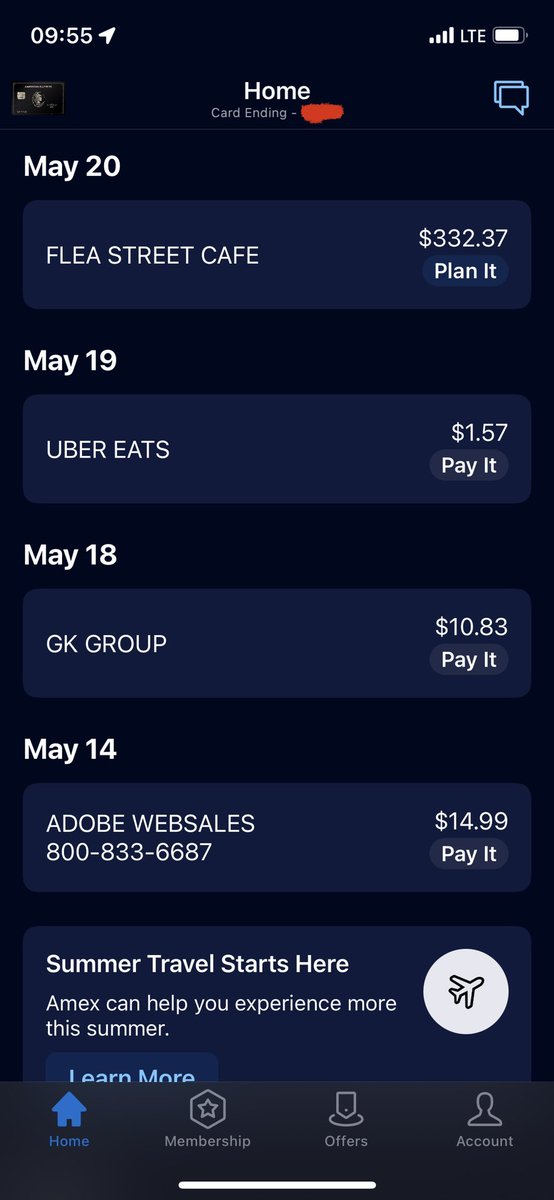
For example, Amex has offered *for a long time* a product called “Plan It” which works great and allows any purchase to be turned into a set of installments.

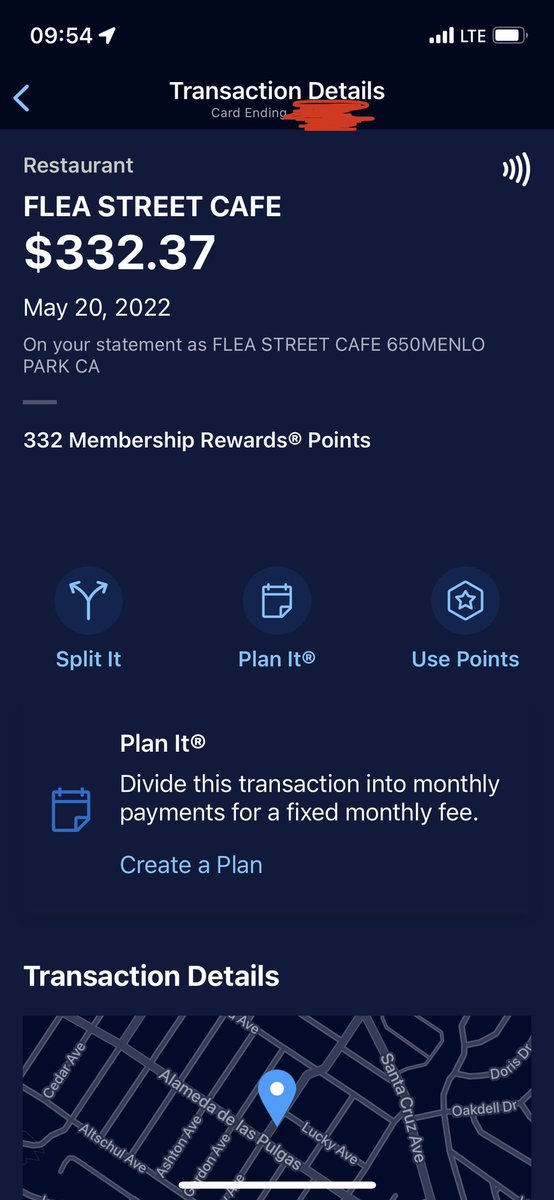
Here’s my Amex bill

I click on “Plan It” next to my Flea Street payment (great restaurant btw) and can either Split It (with friends, using Venmo or PayPal), Plan It (turn into installments), or even Use Points

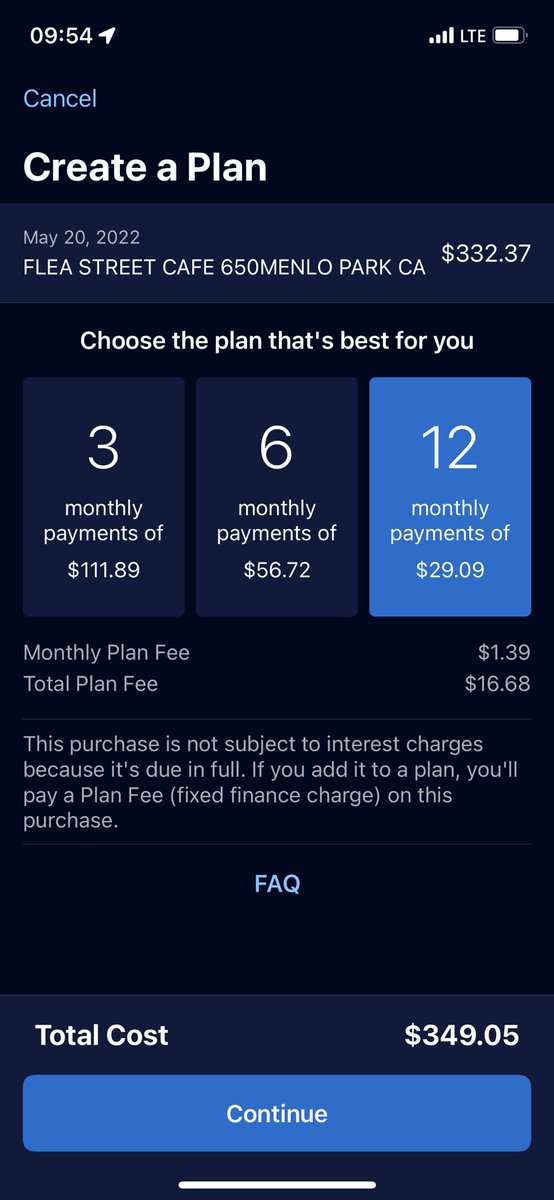
I’m going to use Plan It, which offers me several installment plans — 3, 6 or 12 months. No interest but a monthly “plan fee”

This works great, but to the point at the beginning — it misses the fact BNPL is a *promotional tool used by manufacturers and merchants to sell more stuff* — eg, Toyota often offers and *advertises* 0% financing to induce you to buy (promotion!)…not “post payment planning”

More on this from a thread I wrote in September 2021: https://x.com/arampell/status/1435692945387048964

ApplePay is awesome, and integrating installments to ApplePay makes sense, just like it made sense for Amex, above. But the “consumer + merchant + manufacturer” magic of BNPL happens when merchants/manufacturers can lower rates and extend terms to consumers…

…and can actually integrate those lower rates and extended terms into promotional materials in order to bring customers TO the checkout. It’s “too late” to first show this in the literal checkout line…which is why car manufacturers have run financing promotions for decades.

BNPL “done right” brings this same set of tools to any merchant and even any manufacturer (see long BNPL thread above on manufacturer-sponsored offers), helping unlock sales that otherwise would not happen

Stochastic Gross Margins of Financial Services

Originally posted as a Twitter thread on November 03, 2021


Many areas of financial services have “stochastic margins” per widget, but hopefully (obviously!) positive margins for the whole batch of widgets sold – unlike most manufacturers, with fixed/declining COGS at scale. This means many things when you build a “financial” business

You might make or lose money on the marginal loan, marginal insurance policy, marginal payment processed, marginal market-making trade. Apple makes the same margin on every iPhone 13 Pro it sells.

In no particular order, here are some things to think about:

Understanding adverse selection v positive selection is crucial. And the “default” (when you are providing pure MONEY) is being *overwhelmed* with adverse selection before the positive selection customers even show up. Bad loans, risky insurance, tainted properties, etc.

ONE FORM of adverse v positive selection is pull v push. In most businesses organic consumer adoption is a godsend. In risk, it is not! Compare people searching for “I need a loan” to people who get “pushed” a loan offer based on their highly desirable, prescreened credit

This is one of many reasons why postal mail works so well (surprisingly!) for lenders. It’s not just the saturation of the channel – it’s push v pull, picking your customers vs trying to pick through the sea of (possibly) adverse selection applicants

So tracking the **channel** against the cohort performance is *crucial* to understand which channels tend to have more of this adverse dynamic, even holding things like credit score or underwriting risk constant. Cohort customers by time AND channel (and other behaviors)

Be highly, highly tuned to “anomalously high” conversion rates. It might mean that you found a great channel, or it might mean you found a motherlode of desperate/bad/fake customers

A life insurance executive once told me that they found that post-midnight advertising on the History Channel was their most cost effective channel, but turned out to be netting very bad, depressed customers — which didn’t show up in medical underwriting but tracked to channel

Another form of adverse selection happens when you are buying/underwriting a subset of financial products without seeing the full set. Think lenders who sell SOME of their loans. The offered products are ipso facto riskier or worse than the retained ones.

The tail REALLY matters – cohorts need to season. If you are selling life insurance, you don’t know if you’re good or bad at underwriting until (sadly) people die. If you’re buying homes…until the VERY last homes sell.

A mistake I see many companies make is they record their early realized gains, and either assume that will continue or (equally bad) hold everything else in the tail at cost. The last trades are almost always the worst — that’s why it took so long to unload them

Promotions are their own form of adverse selection in “deal seekers.” PayPal once ran a giant promo (trying to launch their offline biz) with HomeDepot, and saw massive customer adoption – but all from SlickDeals deal seekers who saw opportunity for profit

so:
-let cohorts season before assuming anything
-understand channels
-always watch for adverse selection
-be vigilant watching for anomalously HIGH conversion rates
-push can outperform pull
-beware underwriting “subsets” of a customer’s business
-beware deal-seeking

Net Promoter Scores and Sampling Bias

Originally posted as a Twitter thread on November 06, 2019


Net Promoter Score (NPS) is, when used properly, a great metric for many businesses. But many startups are trying to tout high scores, not *accurate scores* which is both dangerous and intellectually dishonest.

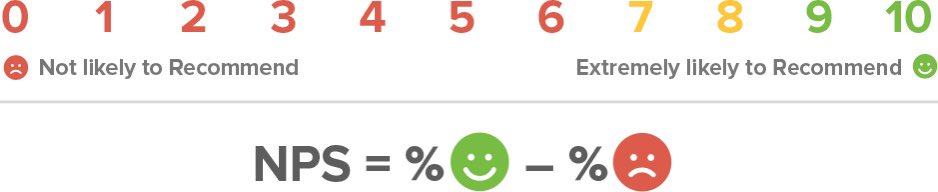
The classic question is “On a scale of 0 to 10, how likely are you to recommend this company’s product or service to a friend or a colleague?” — so if you have no organic traffic but a high NPS, something doesn’t jive / one of those measurements is wrong

Many companies only (whether by accident or on purpose!) survey their satisfied customers, those who made it through a giant funnel…a form of denominator dishonesty that makes it seem like things are rosy when they are not.

10% NPS might sound terrible, but it could mean you surveyed 10 customers and got nine 8s and one 10. NPS *should* be both a leading and lagging indicator of retention and organic growth, but it loses all meaning when it’s gamed to look rosy. Survey everyone! Face the data!

Origins of Visa (and Payment Networks)

Originally posted as a Twitter thread on September 18, 2019


September 18th marks the 61st anniversary of the most valuable network effect of all time: the credit card. How did we get here? Read on. And read @opinion_joe ‘s book “Piece of the Action” for more…

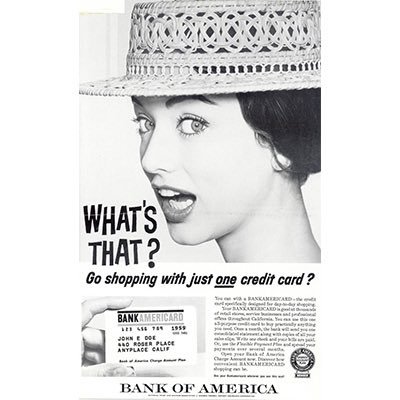
The epicenter of the revolution was Fresno, California. Facebook started with the contained network of Harvard students; the humble credit card started with 60,000 people in Fresno and a prominent company called Bank of America, then a California-only bank.

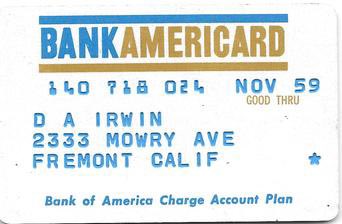
There was no application. 60,000 people just got a BankAmericard in the mail on September 18, 1958, ready to use.

There were “charge cards” like Diner’s Club before the BankAmericard Fresno drop, but there was no “credit” being extended. And you could go to a bank and get a loan, or get an installment loan for a specific purchase, but in person.

The credit card came out of Bank of America’s corporate think tank, called the “Customer Services Research Department,” run by a 41 year old man named Joe Williams.

Consumers were used to paying on credit, but each line of credit was either specific to a merchant (e.g., Sears), or a burdensome process requiring a new loan (in person) from the bank.

Williams thought the credit card — a multi-merchant product — would fix that. It really had two purposes: convenience and lending.

Fresno at the time had about 250,000 people, and *45% of all Fresno families* were Bank of America customers.

Credit card fees were set at 6% for merchants, and consumers — who just randomly got this card without applying — got between $300 and $500 in instant credit.

The brilliance of the 60,000 person drop is that Williams had effectively started with the chicken, in the classic chicken/egg cold start problem. On day 1, cardholders simply *existed* which permitted BoA to sign up all merchants who didn’t have existing proprietary programs

So Williams started in a seemingly random, highly concentrated town, immediately enlisted existing customers, and focused on fast-moving, small merchants — not the giants like Sears — all backed by a massive advertising campaign.

More than 300 merchants in the city signed up, the first being Florsheim Shoes (still around!).

Within 3 months, BoA was expanding concentrically — to Modesto to the north and Bakersfield to the south, and within a year San Francisco, Sacramento, and Los Angeles. Within 13 months of Fresno, there were 2 million cards issued and 20,000 merchants onboarded.

After the Fresno drop, other banks followed. Chase Manhattan was 5 months later on the east coast.

Williams assumed that collections would be a breeze, that late payments would never cross 4%, and that existing bank credit systems would work. Instead, less than 2 years after Fresno, Joe Williams quit BoA due to a series of disasters. The credit card almost died then+there

Delinquencies were over 20%. Fraud was out of control as criminals figured out how to replicate cards. Merchants (harbinger of things to come) hated paying 6% and the first battles over fees began. Some of them stole from the bank or customers, too.

And more broadly — and this is now illegal — simply giving people cards without having them apply, and without them understanding the consequences of wanton spending, created far more bad debt than BoA had ever seen (on a customer % basis).

The huge losses and mounting pressure almost caused BoA to kill the card program altogether. The founder was ousted. Instead, BoA persevered, and just a few years later BankAmericard turned a profit and grew like a rocketship, transforming how people pay and borrow.

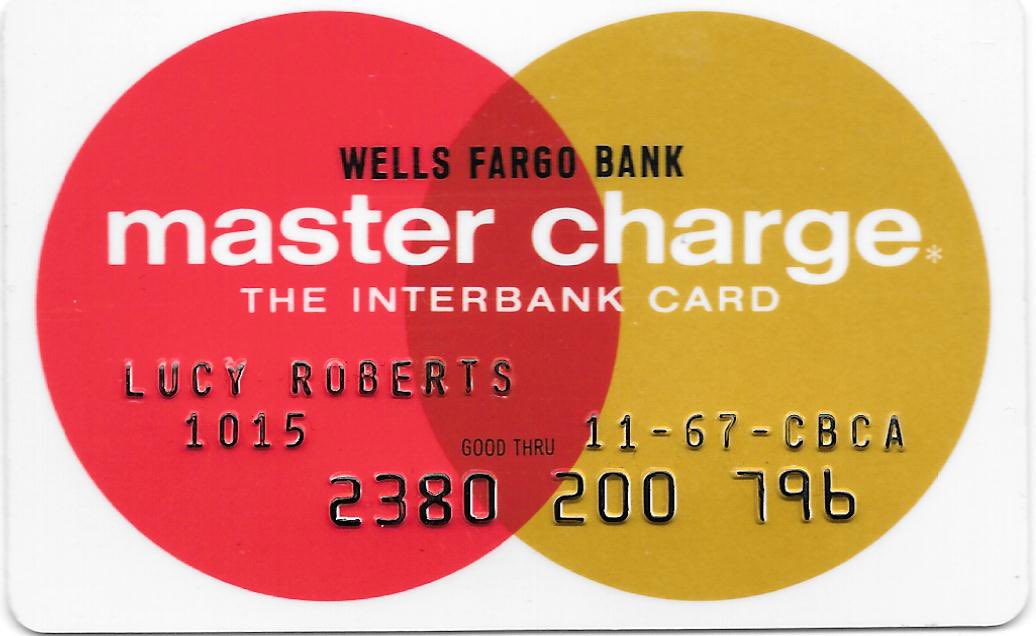
Eventually, BankAmericard became a non-profit consortium called Visa — uniting many banks with competing credit cards. A competing consortium called MasterCharge, later MasterCard, did the same with another set of banks.

Credit cards and payment cards are arguably the most valuable network in the world, with at least $1T of publicly traded market cap (Visa, MasterCard, the banks who issue them, etc)…all starting off in a little town called Fresno, on a random day in September of 1958.

More on how credit cards work today and their history:

And how all of this — and the creation of this powerful network effect — has an impact on how I think about crypto (old tweetstorm from last year): https://x.com/arampell/status/1042226753253437440?s=21

FIN

Consumer Finance Runs on Friction and Inertia

Originally posted as a Twitter thread on June 04, 2019


An example of how friction and inertia extract profits in consumer finance, and how technology solutions/fintech companies will change the game.

“There are now about 5.9 million borrowers who could see their rates drop by at least 75 basis points by refinancing their mortgages…an aggregate of $1.6 billion in potential monthly savings”
https://www.cnbc.com/2019/06/03/as-mortgage-rates-plunge-millions-more-homeowners-can-benefit-from-refinancing.html

So why don’t consumers do this? It’s WAAAY too complicated for, in this case, an average of $271 per month. Add in the paradox of choice (refinance with whom?), getting stuff notarized, getting both spouses to sign, and hidden fees…and it’s easier to do nothing

Roboadvisors have been around for a while focused on investing assets and optimizing portfolios, but I believe the bigger opportunity is on roboadvising debt — and this has potentially the gravest impact to banks who *make money on friction* (which is all banks!)

There are lots of refinance companies out there, but the biggest opportunity is to do it all automagically for consumers whenever savings can be had (including shifting unsecured debt into secured debt). Refinance as a service, not leadgen to open yet another account

Banks are effectively the biggest “managed marketplaces” out there, between depositors and borrowers. Both sides are getting screwed over by a giant take rate protected by friction (too hard to switch) — with banks earning healthy spreads and record profits

B2B2C

Originally posted as a Twitter thread on May 18, 2018


The reason B2B2C models are so interesting: when we look at fintech investments, the questions of “how do you get distribution” and “how do you make sure somebody else doesn’t outbid you” are paramount. If you can nail a B2B2C model, you lock down both:
https://a16z.com/2018/05/17/b2b2c-business-models-rampell/

I like to joke that the best way of investing in fintech is to buy Google stock and Facebook stock (or even CreditKarma private stock!) — that’s where all these companies go to acquire customers

It’s because it’s REALLY hard to have an organically adopted product in financial services. Do you rave about your once-every-10-years mortgage? Will your raving be remembered by the friend who needs it in 5 years?

Some companies have solved this (eg @TransferWise). But for others, you need a quasi-proprietary distribution model to prevent all the economic rent from flowing to a FB or GOOG. And B2B2C is uniquely well suited to fintech since it’s often a horizontal layer (see post)

Don’t Just Sell to the CEO!

Originally posted as a Twitter thread on January 13, 2018


There are a broad range of products/services that you CANNOT sell to the CEO or senior exec of a company — too irrelevant to them. You either need to figure out how to position your service against EXISTING top priority to CEO, or you are better off selling “lower” in org

But sell too low, and at a company where the principal-agent problem is at its peak (employees are agents, corporation is the principal), and “saving the company money” or “making the company money” are totally irrelevant.

So for most products and services, you need to find somebody in the “middle” and figure out how to make the agent, not just the ethereal principal, win.

Some of the most valuable companies operate in the “zone of irrelevance” because there is no impetus to switch them out (think: payroll, janitorial services, etc) and costs are not SO high, so not as much margin/competitive pressure

In many cases you need to wait for a fundamental shift to challenge one of these companies, or get very, very creative (and very determined) selling into “the middle.” But it’s ironically much stickier to be in the “zone of irrelevance, yet necessary” for clients