Category Archives: Economics

Stochastic Gross Margins of Financial Services

Originally posted as a Twitter thread on November 03, 2021


Many areas of financial services have “stochastic margins” per widget, but hopefully (obviously!) positive margins for the whole batch of widgets sold – unlike most manufacturers, with fixed/declining COGS at scale. This means many things when you build a “financial” business

You might make or lose money on the marginal loan, marginal insurance policy, marginal payment processed, marginal market-making trade. Apple makes the same margin on every iPhone 13 Pro it sells.

In no particular order, here are some things to think about:

Understanding adverse selection v positive selection is crucial. And the “default” (when you are providing pure MONEY) is being *overwhelmed* with adverse selection before the positive selection customers even show up. Bad loans, risky insurance, tainted properties, etc.

ONE FORM of adverse v positive selection is pull v push. In most businesses organic consumer adoption is a godsend. In risk, it is not! Compare people searching for “I need a loan” to people who get “pushed” a loan offer based on their highly desirable, prescreened credit

This is one of many reasons why postal mail works so well (surprisingly!) for lenders. It’s not just the saturation of the channel – it’s push v pull, picking your customers vs trying to pick through the sea of (possibly) adverse selection applicants

So tracking the **channel** against the cohort performance is *crucial* to understand which channels tend to have more of this adverse dynamic, even holding things like credit score or underwriting risk constant. Cohort customers by time AND channel (and other behaviors)

Be highly, highly tuned to “anomalously high” conversion rates. It might mean that you found a great channel, or it might mean you found a motherlode of desperate/bad/fake customers

A life insurance executive once told me that they found that post-midnight advertising on the History Channel was their most cost effective channel, but turned out to be netting very bad, depressed customers — which didn’t show up in medical underwriting but tracked to channel

Another form of adverse selection happens when you are buying/underwriting a subset of financial products without seeing the full set. Think lenders who sell SOME of their loans. The offered products are ipso facto riskier or worse than the retained ones.

The tail REALLY matters – cohorts need to season. If you are selling life insurance, you don’t know if you’re good or bad at underwriting until (sadly) people die. If you’re buying homes…until the VERY last homes sell.

A mistake I see many companies make is they record their early realized gains, and either assume that will continue or (equally bad) hold everything else in the tail at cost. The last trades are almost always the worst — that’s why it took so long to unload them

Promotions are their own form of adverse selection in “deal seekers.” PayPal once ran a giant promo (trying to launch their offline biz) with HomeDepot, and saw massive customer adoption – but all from SlickDeals deal seekers who saw opportunity for profit

so:
-let cohorts season before assuming anything
-understand channels
-always watch for adverse selection
-be vigilant watching for anomalously HIGH conversion rates
-push can outperform pull
-beware underwriting “subsets” of a customer’s business
-beware deal-seeking
iBuying and Marketplaces

Originally posted as a Twitter thread on November 02, 2021


few thoughts on iBuying in light of ZG news:
Amazon started off stocking every book it sold, but the vast majority of revenue is now 3P marketplace/FBA (Fulfilled by Amazon). Once AMZN aggregated consumer demand, it started aggregating other sellers and charging commissions

So iBuying is not simply “let’s take lots of principal risk by playing market maker.” Opendoor is aggregating a lot of inventory, which in turn aggregates consumer demand (direct to OD), which then would allow OD to aggregate 3P supply since supply follows consumer demand

the only way to do this is to buy the homes since, as a principal, Opendoor can choose to withhold from MLS and simply list direct. An agent representing a homeowner could try this but…there’s no strategic value to owner in risking lower price for “strategic value to company”

next: cohort math. The real embarrassment to ZG is that their misfire on this business impugns the accuracy of their apparently not very accurate “Zestimate.” But the reason for the misfire, IMHO, is about how cohorts work and age.

let’s say I buy 1000 homes this month for $300M. Avg price $300K. Between commissions, fixes, cost of capital, etc I might be shooting for 50bps profit at the end. But the last 10 homes to sell will make or break me. Why?

by virtue of the fact that they are my LAST 10 to sell, something must be wrong with them. Termites, ghosts, etc. I might need to discount them by 50% to sell them. But that 50% principal impairment wipes out my WHOLE cohort profit/is not realized until the END of cohort!

so basically:
-there is a lot of strategic value to aggregating supply -> aggregating demand to build a marketplace in the biggest asset class in the world. It’s not dumb to try.
-it is very, very hard to get it working, particularly since it will look good until the very end

Bretton Woods / End of Gold Convertibility

Originally posted as a Twitter thread on August 15, 2021


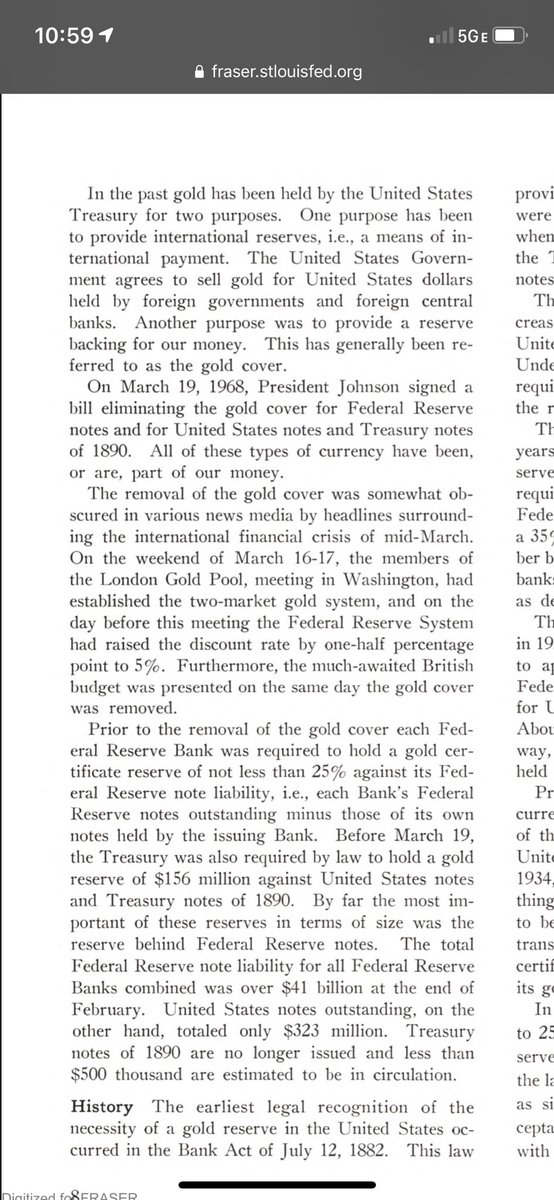
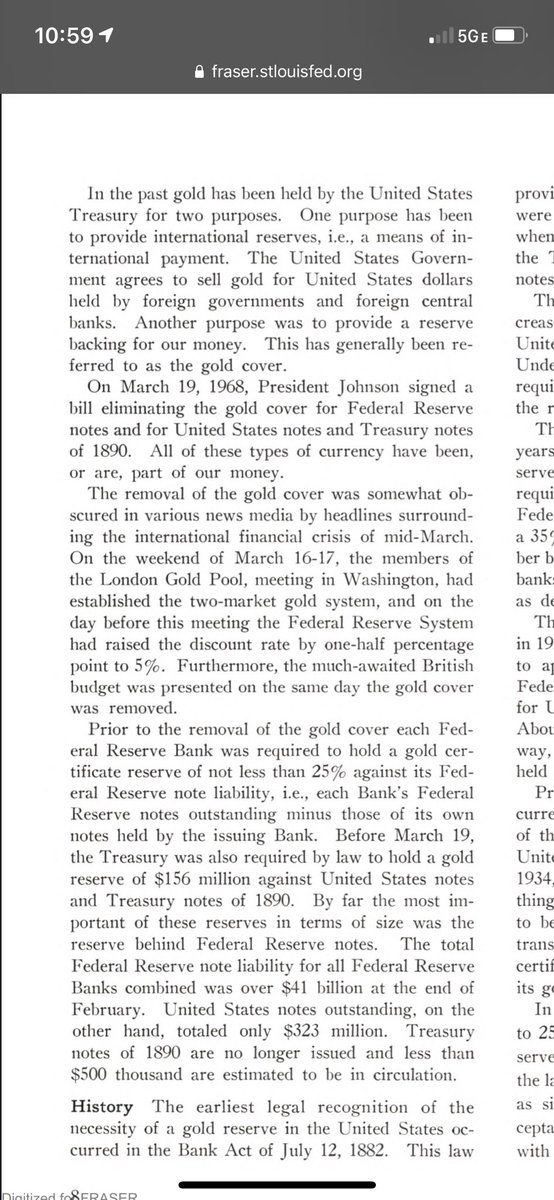
While Bretton Woods and USD gold convertibility formally ended on August 15, 1971, the writing was on the wall for years, particularly once LBJ suspended the 25% Gold Cover for Federal Reserve Notes (and 1890 Treasury Notes) in March 1968:

https://fraser.stlouisfed.org/files/docs/publications/frbrichreview/pages/65585_1965-1969.pdf

And more on the final nail in the coffin, and how this is related to Bitcoin:

https://x.com/arampell/status/1294880378147094530?s=21

Productivity Gains

Originally posted as a Twitter thread on March 07, 2021


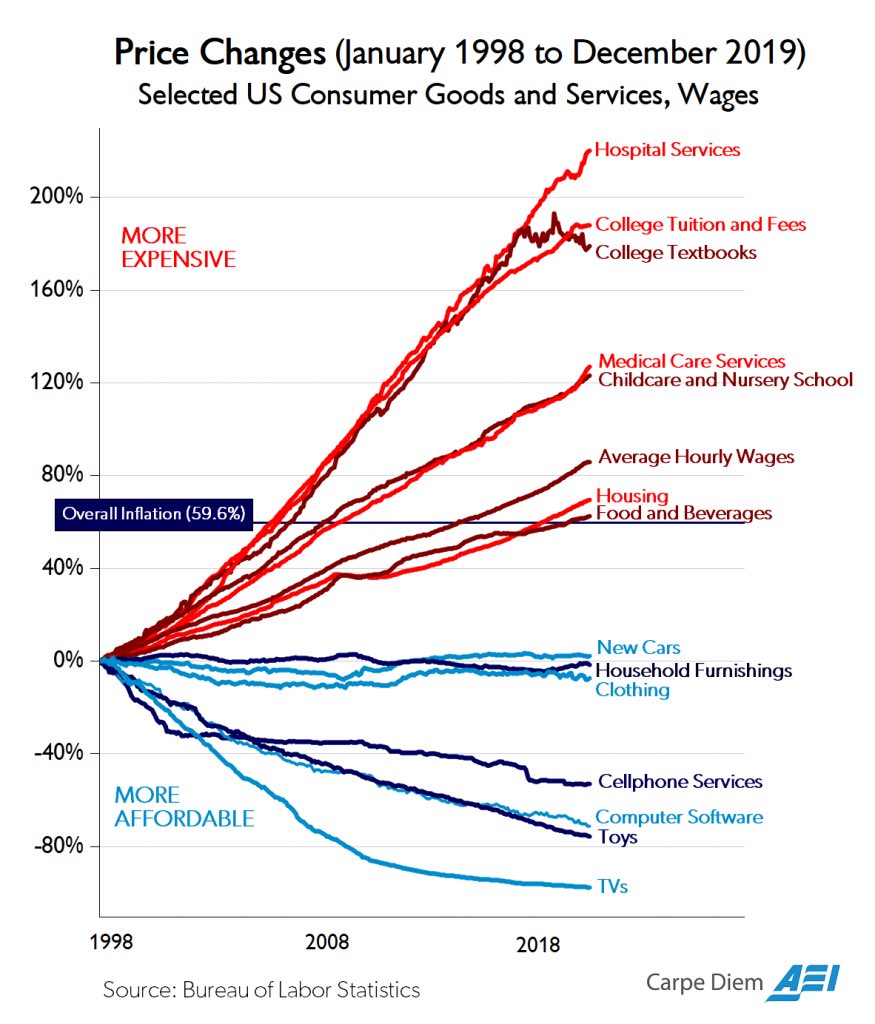
Productivity gains due to technology are the largest source of deflation. $1 buys less today than 1993, but productivity gains offset that for many goods

Technology+transparent pricing+competition =magic

We just lack this in (much of) education, medicine, and construction https://x.com/HumanProgress/status/1368565855571808260

There’s no doubt that medicine has better outcomes today than, say, 1935. But most other technology-fueled productivity gains make products better AND cheaper…

Bureaucracy is a Regressive Tax

Originally posted as a Twitter thread on February 11, 2021


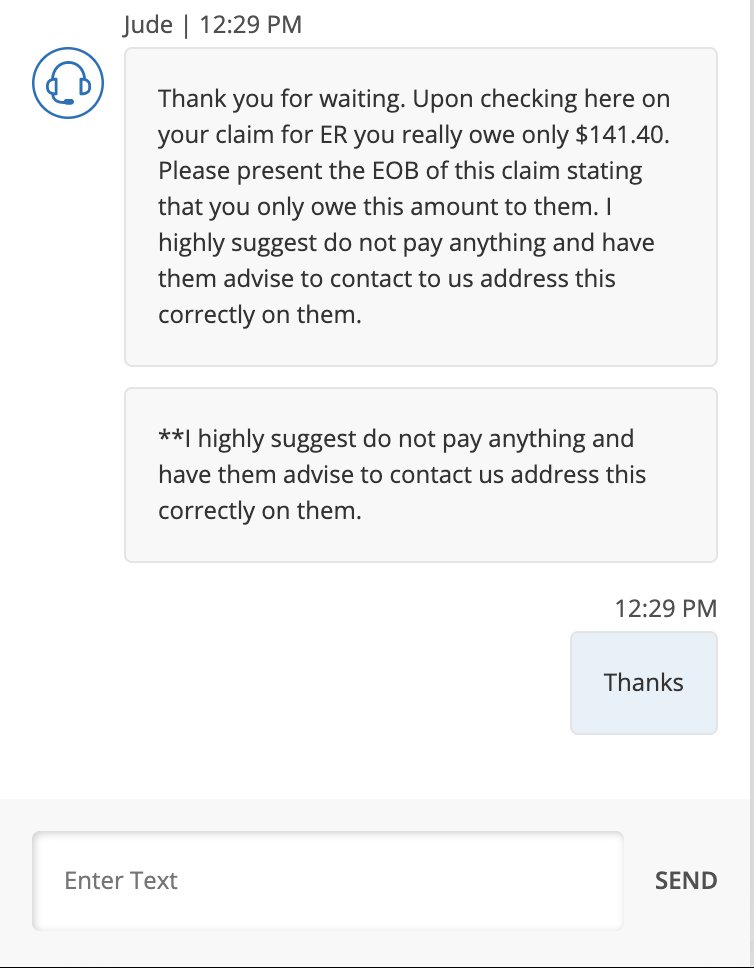
Bureaucracy – in government, the medical system, and more – is a HIGHLY regressive tax in that rich people can pay to solve problems, and the poor must use their time, miss work and lose income…and more.
This is why I love @DoNotPayLaw + @jbrowder1

This is not hyperbole…

I had to go to the ER a few months ago. My bill didn’t match my insurance statement. Insurance company tells me not to pay. Provider threatens to report me to collections. This consumes HOURS of times and damages credit, making borrowing (and living!) more expensive

I am lucky to be able to say “it’s not worth my time” and do just fine — either pay it or deal with the consequences, which are insignificant to me. Millions cannot.

Directly Accessing Government: Fintech’s Final Frontier

Originally posted as a Twitter thread on January 15, 2021


The Internet has many legacies, but its greatest one is disintermediation — taking out the middleman. And the biggest ever disintermediation — of financial services — is coming to an app near you. This is where government should focus:
https://a16z.com/2021/01/15/fintechs-final-frontier/

Governments have monopolies on money and law-enforcement (only the gov’t can legally do those two things, crypto aside!). But there’s almost no way for consumers to interact with central banks! Just like there was no way for consumers to buy airplane tickets w/o travel agents

Want to send a wire? Get access to your PPP loan? Earn interest from the Fed (as banks do via “Interest on Excess Reserves”)? Got to be a bank. Consumers have to go through a travel agent, versus direct. Why can’t your SSN or FEIN be an “account” that can send/receive money?

This is not arguing for “postal banking” or any DMV-style nationalization of banking — which is a terrible idea. But monetary and fiscal policies that require intermediation are simply not as effective as “going direct” — which the internet and fintech allow.

Take interest rates and monetary policy in emerging markets. The Central Bank can/does hike rates to prevent capital flight. Doesn’t really work because banks “intermediate” and don’t provide that rate to consumers…who sell the depreciating currency in favor of USD/EUR.

In many emerging markets, banks hardly make unsecured loans to consumers. They just take deposits and loan to the government. Which is bad for the government, bad for their citizens, bad for their economy, bad for their currency.

More here. Fintech alone can’t solve this — but every single Central Bank should be thinking: how do I go direct? And I would love to see companies and tools (painful as the gov’t “sale” may be) that help facilitate this:
https://a16z.com/2021/01/15/fintechs-final-frontier/

High Salaries and Expensive Real Estate

Originally posted as a Twitter thread on December 02, 2020


Are high salaries the *cause* or *effect* of expensive housing? In NIMBY-prone areas (hello SF!) where supply is artificially constrained, companies anchored to the geography need to pay a high enough wage to attract talent, which then anchors rent/mortgage payments

Prediction: the current remote-work salary adjustment concept, the Marxian “from each according to his abilities, to each according to his location,” will not last. Why pay people more simply because they choose to live in a more expensive area? Pay them more if they are good!

So looking at lower-cost areas, and paying a discount to prevailing SF wages to get to “parity,” is a crutch of sorts to get to a more sensible end-state: pay a prevailing wage to get the talent. And then let’s see what happens to housing prices…

Home prices will always be based on supply and demand, of course – WFH doesn’t change economics. But “desired location to live” is going to drive that more than “high wage employers” — where those wages could conceptually plummet given increase in supply (global worker pool)

How IPOs Work

Originally posted as a Twitter thread on August 28, 2020


There’s been a lot of misinformation about IPOs — particularly around the narrative of “intentional underpricing” and subsequent IPO pops / “money left on the table.” IPOs aren’t perfect, but the problem isn’t the pop — a sideshow caused by quirky supply/demand imbalances.

The things to fix are aggregating the most demand, blurring the lines between private and public for a seamless transition to being public, and more thoughtful lockup releases, while also ensuring that a company is sufficiently well capitalized.

Many are celebrating SPACs and Direct Listings, which both have their place as valuable tools, as the “death” of the IPO *because* of a misunderstanding of what causes a pop. A price without a quantity is not a price: block sales happen at a discount, M&A at a premium.

But today, an IPO remains the best way to raise a large block of primary capital. It *should* improve, but the way to measure improvement is not pop against low float, but on aggregation of the most demand (*all* investors) in a way that sufficiently capitalizes the company.

There’s a lot more data and examples to back this up in this piece which @skupor and I put together. It’s long but hopefully shows exactly the dynamics and game theory in play around how a company goes public and what’s in a price:
https://a16z.com/2020/08/28/in-defense-of-the-ipo/

Fiat Money Anniversary

Originally posted as a Twitter thread on August 16, 2020


Today is August 15, the 49th anniversary of the de facto end of Bretton Woods, creating the fiat currency world we know today. Bitcoin’s birthday is October 31, 2008, but it has a spiritual secondary birthday of today — the widespread beginning of fiat money.

Until August 15, 1971, dollars were backed by gold at a fixed rate of $35/ounce. The dollar was the world’s reserve currency, and underpinning this reserve was this gold backing. Any foreign government could convert their dollars to gold.

At least, they could *conceptually* convert dollars to gold. In reality, by 1971, the US was “writing checks” (printing dollars) that the gold vaults couldn’t “cash” (or metal!) — a run on the gold, so to speak, would metallurgically bankrupt the vaults.

Before 1971, there really wasn’t a notion of purely fiat money with floating exchange rates — or at least not one that was taken seriously. The US was the manufacturing center of the world and dollars were the needed, default currency, backed by gold.

Nixon delivered the following speech on August 15th, announcing this change and codifying it with Executive Order 11615, closing the gold window. It never opened again.

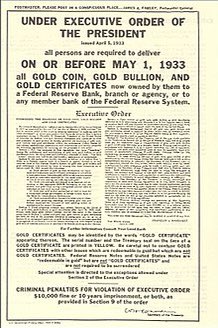
What’s really fascinating is that because gold backed the entire monetary system, owning (non-jewelry) gold was *illegal* from 1933 until 1974. Gold was the settlement ledger for currencies, the true reserve, although the more easily portable/official reserve was the US dollar.

There are many things about a gold standard that make little sense (eg, the supply can increase with a newly discovered mine in South Africa or Russia!) and its inflexibility provides fewer tools for dealing with economic shocks like the Covid one we are dealing with now.

But more so than anything else, gold represented a de facto store of value — and this was *codified* into the financial system until 1971. Seeing as gold now trades at >$2000/ounce, vs $35/ounce in 1971, there’s clearly a divergence between fiat and gold.

And yet gold is: heavy, next to impossible to send around the world (think checks are bad?), hard to divide, and hard to verify. This was NOT a problem before 1971 because the US dollar was none of these things and yet had the backing of/convert ability to gold!

This is why I consider today to be the second birthday of Bitcoin. From 1971-2008, there really wasn’t a financial instrument that had “fixed” dimensions, a reputable store of value but with an easy form of settlement/transmission, which the US dollar until Aug 15 provided.

Given how long it’s been since gold was a reserve currency, and how antiquated gold vaults seem, Bitcoin — for all its flaws — is a logical and superior successor. Particularly given how much money is now being printed by every government, kept in check by…nothing.

Origins of Visa (and Payment Networks)

Originally posted as a Twitter thread on September 18, 2019


September 18th marks the 61st anniversary of the most valuable network effect of all time: the credit card. How did we get here? Read on. And read @opinion_joe ‘s book “Piece of the Action” for more…

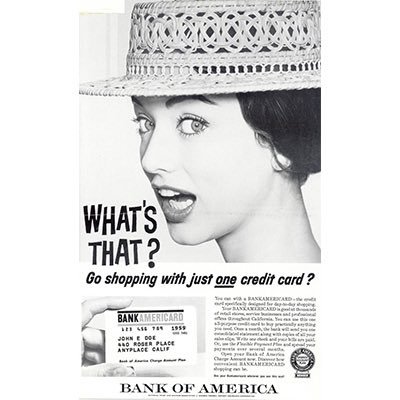
The epicenter of the revolution was Fresno, California. Facebook started with the contained network of Harvard students; the humble credit card started with 60,000 people in Fresno and a prominent company called Bank of America, then a California-only bank.

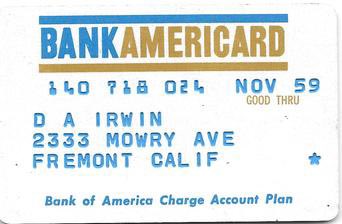
There was no application. 60,000 people just got a BankAmericard in the mail on September 18, 1958, ready to use.

There were “charge cards” like Diner’s Club before the BankAmericard Fresno drop, but there was no “credit” being extended. And you could go to a bank and get a loan, or get an installment loan for a specific purchase, but in person.

The credit card came out of Bank of America’s corporate think tank, called the “Customer Services Research Department,” run by a 41 year old man named Joe Williams.

Consumers were used to paying on credit, but each line of credit was either specific to a merchant (e.g., Sears), or a burdensome process requiring a new loan (in person) from the bank.

Williams thought the credit card — a multi-merchant product — would fix that. It really had two purposes: convenience and lending.

Fresno at the time had about 250,000 people, and *45% of all Fresno families* were Bank of America customers.

Credit card fees were set at 6% for merchants, and consumers — who just randomly got this card without applying — got between $300 and $500 in instant credit.

The brilliance of the 60,000 person drop is that Williams had effectively started with the chicken, in the classic chicken/egg cold start problem. On day 1, cardholders simply *existed* which permitted BoA to sign up all merchants who didn’t have existing proprietary programs

So Williams started in a seemingly random, highly concentrated town, immediately enlisted existing customers, and focused on fast-moving, small merchants — not the giants like Sears — all backed by a massive advertising campaign.

More than 300 merchants in the city signed up, the first being Florsheim Shoes (still around!).

Within 3 months, BoA was expanding concentrically — to Modesto to the north and Bakersfield to the south, and within a year San Francisco, Sacramento, and Los Angeles. Within 13 months of Fresno, there were 2 million cards issued and 20,000 merchants onboarded.

After the Fresno drop, other banks followed. Chase Manhattan was 5 months later on the east coast.

Williams assumed that collections would be a breeze, that late payments would never cross 4%, and that existing bank credit systems would work. Instead, less than 2 years after Fresno, Joe Williams quit BoA due to a series of disasters. The credit card almost died then+there

Delinquencies were over 20%. Fraud was out of control as criminals figured out how to replicate cards. Merchants (harbinger of things to come) hated paying 6% and the first battles over fees began. Some of them stole from the bank or customers, too.

And more broadly — and this is now illegal — simply giving people cards without having them apply, and without them understanding the consequences of wanton spending, created far more bad debt than BoA had ever seen (on a customer % basis).

The huge losses and mounting pressure almost caused BoA to kill the card program altogether. The founder was ousted. Instead, BoA persevered, and just a few years later BankAmericard turned a profit and grew like a rocketship, transforming how people pay and borrow.

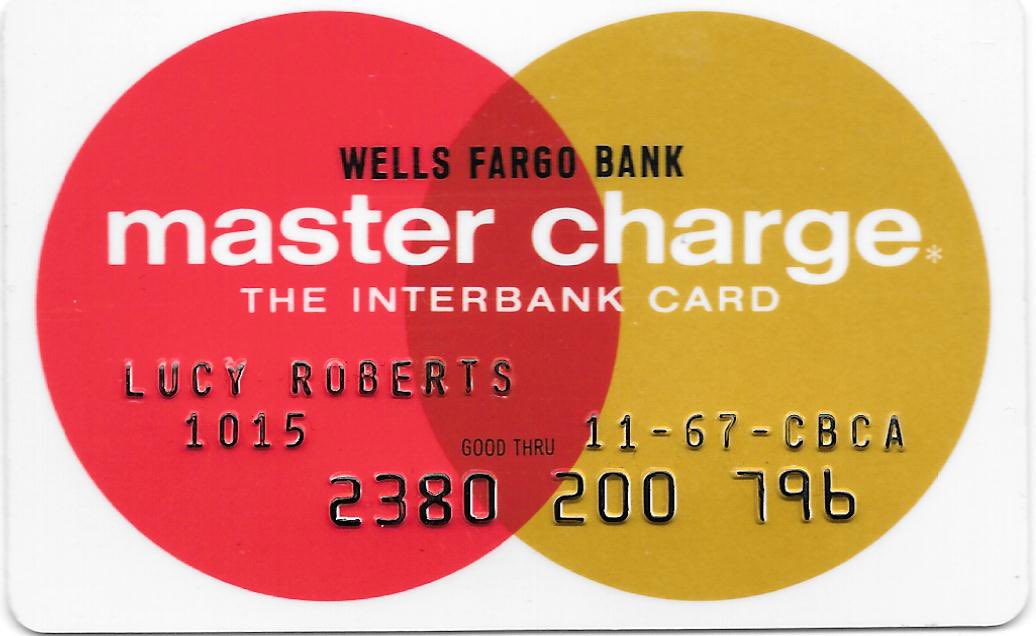
Eventually, BankAmericard became a non-profit consortium called Visa — uniting many banks with competing credit cards. A competing consortium called MasterCharge, later MasterCard, did the same with another set of banks.

Credit cards and payment cards are arguably the most valuable network in the world, with at least $1T of publicly traded market cap (Visa, MasterCard, the banks who issue them, etc)…all starting off in a little town called Fresno, on a random day in September of 1958.

More on how credit cards work today and their history:

And how all of this — and the creation of this powerful network effect — has an impact on how I think about crypto (old tweetstorm from last year): https://x.com/arampell/status/1042226753253437440?s=21

FIN