Category Archives: Payments

Digital Payments are Going to REALLY Grow

The payments market is going to massively expand over the next decade because:

1. ANYONE can now build anything digital — AI code creation means exponentially more digital SKUs that can be created and, of course, paid for. We are in the very early innings here. The gating item is just human creativity. It’s not just software. Can you whistle or come up with a tune? Then you can compose music (no need to learn to read music or know music theory). Can you think of an idea for a movie? You can just…create one. Etc.

Combined with:

2. Almost anything that was “payroll” (paying PEOPLE) can now be “payments” (paying for THINGS). For example: “Hiring an assistant” or “hiring a paralegal” (both payroll) -> paying for a SKU.

We don’t think of ADP or Paychex as payments companies because they aren’t; they are payroll companies. Paying people != paying things.

But more tasks/outputs that were once only available through “paying for people” now become available for purchase on a credit or debit card. This is already starting to happen and accelerate.

And of course, this is not zero sum! Much of this is “everything to the right” of the supply-demand equilibrium point, where there’s conceptually high quantity demanded at a very low price where there’s heretofore no (human) labor supplied. Lots of people will want to purchase a SKU who were unable to hire a person historically.

How AI Will Erode Bank Profit Pools

Originally posted as a Twitter thread on May 17, 2023


I’ve often written about how friction/inertia preserves giant gross profit pools in financial services.

The missing link to change this is what I would call a “consumer signup RPA” — which AI can do

RPA: Robotic Process Automation. Take an “API-less” process and “just do it”

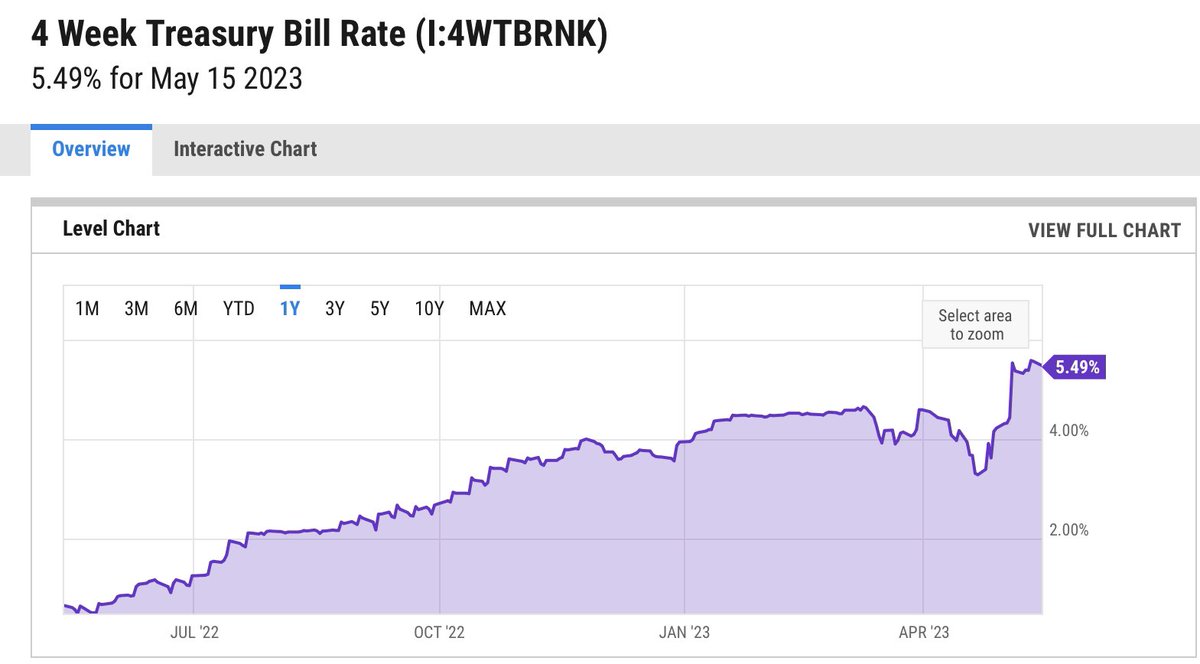
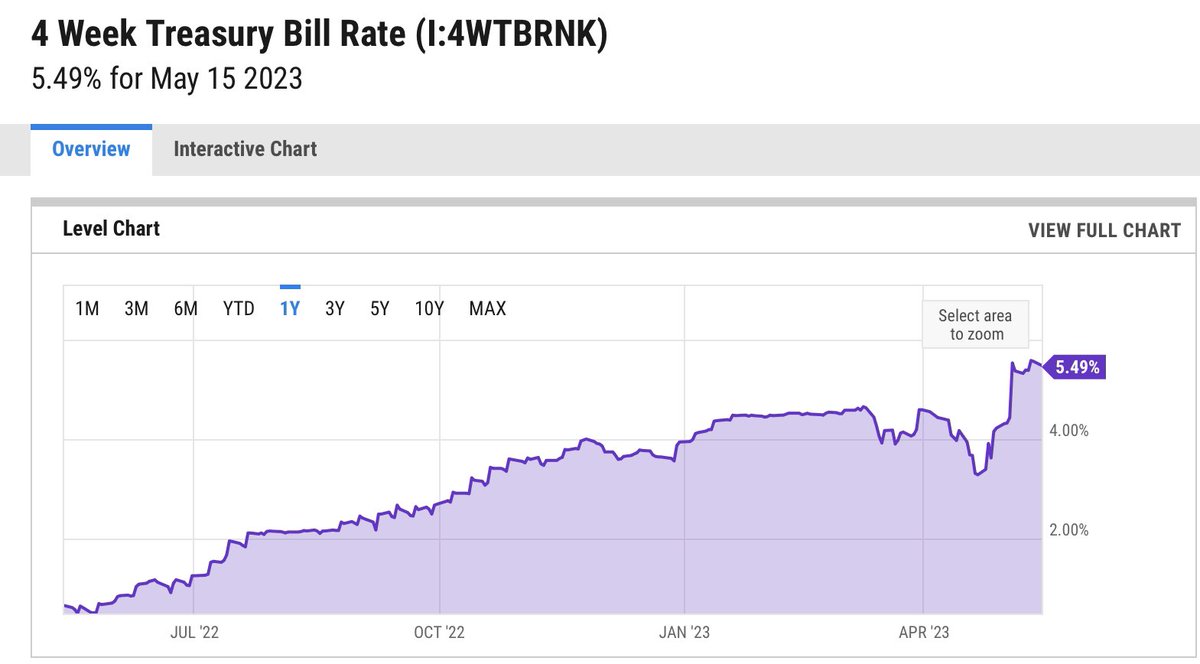
Nowhere is this more true than depository accounts. A 4 week Treasury Bill from the *US Government* pays 5.49% and a 1 year Treasury Bill pays 4.73%.

How much does the biggest bank in the US pay for the same…which of course is insured by the same US Government for ONLY up to $250K?

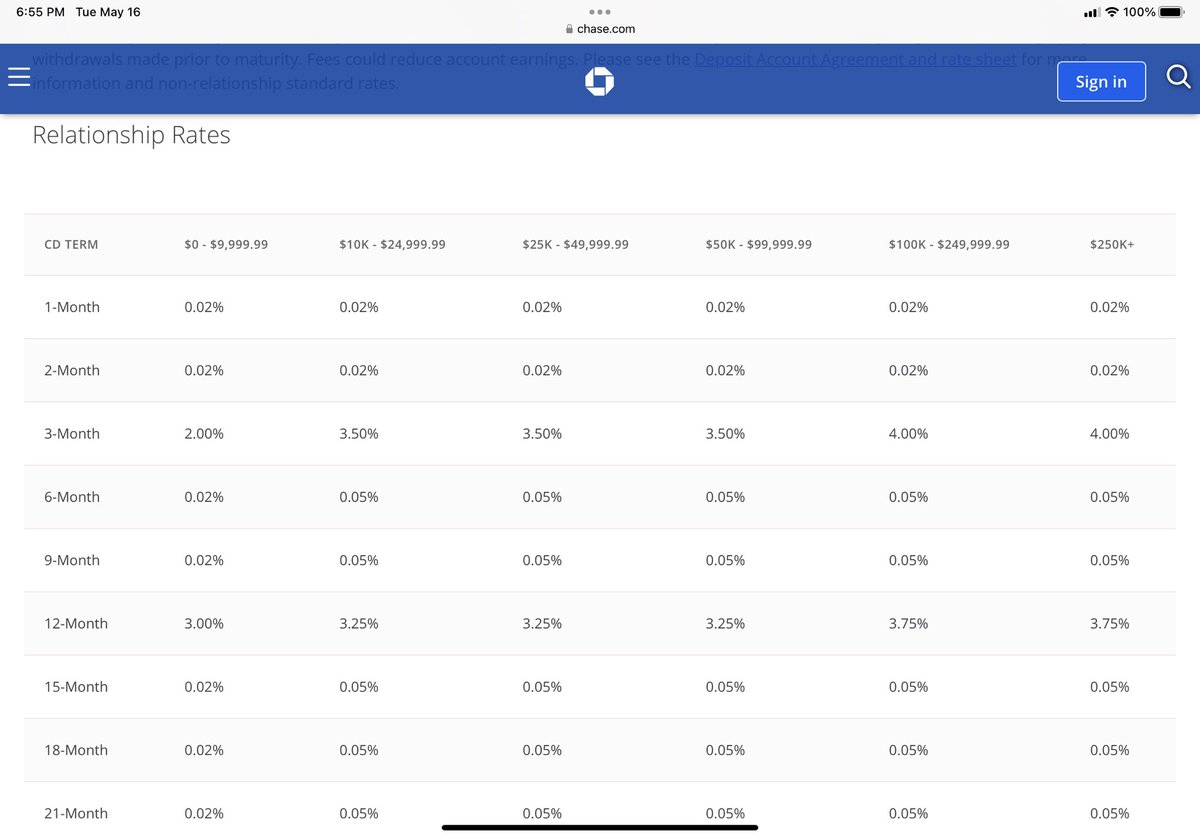
.02% and 3%, respectively…for a higher level of risk. You’d have to be insane to choose a CD with Chase vs a T-bill.

So WHY do consumers leave excess money or buy CDs with Chase? Three reasons:
1. They don’t know what yields are (Chase takes advantage of them)
2. It’s too hard to buy T-bills directly (try signing up for http://treasurydirect.gov)
3. It’s too hard to move money back and forth

The promise of Fintech (and in particular, tools like @Plaid) is that friction/inertia will no longer be an impediment towards consumers switching from the worst services to the best services.

Round One of this was “tools to read” information — let’s import your credit card purchases, or read your checking account number in.

Mobile Wallets have the promise of being a platform for financial services (the App Stores equivalent = financial products). I wrote about this back in 2016:

https://a16z.com/2016/04/25/digital-wallets-fintech-platform/

But AI is also going to transform this, because the incredibly painful (consumer) process of, say, buying short duration T-bills directly from the US government could now be…very easy. Or the seamless movement of money to meet bill pay needs and invest excess cash.

And the missing link for all of this has its technological answer in the form of Generative AI. AI has been used extensively in fintech, but primarily for “scoring” and “approving” things — speeding up backend processes.

But Generative AI is the mirror image: help automatically answer things on behalf of a consumer, bringing a generative robot to a 1990s workflow from a bank (or government) that’s unlikely to embrace, say, RESTful APIs.

And it’s not just about seeking higher yield or lower debt cost, which are particularly salient in today’s higher interest rate environment. Friction/inertia also keep people on their metaphorical financial Flip Phones vs meaningfully better products and experiences

Gen AI also has cost-saving, transformative opportunities for the big guys, too. But if they keep ripping off their customers, they’re finally going to start paying the price as “assistants” make breaking up easy to do…

The Future of Payments…is Red?

Originally posted as a Twitter thread on January 12, 2023


The Future of Payments…is Red?

What could disrupt Visa/MasterCard/Amex? How might a new payments Goliath start?

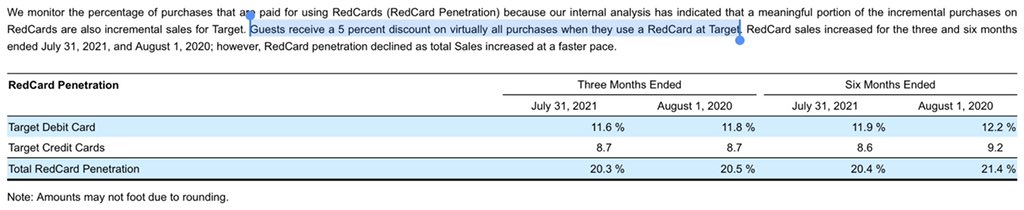
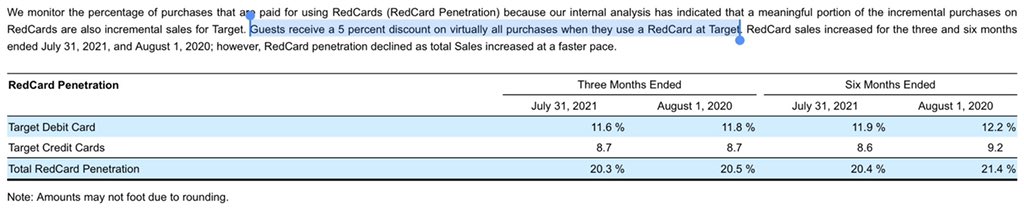
Let’s talk about the Target Red Card. Target did >$100B in revenue last year, 20% of which happened on its own cards:
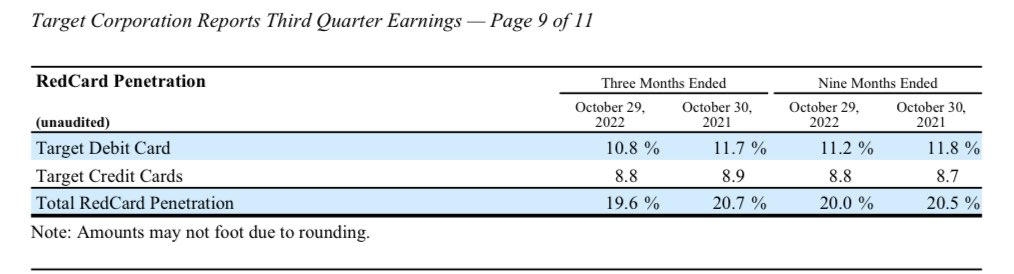
You’ll see “Target Debit Card” and “Target Credit Cards” (source: Target 10Q)

Many retailers have what are known as co-branded credit cards. Target’s is issued by TD Bank; Amazon => Chase; American Airlines => Citi. Some retailers make more on cards than on their core biz!

But what is extremely interesting, and has compelled me to scan every Target 10Q for years, is the Target Debit Card, which makes up over 11% of Target’s entire revenue. The Debit Card just pulls money directly from your bank account — allowing Target to not pay interchange.

It should be self-evident why this is important. Look at Target’s Q1-Q3 revenue last year — $76.6B sales, $2.4B pretax income. Imagine every Target transaction was credit card (not the case) @ a blended 2% fee => $1.5B in incremental income if shifted to ACH, 63% more profit!
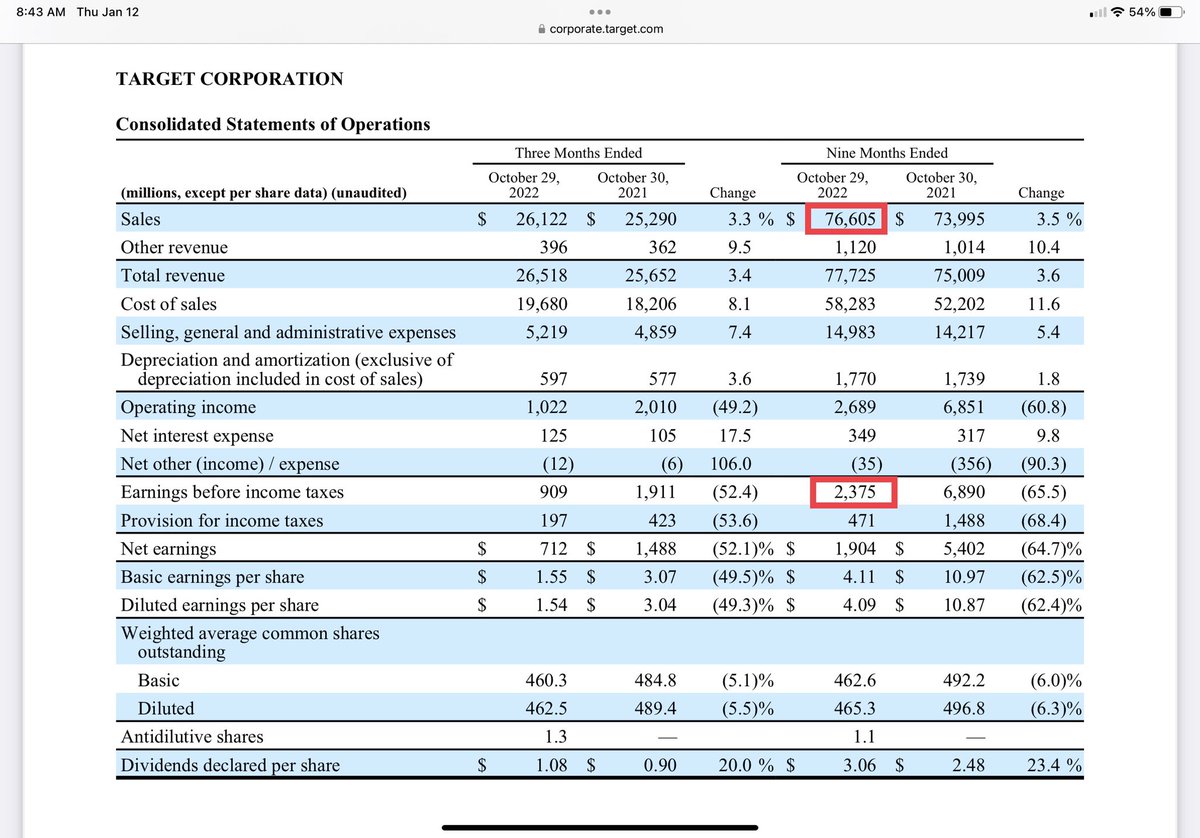
Target has impressively shifted 20% of their *entire* sales to their own cards. The only “illogical” part of this is that to save 2%, they are…giving up 5%, albeit to the user directly in savings at Target, which is the primary benefit of Red Card.
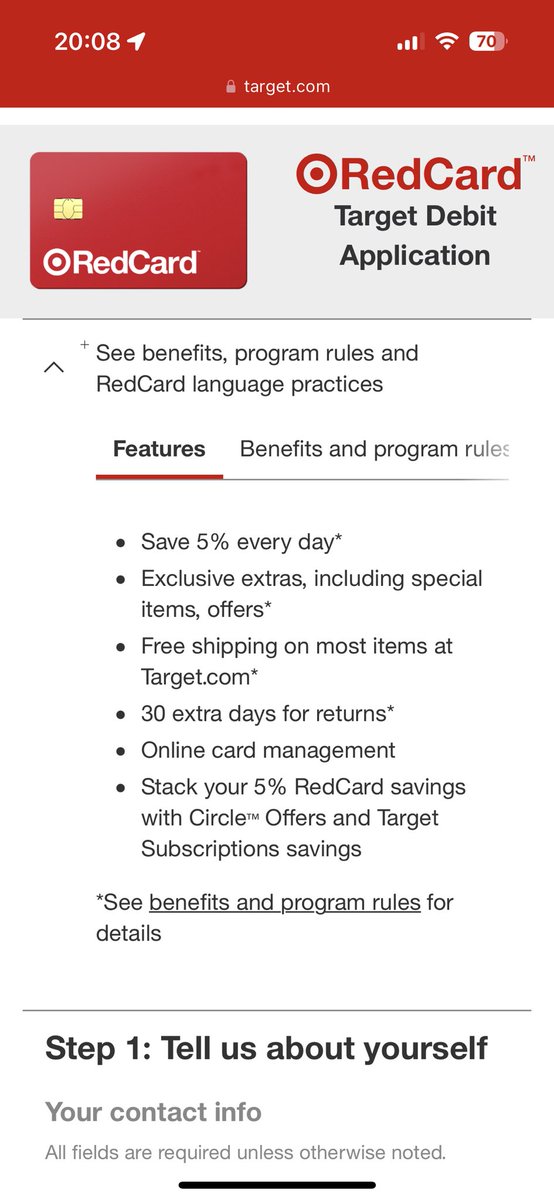
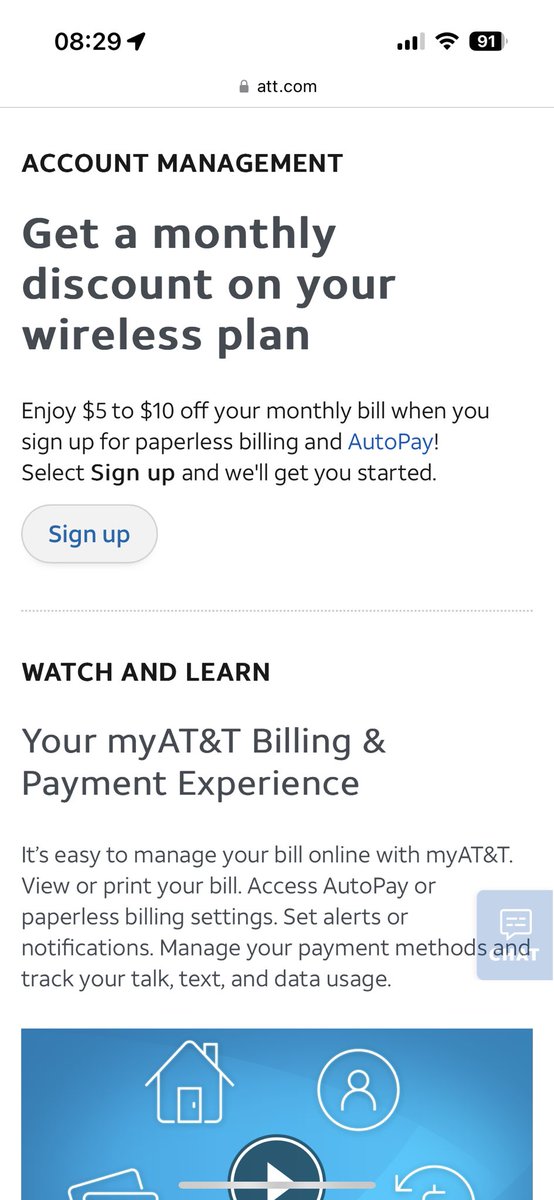
Target isn’t an outlier here. Most “frequent interaction” or high frequency billing companies do the same. Here’s Verizon and AT&T, which give you substantial savings monthly for moving your bill pay off credit cards and to ACH (or sometimes debit cards, given lower avg fee)
Image

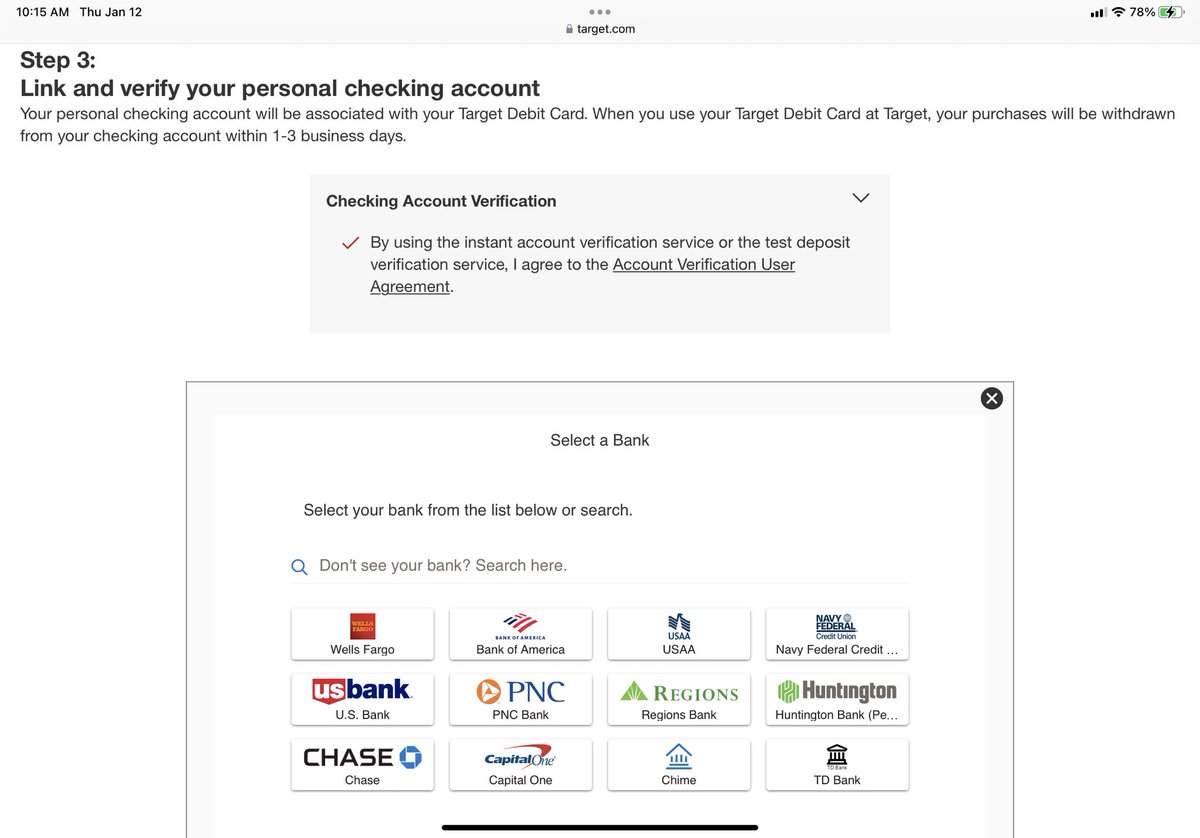
When you sign up for a Red Card debit card, you link your existing bank account and let Target pull funds from it. It’s just a “router” to your existing bank account.

Image

Image

So effectively the Debit Red Card is an abstraction layer around payments, mapping a POS transaction at a Target store to a subsequent low-cost ACH debit from an existing checking account.

This is harder than it seems. For anyone in Credit/Debit payments, you might recognize the “verbs” of payments: Authorize, Capture, Settle, Void, Credit. Not to mention things like chargebacks. ACH has fundamentally different “verbs” and Red Card is a Rosetta Stone of sorts.

Why is this potentially the future of payments? For one, tools like @Plaid have made the connection extraordinarily easy. You don’t have to remember your bank account number or “routing code.” Just log-in to your bank account ONCE and you’re done. Consumers are used to this.

Every “high frequency biller” should be doing this, and experimenting with pricing and benefits. Albertson’s, Netflix, Walmart, Costco, Safeway, Microsoft, Disney, etc. It’s likely trillions of $ of “frequent merchant-consumer interaction” payments that *could* shift.

While I think Target has been smart to roll this out, it seems paying 5% to save 2% (and justifying it by showing increased engagement, which likely reverses cause and effect / shows sampling bias!) is not smart. Better to provide one-time benefit to switch, I would think.

To wit: Log-in to Netflix. See a message: “Switch to direct debit, get $2 off this month. Just click here!” -> long term savings of $100M+/year to Netflix in North America alone based on projected interchange costs.

The “hard” part of this, not surprisingly, is software. What’s needed is “Red Card as a Service” for retailers — and in particular, “frequent interaction” retailers. This would likely sit alongside the existing payments stack, or maybe above it…

Because ideally the one team (at the merchant) that handles dispute resolution/chargebacks, or refunds, or store credits…doesn’t care about the tender type. All of that is just abstracted away into whatever tools they already use.

The other thing that’s needed is a much better onboarding experience. Frankly it’s shocking that Target is at 20% given how complex they make the onboarding and how much information they gather…better software/CX/UX would make it much more compelling.
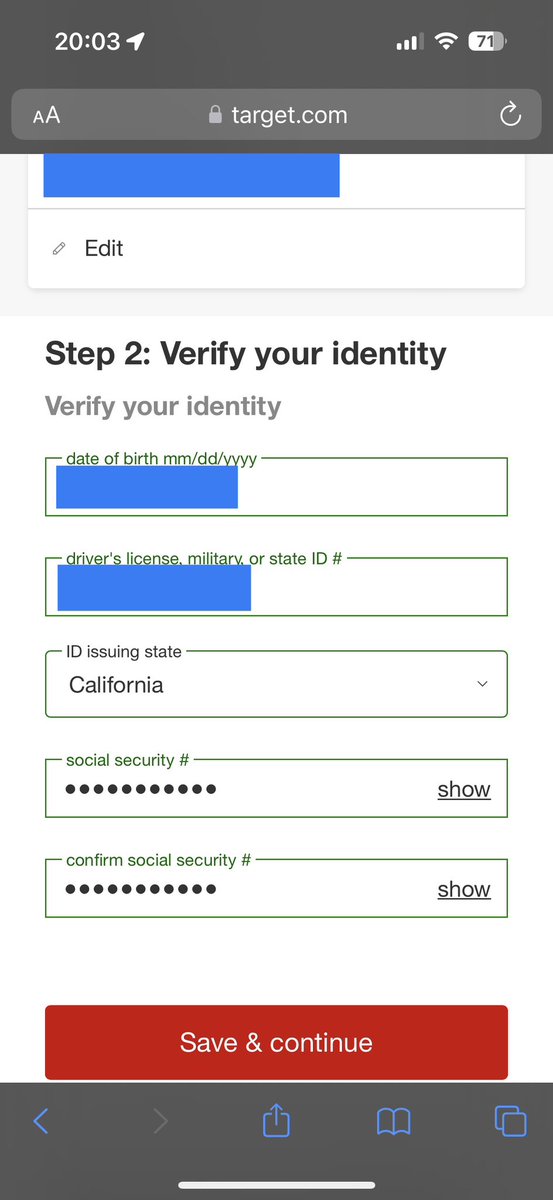
The truly magical experience would be what I would call the “Customer IQ Test.” An automatic mapping of their credit/debit card to their *existing* checking account could be done in the background…credit bureaus and other players already have this.

The IQ Test would thus be: “Do you want to save $5 right now by switching your Visa Card ending in 2655 to your Bank of America account ending in 7688? Click Yes to confirm and your’e done.”

Because fundamentally, the reason “Red Card as a Service” hasn’t taken off in the past is because of the twin moats protecting so much of banking. Inertia (hard to switch) and Rewards (merchant fees fund customer benefits, with banks in the middle). Inertia is now decreasing.

There are other huge benefits to a “frequent interaction biller” introducing this. E.g., “Pre-pay $1000 of spend at Safeway for $950” —> ensures that that person buys all of their groceries at Safeway. Or maybe a quasi subscription.

Not to mention all of the other “fintech” cross-sells available if you have a link to the customer’s checking account and a dominant/frequent relationship with them.

There’s a good question of how many frequent billers does the average customer have, what merchants might this make sense for, etc. But in general, the tools are coming/exist to make this easy, fast, and low-friction…and the economic incentive for merchants is MASSIVE.
BNPL and “Incumbent Does X”

Originally posted as a Twitter thread on June 07, 2022


“BigCo X offers installment payments on existing payment rails” is not really competition to a wide set of use cases that Buy Now, Pay Later enables, because without allowing the merchant or manufacturer to lower the interest rate or extend the term, it doesn’t change behavior

For example, Amex has offered *for a long time* a product called “Plan It” which works great and allows any purchase to be turned into a set of installments.

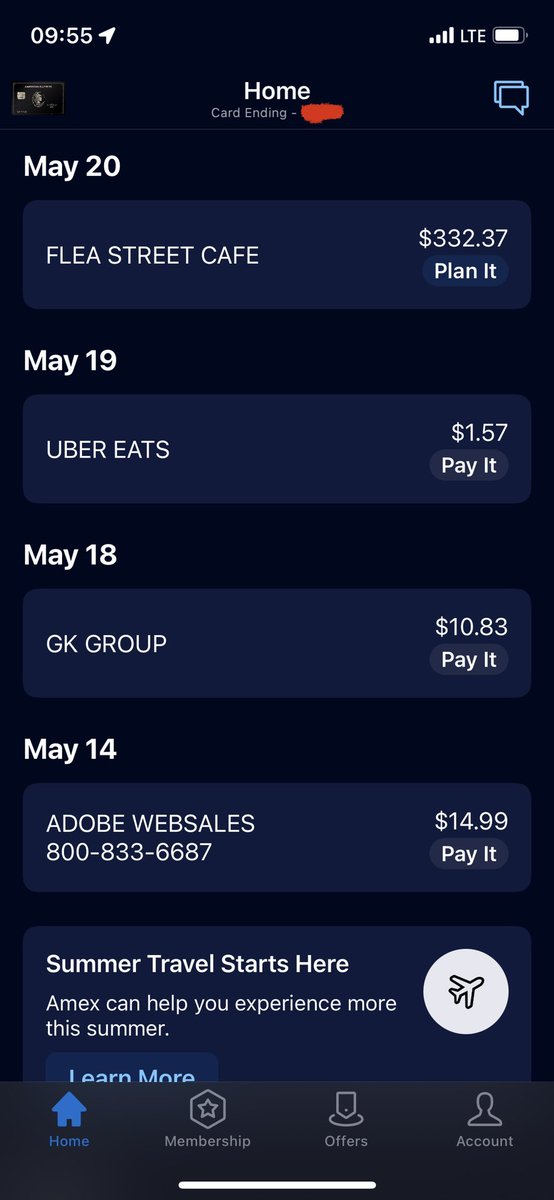
Here’s my Amex bill

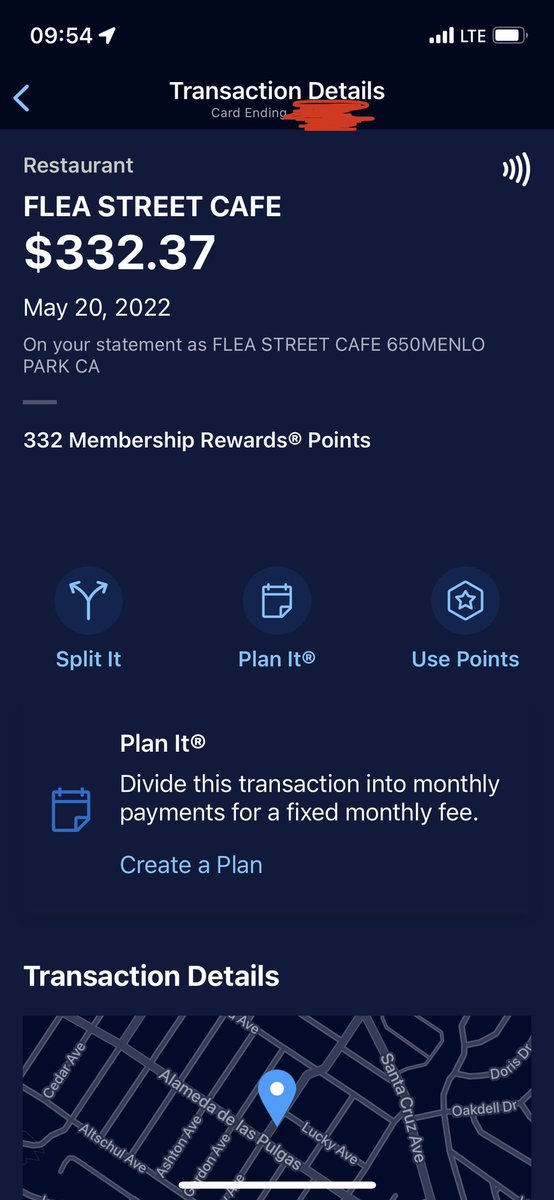
I click on “Plan It” next to my Flea Street payment (great restaurant btw) and can either Split It (with friends, using Venmo or PayPal), Plan It (turn into installments), or even Use Points

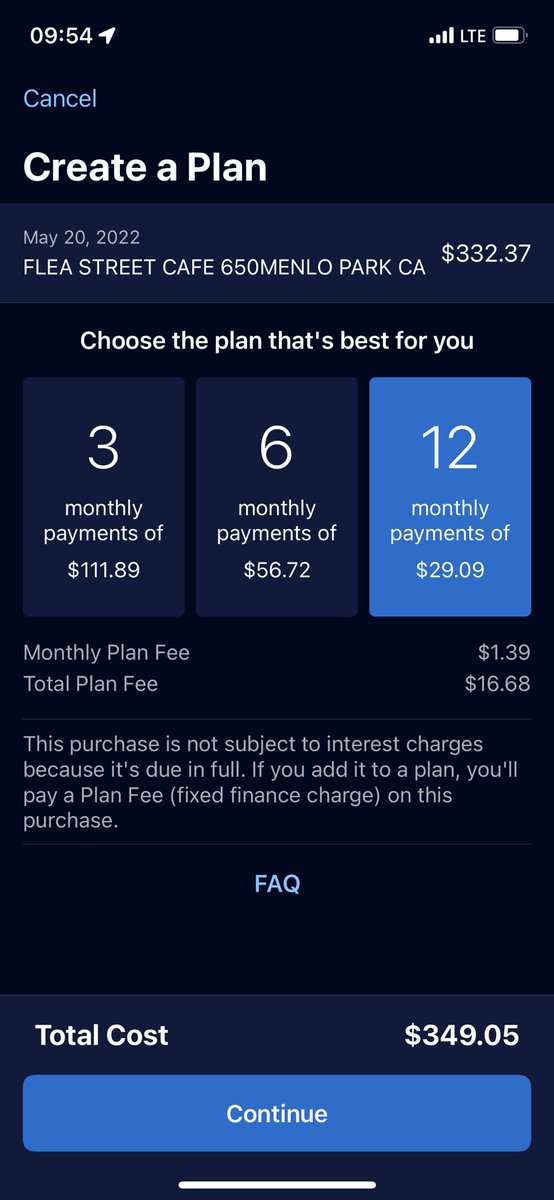
I’m going to use Plan It, which offers me several installment plans — 3, 6 or 12 months. No interest but a monthly “plan fee”

This works great, but to the point at the beginning — it misses the fact BNPL is a *promotional tool used by manufacturers and merchants to sell more stuff* — eg, Toyota often offers and *advertises* 0% financing to induce you to buy (promotion!)…not “post payment planning”

More on this from a thread I wrote in September 2021: https://x.com/arampell/status/1435692945387048964

ApplePay is awesome, and integrating installments to ApplePay makes sense, just like it made sense for Amex, above. But the “consumer + merchant + manufacturer” magic of BNPL happens when merchants/manufacturers can lower rates and extend terms to consumers…

…and can actually integrate those lower rates and extended terms into promotional materials in order to bring customers TO the checkout. It’s “too late” to first show this in the literal checkout line…which is why car manufacturers have run financing promotions for decades.

BNPL “done right” brings this same set of tools to any merchant and even any manufacturer (see long BNPL thread above on manufacturer-sponsored offers), helping unlock sales that otherwise would not happen

Payment Network Effects and Incentives

Originally posted as a Twitter thread on September 27, 2021


There have been many attempts to topple payment network effects by paying users to switch. This almost never works, because (a) more people are motivated by convenience than small amounts of money, and (b) those motivated by money will suck up all the promotional budget ASAP

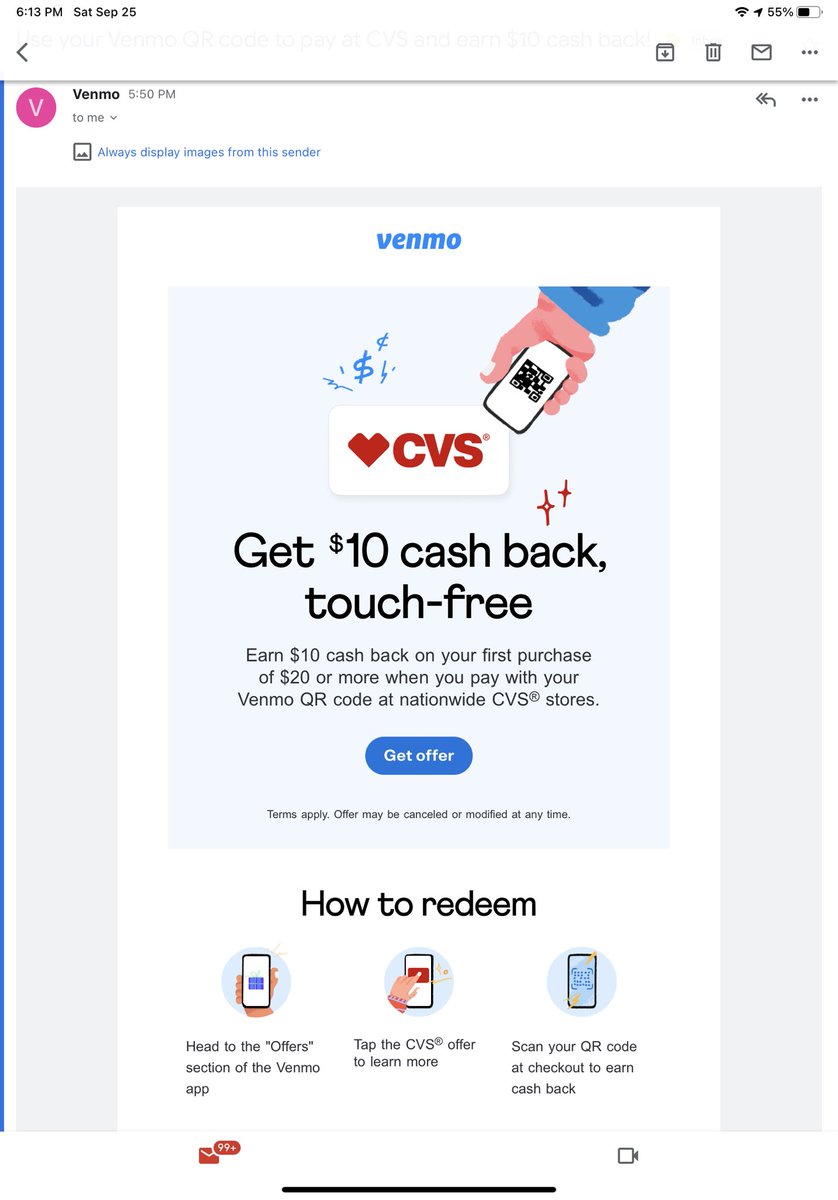
Good case study today is here, with Venmo, straight to my inbox. $10 of $20 at CVS! CVS doesn’t have 50% gross margins, so Venmo is almost certainly paying. But will “normal” people use this? Will it change behavior in a lasting way?

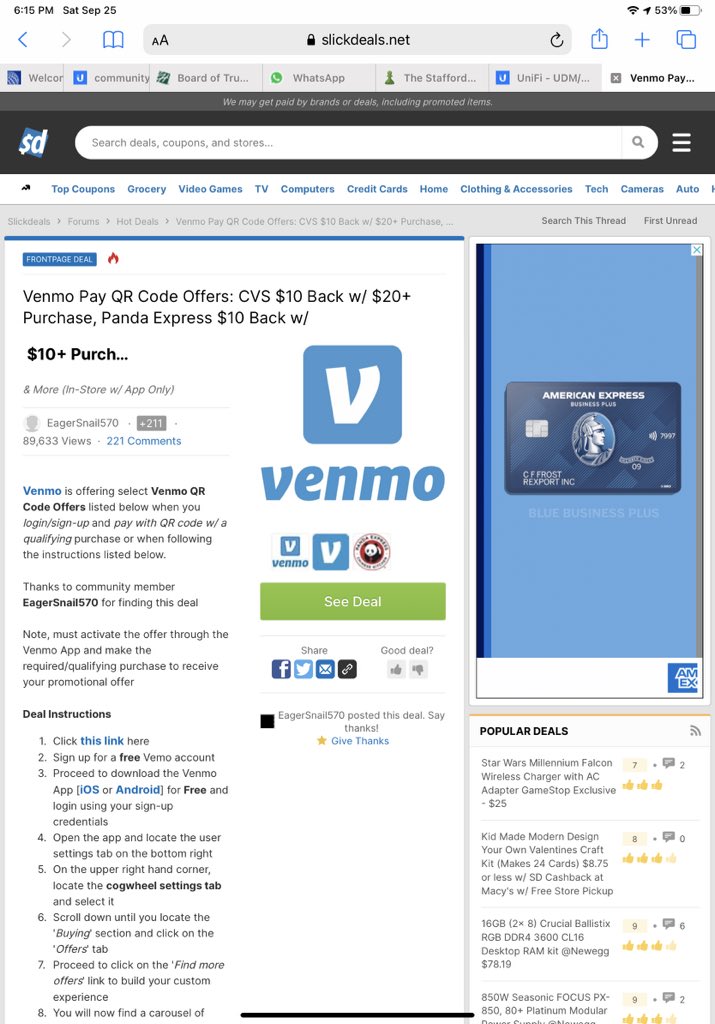
Whenever a promotion like this happens, the “deal hunters” of the internet rejoice! You can even buy a $20 CVS gift card for $10 + sell it on eBay for $15! See here, on Slickdeals…the promotion is capped (100M people can’t use it, that would be $1B!) and gets quickly depleted

PayPal did this with HomeDepot in 2012, in an attempt to jumpstart their offline business. https://www.wsj.com/articles/SB10001424052970203513604577145140658342670

Promotions aplenty (50% off etc), but it didn’t work…at least not in changing behavior. People (the deal seeking people!) pillaged the promotions and moved on.

A good rule of thumb: a new technology will take off “automatically” if it’s 10x better and 1/10th the cost. Payments offline just work, hard to make them 10x better (vs online, where many opportunities since people don’t memorize their credentials…lots of abandoned carts)

So then there’s cost, where you generate merchant excitement with anything that’s 1/10th the cost, but then fail to persuade consumers to adopt it since they lose their rewards. I often describe interchange as a problem of concentrated benefit (banks/V/MA) and diffuse costs…

Saving 2% on your $5 purchase is simply not compelling enough to sign up for a new payment instrument, or switch payment instruments, even though repeated enough times it’s real money. And the merchant might simply try to keep the savings, versus pass on to consumers.

Look at Target. ~$25B in sales, if this were all credit @ ~2% (it’s not) that would be $500M in fees, or a 20% bump to operating income if they eliminated it. Target has something called their RedCard, which now accounts for >20% of sales by…providing 5% (!!) discounts

So Target *did* switch 20% of people over, which is impressive — but would those people stick if the 5% rebate went away? Maybe…but probably not? (NB: Target made $172M last quarter in a profit sharing agreement with TD for the Target Credit Card)

It *is* valuable to become (and pay for) the default payment in a new wallet with repeat usage that’s “set it and forget it.” Uber, Starbucks, United, Amazon…all have “wallets” with stored value, and credentials, that could theoretically be used elsewhere (e.g., AmazonPay).

The reason I find BNPL interesting is, as I stated here, the ability to produce a parallel network that yields more sales and customer utilization “organically”:

https://x.com/arampell/status/1435692945387048964?s=21 https://x.com/arampell/status/1435692945387048964

Changing behavior is tough, and providing discounts and offers generally doesn’t generate the lasting behavior change companies want. Google learned this lesson with Google Checkout, Visa with Visa Checkout, MasterCard with MasterPass, etc.

13/ So the opportunities and questions are: can you *in a lasting way* appeal to convenience vs cost? If so, a one-time incentive *might* be just fine. Otherwise — it’s probably wasted ammunition against the impenetrable fortress of interchange.

Why BNPL is an Early Threat to all of Payments

Originally posted as a Twitter thread on September 08, 2021


Why is “Buy Now, Pay Later” (BNPL) an early threat to trillions of dollars of market cap – Visa (almost $500B), MasterCard ($350B), card issuing banks, acquiring banks/services (Fiserv, FIS, Global Payments, etc)?

2/ Behind every card transaction there are FIVE parties: consumer -> issuing bank -> network (V/MA) -> acquiring bank -> merchant. The middle three get zero data on what items (“SKUs”) are being bought. Short video I made here:

BNPL makes no sense for, say, a $5 transaction at Walgreens. But do you want to get a 2 meter long paper receipt which you need to return that $5 item? Because of the architecture, there’s no way for the issuer to receive that AND the merchant doesn’t want to give it to them

Because the issuer, network, and merchant acquirer do not see SKU-level detail, financing is just “cash advance” and “everything else”
What if a merchant wants to lower the rate for SOME items? (Sell more!) What if a *manufacturer* wants to lower it across merchants? No can do

This what makes BNPL so interesting. It’s a **parallel** network, with SKU level information, that bypasses the issuing bank, card network, and merchant acquirer. It’s just the consumer, the merchant, AND (this is exciting!) a new participant: the product manufacturer!

Let’s say Samsung wants to create an installment payment plan for their new $1000 phone (b/c lower pricing sells more stuff!). How do they do this at, say, Walmart and Target and Amazon? When everyone has a different kind of credit card and those issuers don’t see SKUs? BNPL!

Right now this parallel network is being used for installments / customized financing – the clear product-market need and the hole the “one size fits all because of no SKU-data and five parties” created. But adding SKU-level info and manufacturers is a HUGE unlock for more

There have been many attempts to build a competing payment network (eg MCX: https://en.wikipedia.org/wiki/Merchant_Customer_Exchange) but they failed to address a consumer need. BNPL has both consumer demand and merchant demand, albeit for a subset of transactions

Over time, there’s no reason why any transaction – even the $5 Walgreens one – cannot be run over the BNPL rails, which are signing up merchants and consumers at an aggressive clip. Rather than a financing carrot, it might be a discount carrot, a warranty carrot, etc

Walmart et al created MCX because they hate (understandably so!) paying ~2% interchange fees. But those fees are protected by a very very powerful network effect. Walmart tried playing chicken in Canada — cutting off Visa cards in 2016 — and lost:

https://www.cnbc.com/2016/06/13/walmart-canada-to-stop-accepting-visa-says-fees-too-high.html

So you really need a *ubiquitous parallel network* with *consumer benefit* in order to go cold turkey against the current oligopoly and not lose sales. BNPL is just that. Merchants already use it, consumers already use it, and SKU data passes freely.

As the mobile phone increasingly becomes the consumer wallet, and as merchant payment terminals become smarter, you can also imagine a world where payments (and loans) automatically shift to the lowest cost/highest benefit provider…more here:

Open-loop payments (the V/MA system) are one of the greatest network effects of all time, and have created and *captured* tons of value. The moat is immense. But BNPL and mobile wallets are creating the first market-based (not regulation-based) cracks in the fortress.
FIN

Origins of Visa (and Payment Networks)

Originally posted as a Twitter thread on September 18, 2019


September 18th marks the 61st anniversary of the most valuable network effect of all time: the credit card. How did we get here? Read on. And read @opinion_joe ‘s book “Piece of the Action” for more…

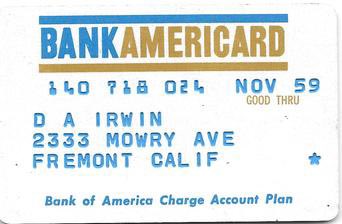
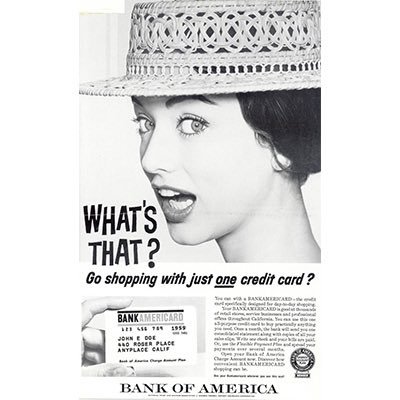
The epicenter of the revolution was Fresno, California. Facebook started with the contained network of Harvard students; the humble credit card started with 60,000 people in Fresno and a prominent company called Bank of America, then a California-only bank.

There was no application. 60,000 people just got a BankAmericard in the mail on September 18, 1958, ready to use.

There were “charge cards” like Diner’s Club before the BankAmericard Fresno drop, but there was no “credit” being extended. And you could go to a bank and get a loan, or get an installment loan for a specific purchase, but in person.

The credit card came out of Bank of America’s corporate think tank, called the “Customer Services Research Department,” run by a 41 year old man named Joe Williams.

Consumers were used to paying on credit, but each line of credit was either specific to a merchant (e.g., Sears), or a burdensome process requiring a new loan (in person) from the bank.

Williams thought the credit card — a multi-merchant product — would fix that. It really had two purposes: convenience and lending.

Fresno at the time had about 250,000 people, and *45% of all Fresno families* were Bank of America customers.

Credit card fees were set at 6% for merchants, and consumers — who just randomly got this card without applying — got between $300 and $500 in instant credit.

The brilliance of the 60,000 person drop is that Williams had effectively started with the chicken, in the classic chicken/egg cold start problem. On day 1, cardholders simply *existed* which permitted BoA to sign up all merchants who didn’t have existing proprietary programs

So Williams started in a seemingly random, highly concentrated town, immediately enlisted existing customers, and focused on fast-moving, small merchants — not the giants like Sears — all backed by a massive advertising campaign.

More than 300 merchants in the city signed up, the first being Florsheim Shoes (still around!).

Within 3 months, BoA was expanding concentrically — to Modesto to the north and Bakersfield to the south, and within a year San Francisco, Sacramento, and Los Angeles. Within 13 months of Fresno, there were 2 million cards issued and 20,000 merchants onboarded.

After the Fresno drop, other banks followed. Chase Manhattan was 5 months later on the east coast.

Williams assumed that collections would be a breeze, that late payments would never cross 4%, and that existing bank credit systems would work. Instead, less than 2 years after Fresno, Joe Williams quit BoA due to a series of disasters. The credit card almost died then+there

Delinquencies were over 20%. Fraud was out of control as criminals figured out how to replicate cards. Merchants (harbinger of things to come) hated paying 6% and the first battles over fees began. Some of them stole from the bank or customers, too.

And more broadly — and this is now illegal — simply giving people cards without having them apply, and without them understanding the consequences of wanton spending, created far more bad debt than BoA had ever seen (on a customer % basis).

The huge losses and mounting pressure almost caused BoA to kill the card program altogether. The founder was ousted. Instead, BoA persevered, and just a few years later BankAmericard turned a profit and grew like a rocketship, transforming how people pay and borrow.

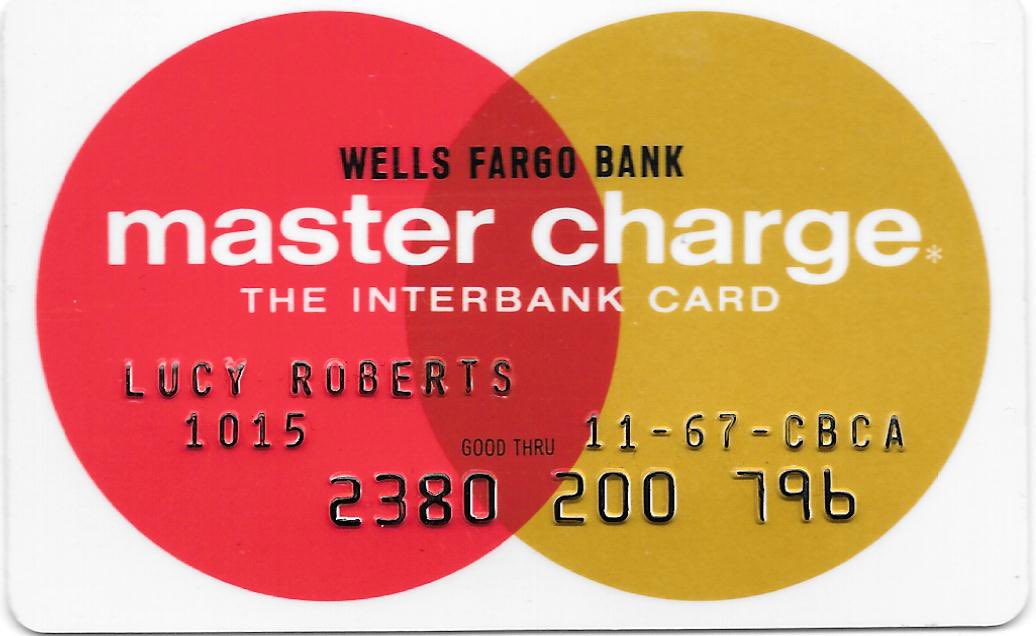
Eventually, BankAmericard became a non-profit consortium called Visa — uniting many banks with competing credit cards. A competing consortium called MasterCharge, later MasterCard, did the same with another set of banks.

Credit cards and payment cards are arguably the most valuable network in the world, with at least $1T of publicly traded market cap (Visa, MasterCard, the banks who issue them, etc)…all starting off in a little town called Fresno, on a random day in September of 1958.

More on how credit cards work today and their history:

And how all of this — and the creation of this powerful network effect — has an impact on how I think about crypto (old tweetstorm from last year): https://x.com/arampell/status/1042226753253437440?s=21

FIN

Currency vs Money

Originally posted as a Twitter thread on August 07, 2019


Controlling currency used to mean controlling payments. You print the money as the sovereign; all payments are transacted with that paper. But non-paper payments have changed that and yielded geopolitical risk…

David Ricardo coined the term “comparative advantage” — why trade makes sense. But there’s this issue of geopolitical risk. Growing *zero* food within Country X might be a bad idea if there is a war of anything that interrupts logistics…

So it’s been well-understood, as a matter of national security, that it makes sense to have self-sufficiency in several areas in case trade breaks down

Which brings us back to how currency now has little to do with payments. Governments have very little control over how commerce and payment networks work, or rather, the ability to *keep* them working

The two largest payment networks are in San Francisco (Visa) and Purchase, New York (MasterCard). They are the routers for a huge and growing amount of commerce in *all* countries but they are domiciled in the US, subject to its laws

It’s going to be interesting to see, as paper money goes away and commerce is transacted entirely via payment networks such as these, how governments react. It’s not clear to me that they really understand what’s happening

Great example of this here: https://www.reuters.com/article/us-russia-crisis-visa-crimea/visa-mastercard-stop-supporting-bank-cards-in-crimea-idUSKBN0K40TN20141226

Now if I’m the UK or France, I might think — hmm, what if that happens to me? In 10 years, things affecting the *commerce* supply, for lack of a better word, will be more influential than anything governments have done in “currency”

China is the only major (non-US) country to have thought this through, as they have their own payment network, China UnionPay, which can interoperate outside of China. But I suspect and expect this to be a bigger deal going forward…

And generally speaking, any network that has an outsize impact on the economy of another country will start being scrutinized more under national security guidelines OR be required to have separate instances that can operate independent of the parent…

For example, imagine that everyone in China took an Uber to work (pre Didi merger). Geopolitical risk having “key economic factor” based in San Francisco — chaos if Uber or the US government cut that off

Food supplies, petroleum, and products of war were the original “national security” risks that couldn’t be subject to plain old free trade. In the 21st century and beyond: NETWORKS.
Fin.

Credit Card Hack: Tips and Receipts

Originally posted as a Twitter thread on July 10, 2019


Credit card hack: rather than saving restaurant receipts to make sure I was charged correctly, code the tip. Eg if one’s digit on total is an odd number, cents on the total should be $.57, if even it should be $.42. Leave tip so total adds up to $.42 or $.57 every time.

So when bill comes, if you have a “non-matching” number, you get cheated and can lodge a protest with CC company. And of course the restaurant is supposed to keep your signed receipt as proof, so you don’t have to 🙂

I find that I get cheated every now and then, but don’t want to carry and reconcile receipts at the end of the month nor even think about it. Much easier way!

Clarifying: when your credit card *statement* comes, look for “non-matching” totals (per your own algorithm; mine is not $.42 and $.57, keeping it secret!) and then lodge a complaint if off

Payment Networks, Protocols, and Crypto

Originally posted as a Twitter thread on September 19, 2018


Visa today has a $328B market cap, bigger than virtually every bank on earth (JPM at $384B is the only one bigger). And yet it started out as a non-profit owned BY banks. How did it become more valuable than its “parents”? https://x.com/VisaNews/status/1042078029114048518

Since Visa intermediates rates between banks (“interchange” between card issuers and merchant acquirers) and clears transactions between issuing banks and acquiring banks, it is the ultimate “central ledger” or platform for finance.

It was originally part of Bank of America, called BankAmericard. But to syndicate this platform beyond BoA, it became a consortium — Visa. Independence (to ensure the central platform didn’t take too much economic rent!) was ensured via non-profit ownership structure

…that is, until 2008 when it went public in the largest US IPO of all time. It reorganized from a non-profit to a for-profit, partially to avoid anti-trust issues (all of the banks get together and decide what to charge merchants…imagine the airlines doing this!)

To me, this is a great example of where/how decentralized networks can preserve true independence (value accrues to network participants vs central player) — and why protocol design, if you will, trumps legal design

Visa is a great and incredibly valuable company. The “protocol” is one of transactional authorization/settlement/clearance. But it was enshrined in a once not-for-profit central actor who today has more value than all but one network participant

Despite a lot of “private blockchain” nonsense out there, this is a great example of how Visa could have or should have been constructed by banks way back when to ensure perpetual independence and inability to capture value as central ledger.

Protocol design matters. And a well thought through protocol is more valuable and protective than lawyers, contracts, and even governments — it will survive all of them.