Category Archives: Regulation

Banks and Fear

Originally posted as a Twitter thread on March 11, 2023


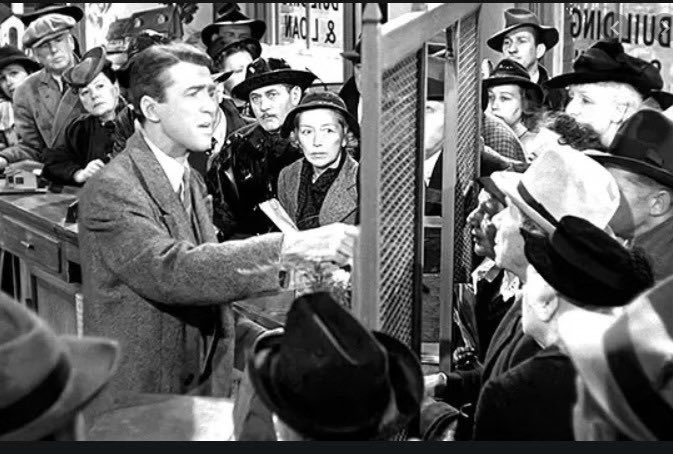
We no longer live in the “It’s a Wonderful Life” bank era. Fear can spread at the speed of WhatsApp and iMessage and Twitter, and electronic transfers can instantaneously render a bank insolvent.

Branches and branch-centric thinking are anachronisms.

At the same time, banks in 2023 do MUCH MORE than just lend and deposit money. They provide pipes and technology for *everything.* Payments are mostly electronic, not cash. Payroll goes to a payroll company which…has its own bank.

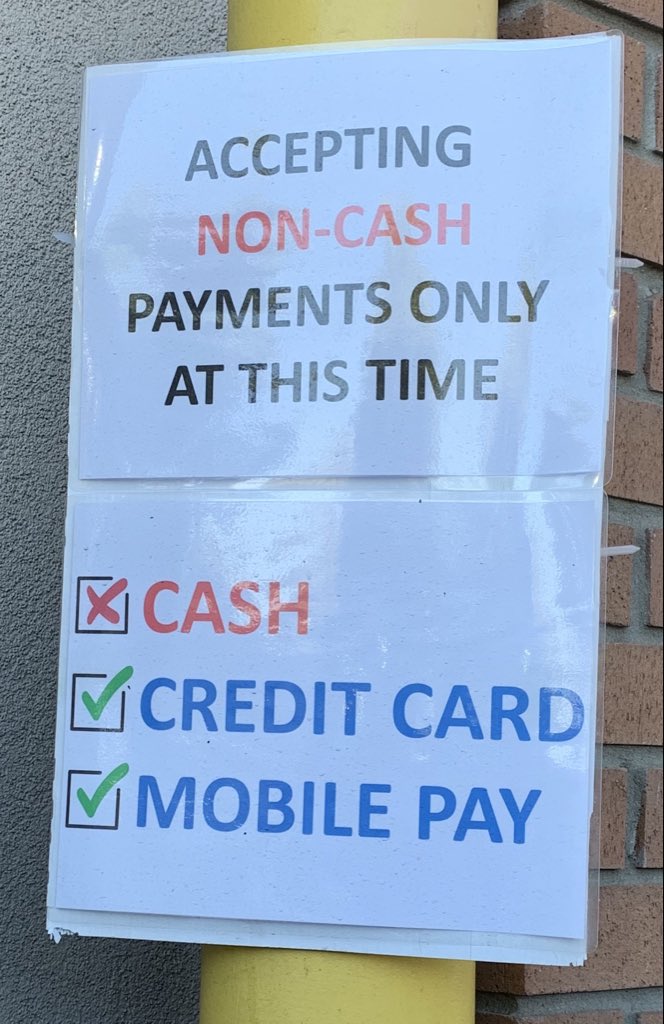
The Great Depression rendered a whole generation skeptical of banks. Money under mattresses was a thing. But that’s before commerce was entirely electronic. Most people can’t live life “cash under a mattress” even if they try. Lots of places won’t even accept cash!

Image

Image

And if you just say, ok, I’ll diversify banks at $250K max cap…what do you do if your business has a $1M payroll run to make and you use ADP/Paychex/etc. Which bank do THEY use? Or: How do you buy something like a >$250K house where the money “sits” somewhere in escrow?

Do we really want to concentrate all US deposits in 4 big banks? They can’t withstand a 50% instant withdrawal event, either. Or concentrate OUT of banks and into short-term t-bills?

2023 is not 1933

Intelligent Regulation

Originally posted as a Twitter thread on December 17, 2021


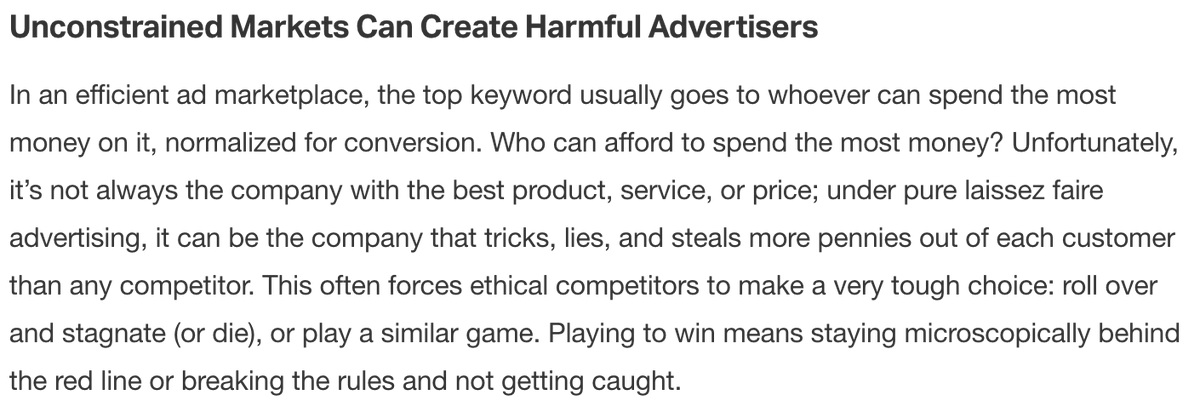
Many of the best entrepreneurs *welcome* intelligent regulation because it prevents the tragedy of the commons — where the only way to “win” is to do underhanded things. I lived this in 2009 with sketchy ads in offer-based payments…and wrote this:
https://techcrunch.com/2009/11/03/tragedy-of-the-social-gaming-commons-a-blueprint-for-change/

Government and platform (yes, some platforms have that much power) regulators do customers *and* entrepreneurs a favor with smart regulation, because it forces companies to compete on who can do the best job for the *customer*

Bureaucracy is a Regressive Tax

Originally posted as a Twitter thread on February 11, 2021


Bureaucracy – in government, the medical system, and more – is a HIGHLY regressive tax in that rich people can pay to solve problems, and the poor must use their time, miss work and lose income…and more.
This is why I love @DoNotPayLaw + @jbrowder1

This is not hyperbole…

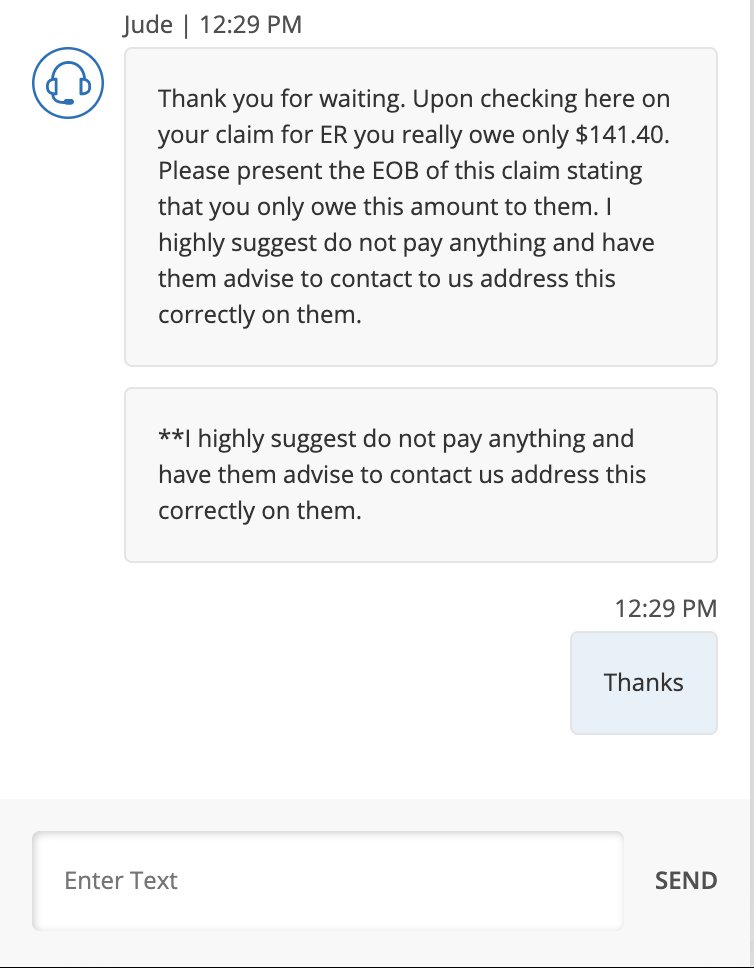
I had to go to the ER a few months ago. My bill didn’t match my insurance statement. Insurance company tells me not to pay. Provider threatens to report me to collections. This consumes HOURS of times and damages credit, making borrowing (and living!) more expensive

I am lucky to be able to say “it’s not worth my time” and do just fine — either pay it or deal with the consequences, which are insignificant to me. Millions cannot.

Directly Accessing Government: Fintech’s Final Frontier

Originally posted as a Twitter thread on January 15, 2021


The Internet has many legacies, but its greatest one is disintermediation — taking out the middleman. And the biggest ever disintermediation — of financial services — is coming to an app near you. This is where government should focus:
https://a16z.com/2021/01/15/fintechs-final-frontier/

Governments have monopolies on money and law-enforcement (only the gov’t can legally do those two things, crypto aside!). But there’s almost no way for consumers to interact with central banks! Just like there was no way for consumers to buy airplane tickets w/o travel agents

Want to send a wire? Get access to your PPP loan? Earn interest from the Fed (as banks do via “Interest on Excess Reserves”)? Got to be a bank. Consumers have to go through a travel agent, versus direct. Why can’t your SSN or FEIN be an “account” that can send/receive money?

This is not arguing for “postal banking” or any DMV-style nationalization of banking — which is a terrible idea. But monetary and fiscal policies that require intermediation are simply not as effective as “going direct” — which the internet and fintech allow.

Take interest rates and monetary policy in emerging markets. The Central Bank can/does hike rates to prevent capital flight. Doesn’t really work because banks “intermediate” and don’t provide that rate to consumers…who sell the depreciating currency in favor of USD/EUR.

In many emerging markets, banks hardly make unsecured loans to consumers. They just take deposits and loan to the government. Which is bad for the government, bad for their citizens, bad for their economy, bad for their currency.

More here. Fintech alone can’t solve this — but every single Central Bank should be thinking: how do I go direct? And I would love to see companies and tools (painful as the gov’t “sale” may be) that help facilitate this:
https://a16z.com/2021/01/15/fintechs-final-frontier/

Geopolitical Risk x Networks

Originally posted as a Twitter thread on January 10, 2021


The internet drove instant, rich, free communication in a form humans have never before seen. With that comes good and bad.

*Right or wrong*, when the leader of a country is kicked off a massive communication network, it creates a geopolitical risk that will…

…likely undo this trend and create many regional, more siloed networks. It has to. It’s simply too much risk for another country to allow a foreign private company (or the US Govt which controls this particular private company!) to “control” the means of communication.

I had previously written about this re: payment networks (when I was at Visa, we stopped payment processing in Crimea…per US law). Again, right or wrong, friend or foe, it is TOO MUCH GEOPOLITICAL RISK for countries to allow their networks to be domiciled elsewhere. Fin. https://x.com/arampell/status/1158952157137297410

Currency vs Money

Originally posted as a Twitter thread on August 07, 2019


Controlling currency used to mean controlling payments. You print the money as the sovereign; all payments are transacted with that paper. But non-paper payments have changed that and yielded geopolitical risk…

David Ricardo coined the term “comparative advantage” — why trade makes sense. But there’s this issue of geopolitical risk. Growing *zero* food within Country X might be a bad idea if there is a war of anything that interrupts logistics…

So it’s been well-understood, as a matter of national security, that it makes sense to have self-sufficiency in several areas in case trade breaks down

Which brings us back to how currency now has little to do with payments. Governments have very little control over how commerce and payment networks work, or rather, the ability to *keep* them working

The two largest payment networks are in San Francisco (Visa) and Purchase, New York (MasterCard). They are the routers for a huge and growing amount of commerce in *all* countries but they are domiciled in the US, subject to its laws

It’s going to be interesting to see, as paper money goes away and commerce is transacted entirely via payment networks such as these, how governments react. It’s not clear to me that they really understand what’s happening

Great example of this here: https://www.reuters.com/article/us-russia-crisis-visa-crimea/visa-mastercard-stop-supporting-bank-cards-in-crimea-idUSKBN0K40TN20141226

Now if I’m the UK or France, I might think — hmm, what if that happens to me? In 10 years, things affecting the *commerce* supply, for lack of a better word, will be more influential than anything governments have done in “currency”

China is the only major (non-US) country to have thought this through, as they have their own payment network, China UnionPay, which can interoperate outside of China. But I suspect and expect this to be a bigger deal going forward…

And generally speaking, any network that has an outsize impact on the economy of another country will start being scrutinized more under national security guidelines OR be required to have separate instances that can operate independent of the parent…

For example, imagine that everyone in China took an Uber to work (pre Didi merger). Geopolitical risk having “key economic factor” based in San Francisco — chaos if Uber or the US government cut that off

Food supplies, petroleum, and products of war were the original “national security” risks that couldn’t be subject to plain old free trade. In the 21st century and beyond: NETWORKS.
Fin.