Category Archives: Tweetstorms

The Anachronism of Education

Originally posted as a Twitter thread on March 13, 2019


Educational institutions bundle an education (knowledge) and a credential. The means of getting an education keep getting cheaper — at the limit, it’s just consumption of (free) knowledge — and it’s therefore the credential that’s getting more expensive.

Why did all these rich and famous people cheat and bribe their kids into school? To help them get an education, or to help them get a credential?

Ancient Credentials are not only backwards looking, and a poor substitute for accomplishment, but they are increasingly irrelevant in a world of real time feedback and measurement.

“But would you see a doctor without an MD credential from a top school?” We should care about what you know, how well you practice it, and other relevant metrics

But when those things aren’t easily available or normalized, we instead care about a document, often appropriately enough written in a dead language (Latin) about some past achievement.

6/ Which, coming full circle with today’s indictments, often means nothing.
“Silicon Valley Does X”

Originally posted as a Twitter thread on January 08, 2019


“Silicon Valley Does X” — what does it mean? It *DOES NOT* (or should not) mean “same thing HQ’d in high cost of living SF.” It means a true first principles approach to re-inventing a stagnant industry, process, and way of thinking.

The philosophical burden of proof is often described as “he/she who brings the claim supplies the proof” (or this, by Carl Sagan: “extraordinary claims require extraordinary evidence.”) This is *very* relevant for “Silicon Valley Does X.”

There is often little evidence for *current* positions (outside of precedent) and consequently “Silicon Valley Does X” is pilloried for bothering to re-examine and re-think orthodoxy.

Any industry trusting random humans to make uniformly optimal decisions with little or no feedback loop — now THAT is an extraordinary claim, requiring extraordinary evidence! So industries like real estate, medicine, investing, lending, etc

Real estate: “this agent knows the best stager and it will make your house sell for more” …proof?

Medicine: “don’t screen for X, too many false positives” (best way to solve that is to…collect more data! look at longitudinal changes!)

Education: “you can’t learn from a computer screen / credentials are everything”…really?

“Silicon Valley Does X” is about challenging assumptions, and often exposing that those assumptions are themselves not evidence based. And guess what? Sometimes the orthodoxy is right…

…but we should be grateful that there are entrepreneurs willing to risk failure and challenge it.

Payment Networks, Protocols, and Crypto

Originally posted as a Twitter thread on September 19, 2018


Visa today has a $328B market cap, bigger than virtually every bank on earth (JPM at $384B is the only one bigger). And yet it started out as a non-profit owned BY banks. How did it become more valuable than its “parents”? https://x.com/VisaNews/status/1042078029114048518

Since Visa intermediates rates between banks (“interchange” between card issuers and merchant acquirers) and clears transactions between issuing banks and acquiring banks, it is the ultimate “central ledger” or platform for finance.

It was originally part of Bank of America, called BankAmericard. But to syndicate this platform beyond BoA, it became a consortium — Visa. Independence (to ensure the central platform didn’t take too much economic rent!) was ensured via non-profit ownership structure

…that is, until 2008 when it went public in the largest US IPO of all time. It reorganized from a non-profit to a for-profit, partially to avoid anti-trust issues (all of the banks get together and decide what to charge merchants…imagine the airlines doing this!)

To me, this is a great example of where/how decentralized networks can preserve true independence (value accrues to network participants vs central player) — and why protocol design, if you will, trumps legal design

Visa is a great and incredibly valuable company. The “protocol” is one of transactional authorization/settlement/clearance. But it was enshrined in a once not-for-profit central actor who today has more value than all but one network participant

Despite a lot of “private blockchain” nonsense out there, this is a great example of how Visa could have or should have been constructed by banks way back when to ensure perpetual independence and inability to capture value as central ledger.

Protocol design matters. And a well thought through protocol is more valuable and protective than lawyers, contracts, and even governments — it will survive all of them.

OS Wallets are an Existential Threat to PayPal

Originally posted as a Twitter thread on June 19, 2018


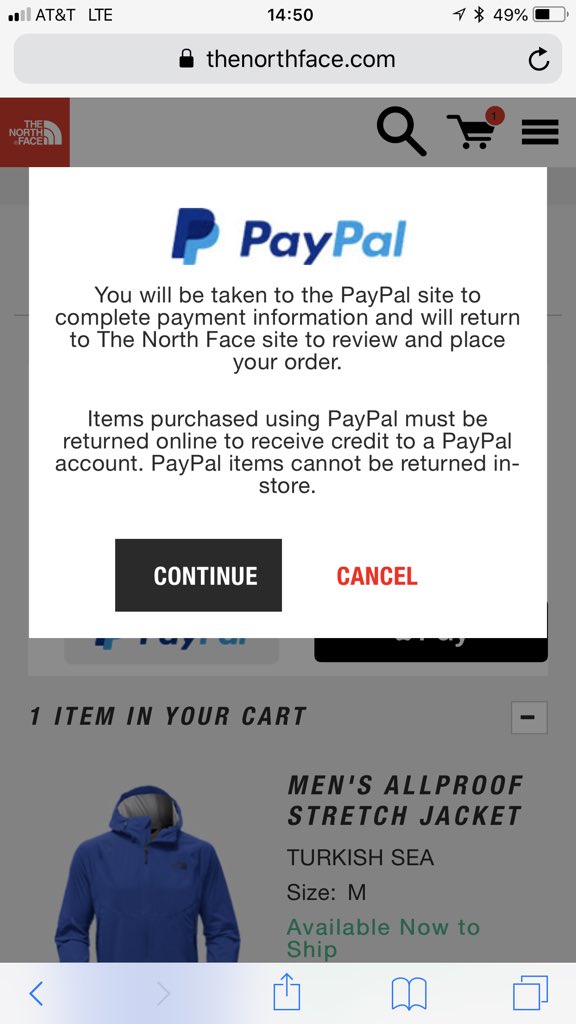
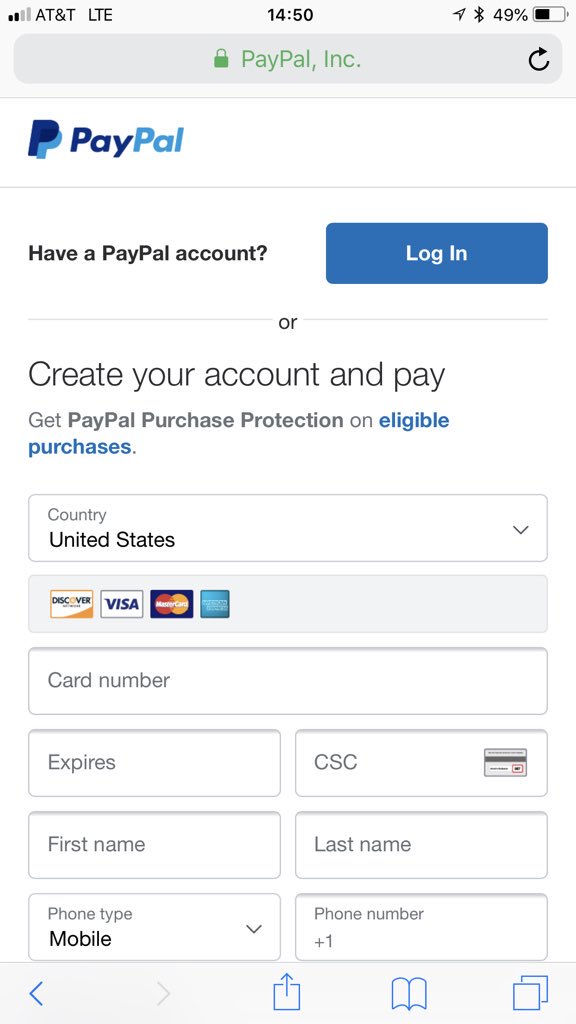
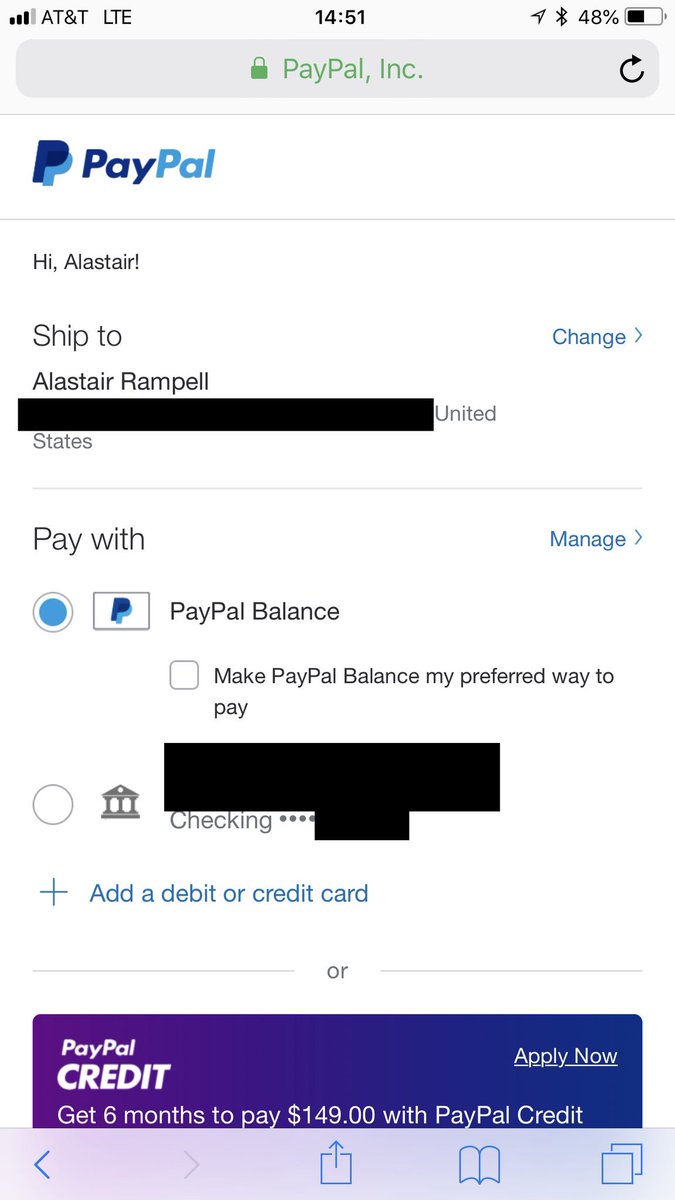
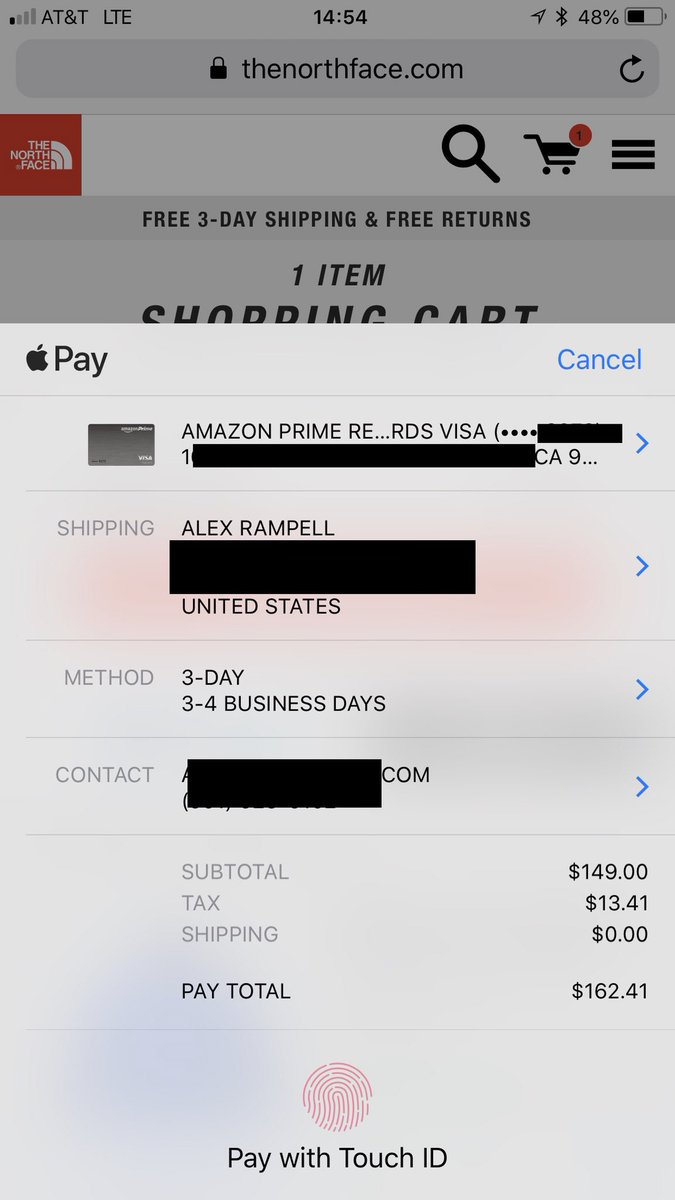
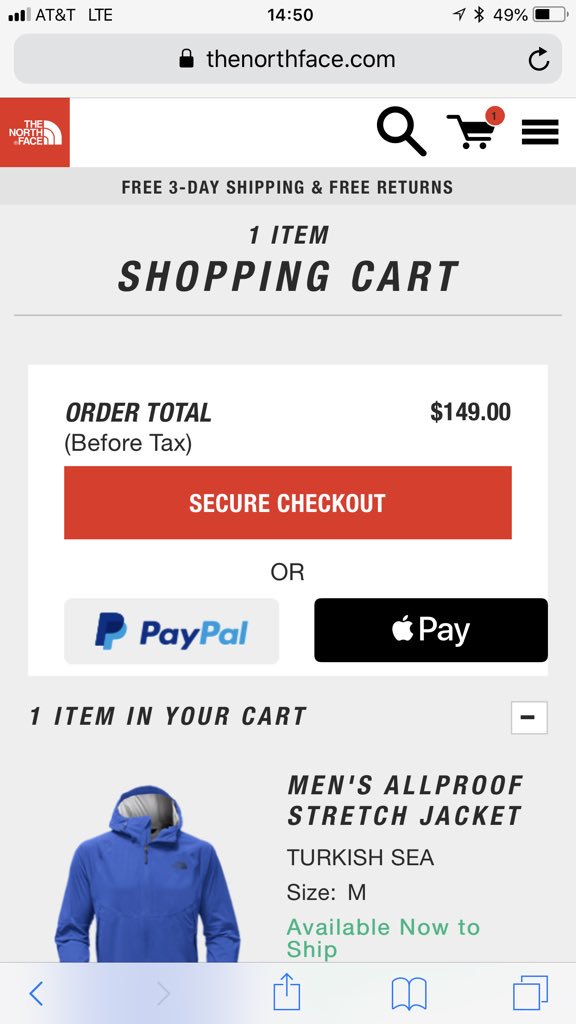
OS-based wallets like ApplePay pose an existential threat to cloud wallets like PayPal. Compare the experience at TheNorthFace with PayPal vs ApplePay. Eventually HomeDepot, Walmart, etc will embrace. PayPal smart to diversify. Let’s tweet this experience…

Ok, I have the jacket I want. Should I pay with PayPal or ApplePay?

Let’s pay with PayPal! Ok, step 1, leave the website I was just on…

Step 2, now login…

More logging in, step 3

Step 4, more…logging in

Step 5, more!

And there are still more steps. Now compare that to ApplePay, one step, built into the browser — and done

PayPal is hardwired into the checkout flow at many top retailers like http://HomeDepot.com, but unless they build their own mobile OS it will be impossible to bundle this as seamlessly as Apple

Expect widespread adoption of ApplePay *on the web* and for this to have a game changing effect

B2B2C

Originally posted as a Twitter thread on May 18, 2018


The reason B2B2C models are so interesting: when we look at fintech investments, the questions of “how do you get distribution” and “how do you make sure somebody else doesn’t outbid you” are paramount. If you can nail a B2B2C model, you lock down both:
https://a16z.com/2018/05/17/b2b2c-business-models-rampell/

I like to joke that the best way of investing in fintech is to buy Google stock and Facebook stock (or even CreditKarma private stock!) — that’s where all these companies go to acquire customers

It’s because it’s REALLY hard to have an organically adopted product in financial services. Do you rave about your once-every-10-years mortgage? Will your raving be remembered by the friend who needs it in 5 years?

Some companies have solved this (eg @TransferWise). But for others, you need a quasi-proprietary distribution model to prevent all the economic rent from flowing to a FB or GOOG. And B2B2C is uniquely well suited to fintech since it’s often a horizontal layer (see post)

Don’t Just Sell to the CEO!

Originally posted as a Twitter thread on January 13, 2018


There are a broad range of products/services that you CANNOT sell to the CEO or senior exec of a company — too irrelevant to them. You either need to figure out how to position your service against EXISTING top priority to CEO, or you are better off selling “lower” in org

But sell too low, and at a company where the principal-agent problem is at its peak (employees are agents, corporation is the principal), and “saving the company money” or “making the company money” are totally irrelevant.

So for most products and services, you need to find somebody in the “middle” and figure out how to make the agent, not just the ethereal principal, win.

Some of the most valuable companies operate in the “zone of irrelevance” because there is no impetus to switch them out (think: payroll, janitorial services, etc) and costs are not SO high, so not as much margin/competitive pressure

In many cases you need to wait for a fundamental shift to challenge one of these companies, or get very, very creative (and very determined) selling into “the middle.” But it’s ironically much stickier to be in the “zone of irrelevance, yet necessary” for clients

CEOs, Please Educate Yourselves about Crypto

Originally posted as a Twitter thread on September 13, 2017


Put another way: CEOs, please educate yourselves properly about cryptocurrency. Side effect is you’ll understand some basic cryptography.

I have personally met Chief Security Officers at major public companies who did not know what a hash function is

And yet CEOs — desperate not to be the Target CEO fired for a security breach — don’t know diff between competence and big talkers

it’s no surprise, then, that these security incidents keep happening — and these are just the ones that are known

There’s a difference between “susceptible to hacking” and “thinking that Bitcoin is a fraud” but cryptographic ignorance at heart of both

And ignorantly saying “it’s a scam” will turn away true cryptographic security experts from wanting to work at your company

Funny thing: true cryptography people tend to like cryptocurrency 😉

Medicine feels like the taxi industry pre Lyft/Uber

Originally posted as a Twitter thread on July 09, 2017


Medicine feels like the taxi industry pre Lyft/Uber — no price transparency, no real reviews, “once and done” for all but primary care

And it’s much worse for procedures…want controlled longitudinal data for, say, allograft vs autograft in ACL repair? Good luck

For me, it’s personal – need major ankle surgery, data do not exist, many surgeons are offended when asked, all “reviews” adversely selected

And stakes are till-death-do-us-part permanent. The consensus, when scientific method applied, is often dead wrong:
http://www.nejm.org/doi/full/10.1056/NEJMoa1305189

Past data = *qualitative* observations and musings. Post-op data = adversely selected, sparse, and also qualitative