Tag Archives: Visa

Digital Payments are Going to REALLY Grow

The payments market is going to massively expand over the next decade because:

1. ANYONE can now build anything digital — AI code creation means exponentially more digital SKUs that can be created and, of course, paid for. We are in the very early innings here. The gating item is just human creativity. It’s not just software. Can you whistle or come up with a tune? Then you can compose music (no need to learn to read music or know music theory). Can you think of an idea for a movie? You can just…create one. Etc.

Combined with:

2. Almost anything that was “payroll” (paying PEOPLE) can now be “payments” (paying for THINGS). For example: “Hiring an assistant” or “hiring a paralegal” (both payroll) -> paying for a SKU.

We don’t think of ADP or Paychex as payments companies because they aren’t; they are payroll companies. Paying people != paying things.

But more tasks/outputs that were once only available through “paying for people” now become available for purchase on a credit or debit card. This is already starting to happen and accelerate.

And of course, this is not zero sum! Much of this is “everything to the right” of the supply-demand equilibrium point, where there’s conceptually high quantity demanded at a very low price where there’s heretofore no (human) labor supplied. Lots of people will want to purchase a SKU who were unable to hire a person historically.

The Future of Payments…is Red?

Originally posted as a Twitter thread on January 12, 2023


The Future of Payments…is Red?

What could disrupt Visa/MasterCard/Amex? How might a new payments Goliath start?

Let’s talk about the Target Red Card. Target did >$100B in revenue last year, 20% of which happened on its own cards:
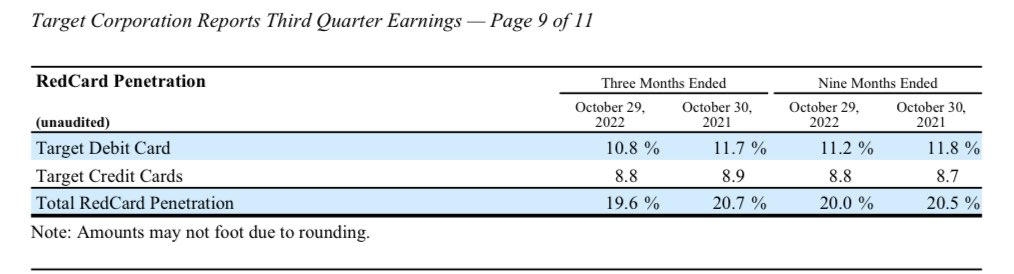
You’ll see “Target Debit Card” and “Target Credit Cards” (source: Target 10Q)

Many retailers have what are known as co-branded credit cards. Target’s is issued by TD Bank; Amazon => Chase; American Airlines => Citi. Some retailers make more on cards than on their core biz!

But what is extremely interesting, and has compelled me to scan every Target 10Q for years, is the Target Debit Card, which makes up over 11% of Target’s entire revenue. The Debit Card just pulls money directly from your bank account — allowing Target to not pay interchange.

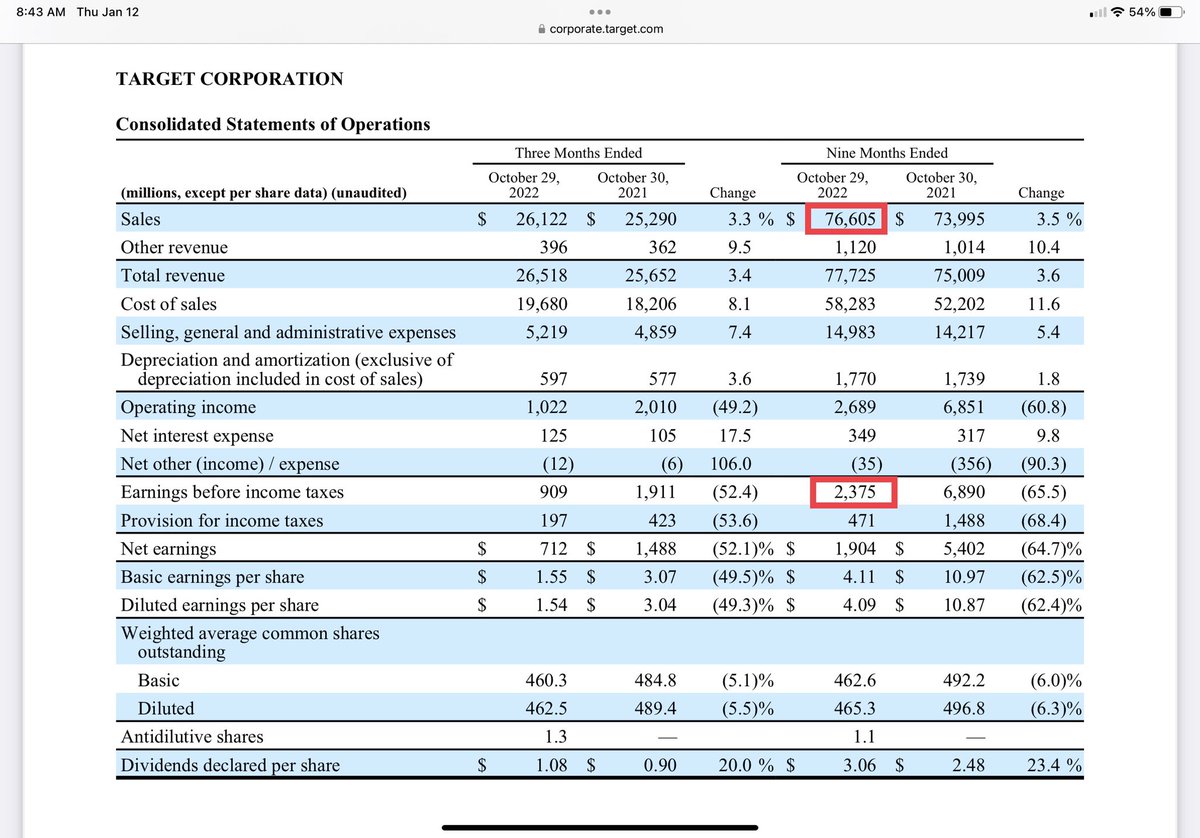
It should be self-evident why this is important. Look at Target’s Q1-Q3 revenue last year — $76.6B sales, $2.4B pretax income. Imagine every Target transaction was credit card (not the case) @ a blended 2% fee => $1.5B in incremental income if shifted to ACH, 63% more profit!
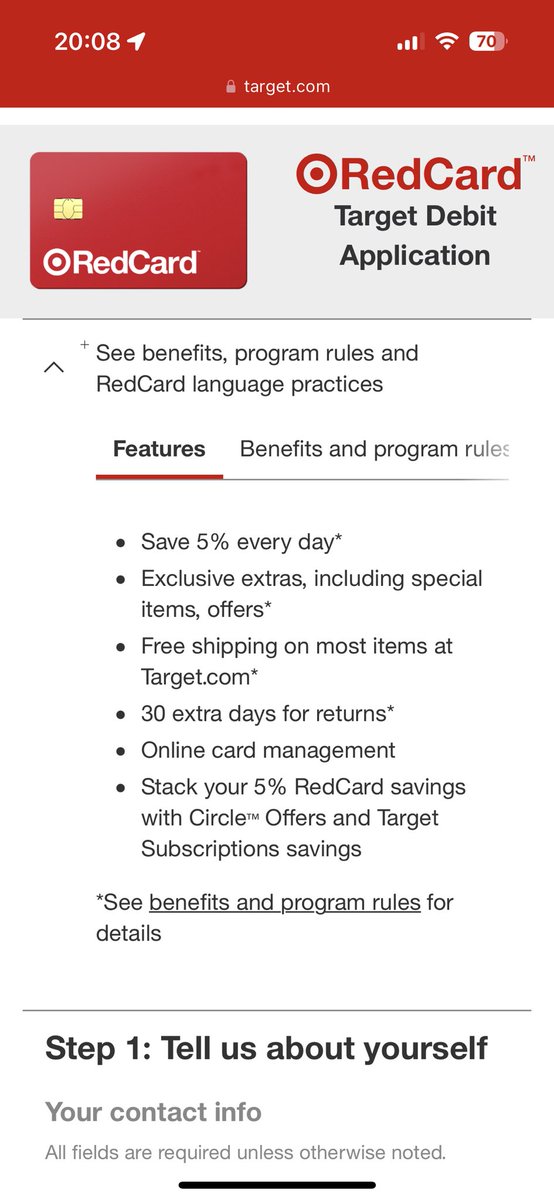
Target has impressively shifted 20% of their *entire* sales to their own cards. The only “illogical” part of this is that to save 2%, they are…giving up 5%, albeit to the user directly in savings at Target, which is the primary benefit of Red Card.
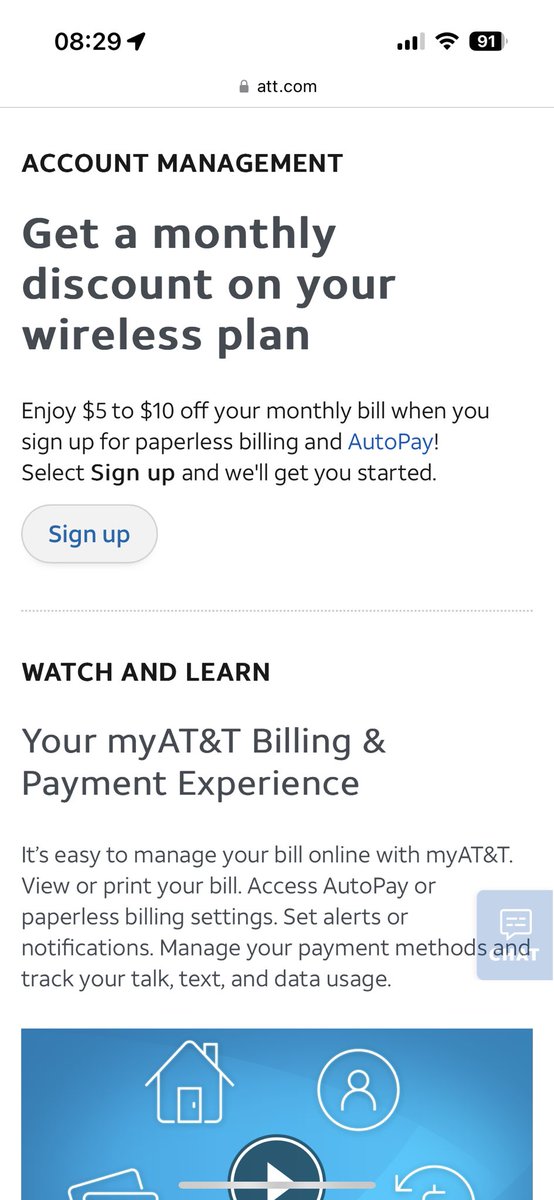
Target isn’t an outlier here. Most “frequent interaction” or high frequency billing companies do the same. Here’s Verizon and AT&T, which give you substantial savings monthly for moving your bill pay off credit cards and to ACH (or sometimes debit cards, given lower avg fee)
Image

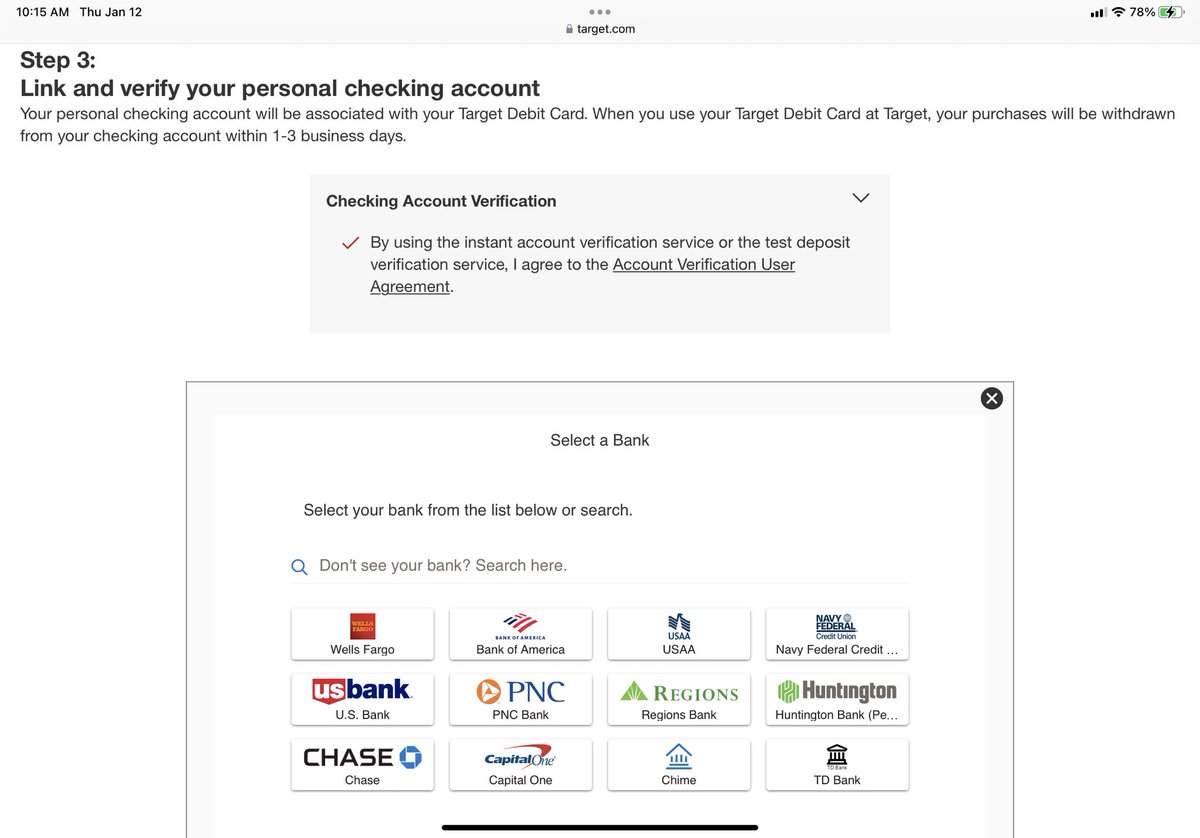
When you sign up for a Red Card debit card, you link your existing bank account and let Target pull funds from it. It’s just a “router” to your existing bank account.

Image

Image

So effectively the Debit Red Card is an abstraction layer around payments, mapping a POS transaction at a Target store to a subsequent low-cost ACH debit from an existing checking account.

This is harder than it seems. For anyone in Credit/Debit payments, you might recognize the “verbs” of payments: Authorize, Capture, Settle, Void, Credit. Not to mention things like chargebacks. ACH has fundamentally different “verbs” and Red Card is a Rosetta Stone of sorts.

Why is this potentially the future of payments? For one, tools like @Plaid have made the connection extraordinarily easy. You don’t have to remember your bank account number or “routing code.” Just log-in to your bank account ONCE and you’re done. Consumers are used to this.

Every “high frequency biller” should be doing this, and experimenting with pricing and benefits. Albertson’s, Netflix, Walmart, Costco, Safeway, Microsoft, Disney, etc. It’s likely trillions of $ of “frequent merchant-consumer interaction” payments that *could* shift.

While I think Target has been smart to roll this out, it seems paying 5% to save 2% (and justifying it by showing increased engagement, which likely reverses cause and effect / shows sampling bias!) is not smart. Better to provide one-time benefit to switch, I would think.

To wit: Log-in to Netflix. See a message: “Switch to direct debit, get $2 off this month. Just click here!” -> long term savings of $100M+/year to Netflix in North America alone based on projected interchange costs.

The “hard” part of this, not surprisingly, is software. What’s needed is “Red Card as a Service” for retailers — and in particular, “frequent interaction” retailers. This would likely sit alongside the existing payments stack, or maybe above it…

Because ideally the one team (at the merchant) that handles dispute resolution/chargebacks, or refunds, or store credits…doesn’t care about the tender type. All of that is just abstracted away into whatever tools they already use.

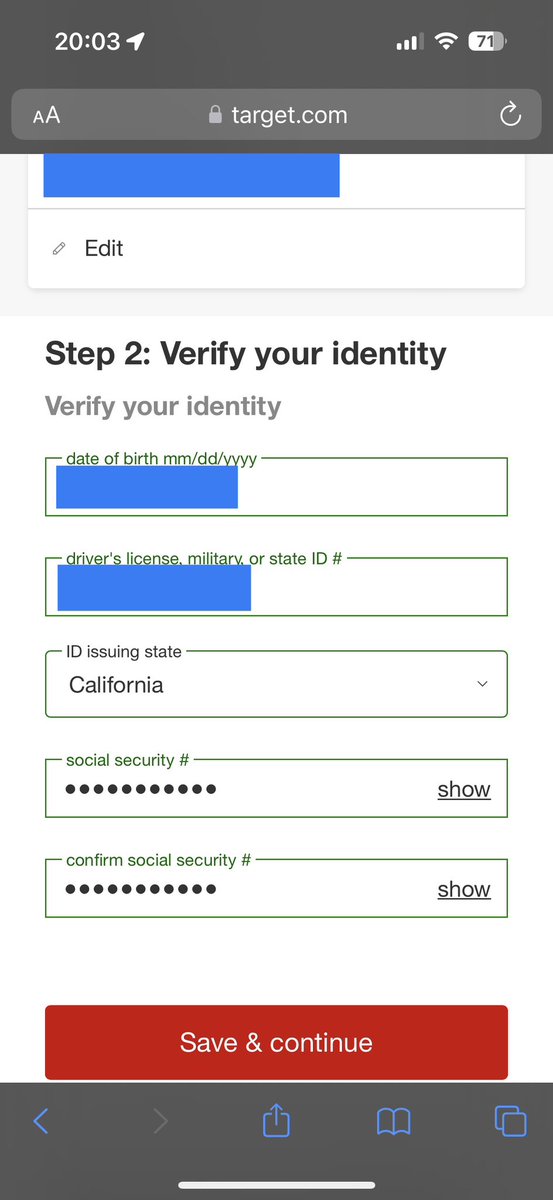
The other thing that’s needed is a much better onboarding experience. Frankly it’s shocking that Target is at 20% given how complex they make the onboarding and how much information they gather…better software/CX/UX would make it much more compelling.
The truly magical experience would be what I would call the “Customer IQ Test.” An automatic mapping of their credit/debit card to their *existing* checking account could be done in the background…credit bureaus and other players already have this.

The IQ Test would thus be: “Do you want to save $5 right now by switching your Visa Card ending in 2655 to your Bank of America account ending in 7688? Click Yes to confirm and your’e done.”

Because fundamentally, the reason “Red Card as a Service” hasn’t taken off in the past is because of the twin moats protecting so much of banking. Inertia (hard to switch) and Rewards (merchant fees fund customer benefits, with banks in the middle). Inertia is now decreasing.

There are other huge benefits to a “frequent interaction biller” introducing this. E.g., “Pre-pay $1000 of spend at Safeway for $950” —> ensures that that person buys all of their groceries at Safeway. Or maybe a quasi subscription.

Not to mention all of the other “fintech” cross-sells available if you have a link to the customer’s checking account and a dominant/frequent relationship with them.

There’s a good question of how many frequent billers does the average customer have, what merchants might this make sense for, etc. But in general, the tools are coming/exist to make this easy, fast, and low-friction…and the economic incentive for merchants is MASSIVE.
Origins of Visa (and Payment Networks)

Originally posted as a Twitter thread on September 18, 2019


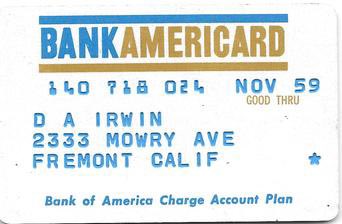
September 18th marks the 61st anniversary of the most valuable network effect of all time: the credit card. How did we get here? Read on. And read @opinion_joe ‘s book “Piece of the Action” for more…

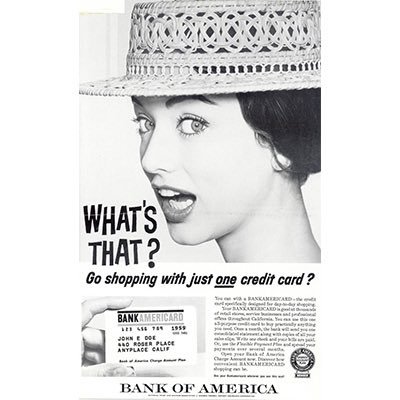
The epicenter of the revolution was Fresno, California. Facebook started with the contained network of Harvard students; the humble credit card started with 60,000 people in Fresno and a prominent company called Bank of America, then a California-only bank.

There was no application. 60,000 people just got a BankAmericard in the mail on September 18, 1958, ready to use.

There were “charge cards” like Diner’s Club before the BankAmericard Fresno drop, but there was no “credit” being extended. And you could go to a bank and get a loan, or get an installment loan for a specific purchase, but in person.

The credit card came out of Bank of America’s corporate think tank, called the “Customer Services Research Department,” run by a 41 year old man named Joe Williams.

Consumers were used to paying on credit, but each line of credit was either specific to a merchant (e.g., Sears), or a burdensome process requiring a new loan (in person) from the bank.

Williams thought the credit card — a multi-merchant product — would fix that. It really had two purposes: convenience and lending.

Fresno at the time had about 250,000 people, and *45% of all Fresno families* were Bank of America customers.

Credit card fees were set at 6% for merchants, and consumers — who just randomly got this card without applying — got between $300 and $500 in instant credit.

The brilliance of the 60,000 person drop is that Williams had effectively started with the chicken, in the classic chicken/egg cold start problem. On day 1, cardholders simply *existed* which permitted BoA to sign up all merchants who didn’t have existing proprietary programs

So Williams started in a seemingly random, highly concentrated town, immediately enlisted existing customers, and focused on fast-moving, small merchants — not the giants like Sears — all backed by a massive advertising campaign.

More than 300 merchants in the city signed up, the first being Florsheim Shoes (still around!).

Within 3 months, BoA was expanding concentrically — to Modesto to the north and Bakersfield to the south, and within a year San Francisco, Sacramento, and Los Angeles. Within 13 months of Fresno, there were 2 million cards issued and 20,000 merchants onboarded.

After the Fresno drop, other banks followed. Chase Manhattan was 5 months later on the east coast.

Williams assumed that collections would be a breeze, that late payments would never cross 4%, and that existing bank credit systems would work. Instead, less than 2 years after Fresno, Joe Williams quit BoA due to a series of disasters. The credit card almost died then+there

Delinquencies were over 20%. Fraud was out of control as criminals figured out how to replicate cards. Merchants (harbinger of things to come) hated paying 6% and the first battles over fees began. Some of them stole from the bank or customers, too.

And more broadly — and this is now illegal — simply giving people cards without having them apply, and without them understanding the consequences of wanton spending, created far more bad debt than BoA had ever seen (on a customer % basis).

The huge losses and mounting pressure almost caused BoA to kill the card program altogether. The founder was ousted. Instead, BoA persevered, and just a few years later BankAmericard turned a profit and grew like a rocketship, transforming how people pay and borrow.

Eventually, BankAmericard became a non-profit consortium called Visa — uniting many banks with competing credit cards. A competing consortium called MasterCharge, later MasterCard, did the same with another set of banks.

Credit cards and payment cards are arguably the most valuable network in the world, with at least $1T of publicly traded market cap (Visa, MasterCard, the banks who issue them, etc)…all starting off in a little town called Fresno, on a random day in September of 1958.

More on how credit cards work today and their history:

And how all of this — and the creation of this powerful network effect — has an impact on how I think about crypto (old tweetstorm from last year): https://x.com/arampell/status/1042226753253437440?s=21

FIN

Payment Networks, Protocols, and Crypto

Originally posted as a Twitter thread on September 19, 2018


Visa today has a $328B market cap, bigger than virtually every bank on earth (JPM at $384B is the only one bigger). And yet it started out as a non-profit owned BY banks. How did it become more valuable than its “parents”? https://x.com/VisaNews/status/1042078029114048518

Since Visa intermediates rates between banks (“interchange” between card issuers and merchant acquirers) and clears transactions between issuing banks and acquiring banks, it is the ultimate “central ledger” or platform for finance.

It was originally part of Bank of America, called BankAmericard. But to syndicate this platform beyond BoA, it became a consortium — Visa. Independence (to ensure the central platform didn’t take too much economic rent!) was ensured via non-profit ownership structure

…that is, until 2008 when it went public in the largest US IPO of all time. It reorganized from a non-profit to a for-profit, partially to avoid anti-trust issues (all of the banks get together and decide what to charge merchants…imagine the airlines doing this!)

To me, this is a great example of where/how decentralized networks can preserve true independence (value accrues to network participants vs central player) — and why protocol design, if you will, trumps legal design

Visa is a great and incredibly valuable company. The “protocol” is one of transactional authorization/settlement/clearance. But it was enshrined in a once not-for-profit central actor who today has more value than all but one network participant

Despite a lot of “private blockchain” nonsense out there, this is a great example of how Visa could have or should have been constructed by banks way back when to ensure perpetual independence and inability to capture value as central ledger.

Protocol design matters. And a well thought through protocol is more valuable and protective than lawyers, contracts, and even governments — it will survive all of them.