Not All SaaS is the Same

There are effectively three kinds of SaaS and it seems the (public) markets can’t tell the difference between the three with the coming AI wave.

Group 1: Software utility is not tied to heads, or if tied to heads not based on those heads delivering an outcome WITH the software. Companies can’t cut back on Workday seats because of AI! Quickbooks is used in small businesses. These systems of record will add AI features which will be accretive to revenue — think background checks for Workday, collections for QuickBooks, etc.

Group 2: AI potentially lowers # of users of the product but potentially introduces more usage? If you need fewer graphics designers you might need less Adobe licenses, but it’s possible you need more? Or the expanded output and productivity gains of AI increases usage?

Group 3: Software utility and pricing are DIRECTLY based on heads using software, where AI directly erases heads for the vertical. Zendesk falls squarely in this category. Theoretically CRM could, too. Without a pivot to outcome based pricing, these guys are in trouble.

But there’s a huge difference between the three. The best companies often have hostages, not customers — and they will maintain pricing irrespective of AI usage.

There’s another thread of “companies will vibe code their own software” but unlikely for critical systems of record where renting is cheaper than owning (hence the shift to SaaS from On Prem starting 20 years ago!)

More here on the value of filing cabinets:

https://a16z.com/ai-turns-capital-to-labor

First Principles on Lending…

Original Posted: https://x.com/arampell/status/1893883095646093315?s=20

From first principles: If you ask me to loan you $100, and I think there’s a 50% chance you don’t pay me back, I should only make the loan if I get $200 back. Otherwise, I shouldn’t make the loan! And you won’t get the loan.

The A in APR is Annual, so even if I think there’s only a 10% chance you don’t pay me back, and the loan is a week long, the APR will be enormous on a percentage basis, but only $11.11 on a dollar basis (.9 [probability] X Repayment = $100, so Repayment = $111.11)

That’s a nominal APR of 577% (or a compounded rate of 23,900%).Should that be “illegal”? If you want to restrict access to credit, then yes. I think most people would say that being able to loan their friend $100 to get back $111.11 the next week when their friend is only 90% reliable…should be perfectly fine…particularly when both parties opt in.

These headlines always miss the fact that most Americans don’t have good access to credit and more competition is the best way of lowering costs, not forcing banks to make money-losing loans (that doesn’t work!) or making it hard to start new companies to compete (the CFPB enjoyed doing that)

The platform (almost always) wins

Originally posted as a Twitter thread on November 10, 2025


The platform (almost always) wins

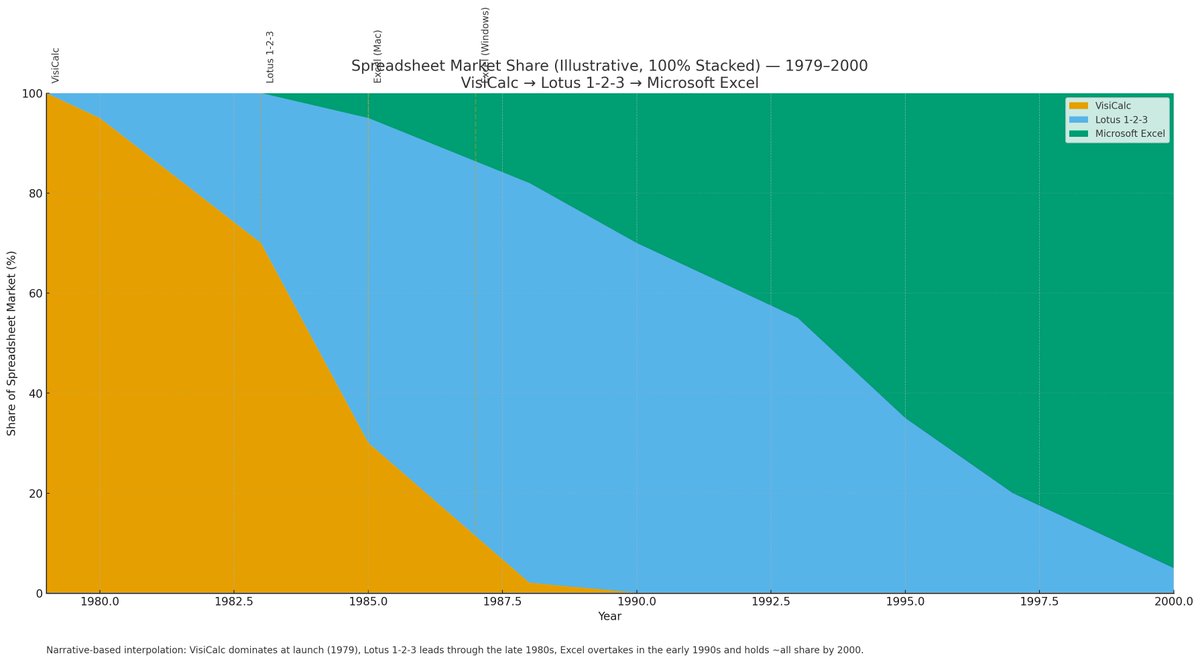
The spreadsheet was invented in 1979 by VisiCalc. VisiCalc lost 50% marketshare within 4 years to Lotus, and Microsoft obliterated Lotus within 15 years.

These “creative destruction” cycles used to take decades. With AI, they can take…months?

Cloud and mobile made distribution almost instantaneous, and AI makes the creation of software faster than ever in history.

Which is why moats really do matter, and why systems of record rule supreme. The good news is that there are new systems of record just waiting to be built…for industries that just never had them before.

https://a16z.com/fruits-of-the-walled-garden/

https://a16z.com/ai-turns-capital-to-labor/

Cost > Value as a Model

Originally posted as a Twitter thread on September 30, 2025


Cost > Value

You might not realize it, but you constantly face decisions where cost is more than value — and you do not proceed.

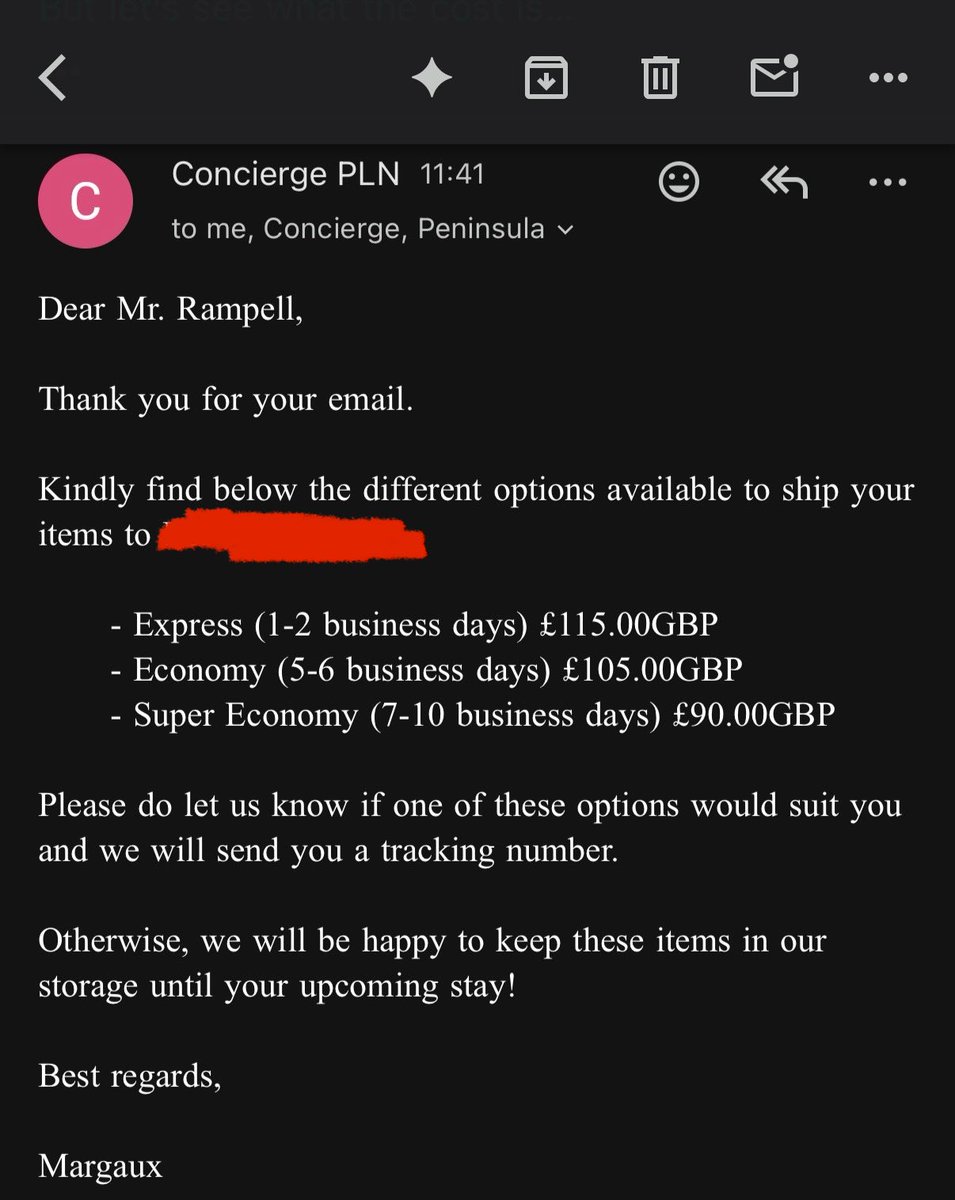
I recently stayed at a hotel where I left my (stinky) gym clothes in the room by mistake. $50 of clothes. Look at the cost to ship them back:

There’s just no scenario where this action makes sense. The cost is more than the value and because it’s overseas shipping, there’s likely no hidden margin that would unlock this. Cost is just always going to be more than value.

Of course I have to make this about AI 🙂

What is SO exciting about many AI companies is they are flipping cost and value. Can every business have a multilingual omniscient receptionist? Sure, but that would have been too much cost for too little value.
Now it works!

Which is why the “AI will take all the jobs” narrative rings somewhat hollow based on what I’m seeing. Where AI Applications are really working is where suddenly value > cost. It’s replacing inertia — a world where cost > value for a seemingly infinite group of things.

AI Commerce

Originally posted as a Twitter thread on August 29, 2025


How will AI commerce start?

Sometimes the best way to predict the future is to observe the present.

Millions of people who value their money more than their time already hunt or wait for deals.

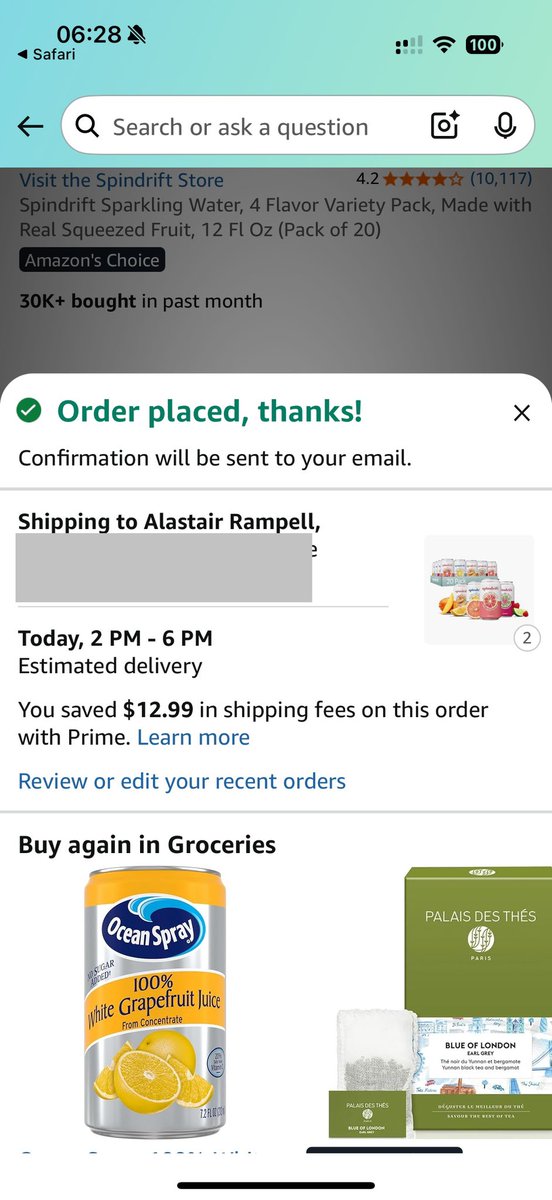
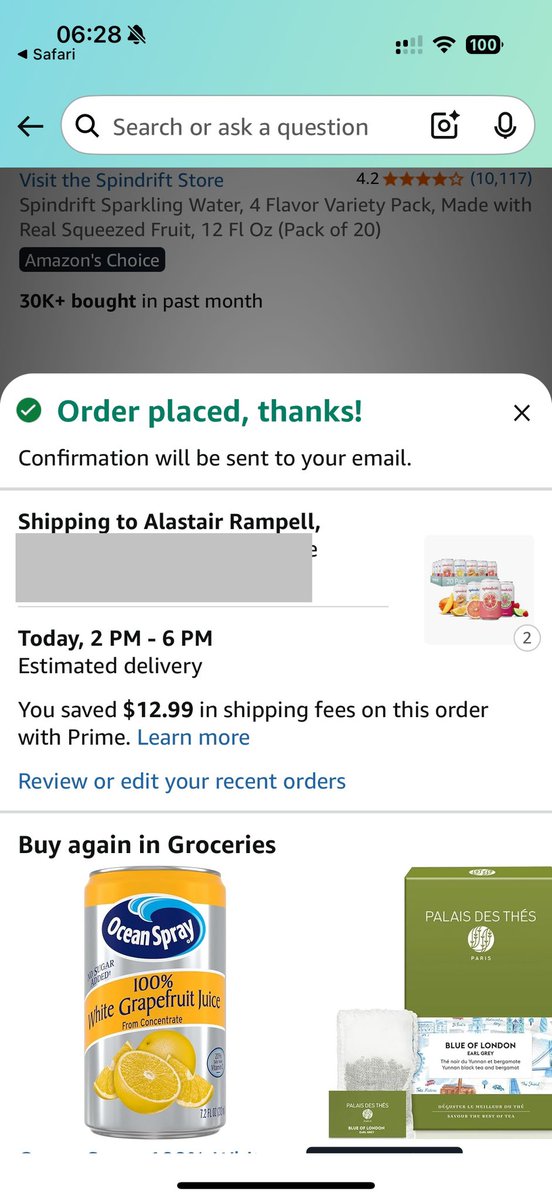
Including me:) I had an alert for Spindrift, it cleared my price, and I bought.

All that is missing from this example is the “do it for me” — as in “BUY it for me when this item clears a specific price”

There’s no question that “buy this SKU for me at the lowest price” (already an observed behavior for those who value money > time) will migrate to AI

More in this piece from @venturetwins and me:

https://a16z.com/ai-x-commerce/

Help Wanted? Hire my software!

Originally posted as a Twitter thread on October 08, 2024


Help Wanted? Hire my software!

Airbnb famously grew by “[growth] hacking” Craigslist — automatically responding to listings to encourage a cross-listing to Airbnb:

https://hackernoon.com/how-airbnb-hacked-craigslist-for-viral-growth-24l35eg

As software “becomes” labor (https://a16z.com/ai-turns-capital-to-labor/), we will see similar hacks to sell software — responding to job postings with software products that do a meaningful percentage of the job’s responsibilities. “I know you’re looking for a ‘Bachelor’s Degree preferred with 5 years of experience X’, but our AI-powered software product can do everything you need, is fully trained, and only costs $20,000/year…and can start tomorrow.”

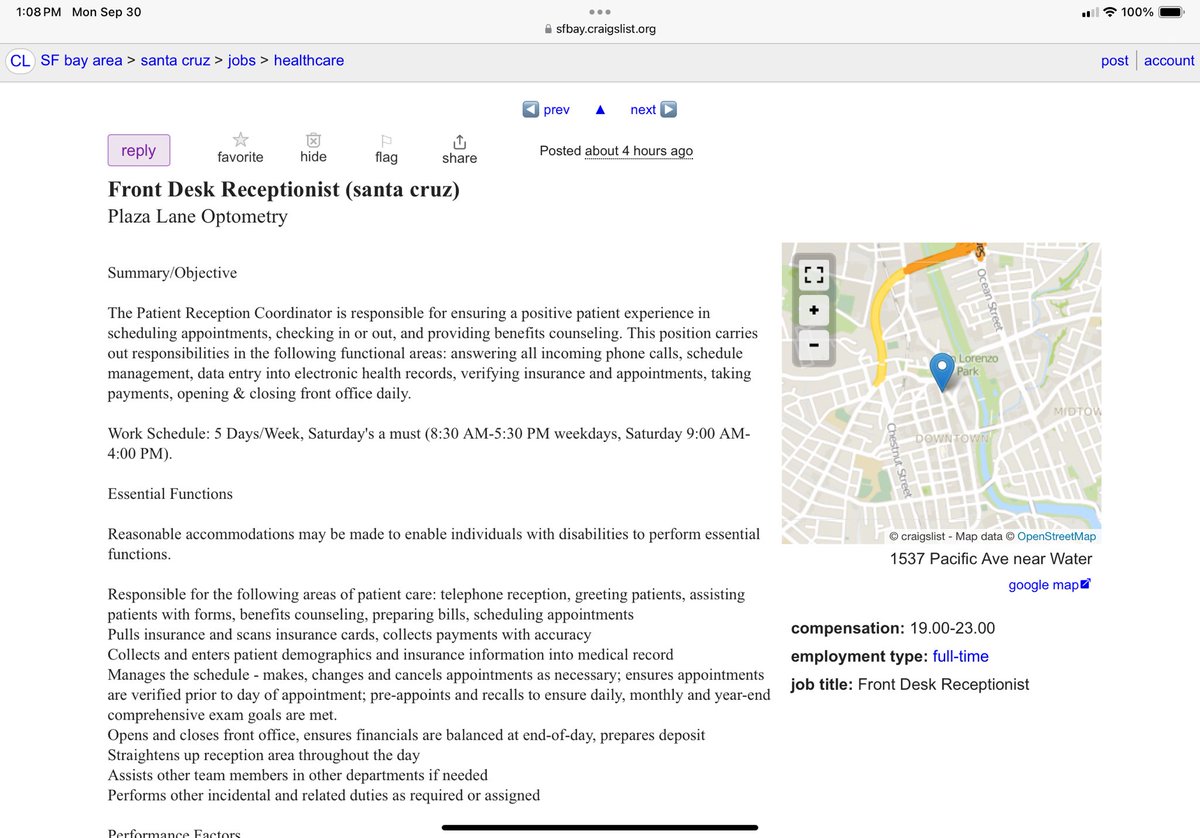
Try going through Craigslist or Monster for job listings — and notice for each job how many of the responsibilities could be done with AI *in its current form* or where AI will be very soon, particularly with more integrations…here’s a local optometrist:

One of my favorite restaurants where I live uses *zero* system for reservations. You have to call, they’re closed in the morning, and the number is always busy during peak dining times. I asked the owner — why not use an online reservation system? They’re so inexpensive now!

His answer: “We are *always* at capacity. We have never had a day where our tables are not full. This would just be an additional expense, and the employee who answers the phone is needed to greet/seat diners anyway — so the reservation taking has no extra cost.”

I asked him: “What if she retires or quits?”
“Well, then I’d hire somebody else”
“What if a software products could do everything she did, for half the cost, spoke 100 languages, never called in sick, and was never late. Would you hire that ‘product’?”
“That sounds crazy, but I guess?”

We’ve already started to see some of this. AI-powered products focused on specialized “complex workflows” are taking on tasks like the ones seen in the prior Optometrist advertisement. And some technology-laggards are adopting these tools first because (like with my restaurant example) they’ve just avoided tech because it’s felt like an extraneous expense…

New Essay: The Transmutation of Capital into Labor

Originally posted as a Twitter thread on August 22, 2024


New Essay: The Transmutation of Capital into Labor

https://a16z.com/ai-turns-capital-to-labor/

The first era of software took analog files, digitized them, and made them accessible with a specialized interface. Think PeopleSoft for HR files, Quickbooks for ledgers, Epic/Cerner for health…

This has played out for 50+ years as more industries have moved to running on software, not files. Cloud lowered the adoption barrier. Adding financial services to cloud made more markets “big enough” for specialized companies (e.g., Toast, ServiceTitan) to exist.

But the same humans that acted on the analog files now act on the digital files! And sometimes it’s impossible to align hiring and training (of those humans) with business needs.

This is what’s exciting about AI. It’s not filling software budget. It’s filling “labor” budget.

Wages in the US alone are $10T+ per year. The worldwide software market is a few hundred billion dollars.

The original “digital filing cabinet” winners have a tremendous amount of potential to add AI, but also have a daunting task of shifting from “per seat” pricing to “per outcome” pricing. Zendesk monetizes per seat. What if a business needs 95% fewer seats because of AI?

Some of the biggest startup outcomes will likely be “net new” industries where a business runs on nothing but Excel…because the software budget was small, the human budget large, and the ability to hire humans was so hard…think compliance officers at a bank.

There’s a saying in economics: “the cure for high prices, is high prices.” As the price goes up, more widgets get manufactured, which increases supply, which lowers the price.
But when it comes to humans and wages, there’s too much latency because of training, licensing, etc.

AI will largely augment employment, and fix many of the “market failures” present with highly skilled yet episodic labor. Imagine: I need your skill for 3 days a year (peak demand), but you need to go to school for 3 years to earn it.

Outcome Based Pricing

Originally posted as a Twitter thread on June 21, 2024


Can’t wait to see the first “incumbent” (in a large software field…like support, CRM, HR, etc) switch from “per-seat” pricing to **per-outcome** pricing.

I’m writing an essay on this now, but consider Zendesk at $115/seat per month…or ~$1.4M/year for 1000 agents:

Let’s say an agent is paid all-in $75,000/year and answers 2000 tickets per year.

This makes the human cost of a ticket $37.50, and the software cost $.69.

The human cost obviously massively outstrips the software cost…and unlike software licenses, it can take months to “install” (find, hire, train) a human to occupy that seat. And in many areas there is simply a dearth of qualified humans given licensing latency

In other words, you can’t simply lift wages and produce more workers…if it’s a role that requires licensing or sufficient training (think mortgage brokers, nurses, etc)

Not to mention the fact that it’s hard (and cruel!) to “flex” humans. Southwest Airlines can’t hire tons of humans when bad weather threatens to cancel flights and then fire tons of humans when weather is clear. But software is perfect for this

So: given the rate of improvement in AI for asynchronous support — what will it take for Zendesk to switch from (in the prior example) $115 per seat per month to, say, $10 per successful ticket answered BY Zendesk? Still much cheaper, more flexible, instant provisioning

It’s obviously going to happen, but how should they price this — it’s the ultimate example of value-based pricing? How to have this interact with existing “seats”? How to have teams not feel threatened by their new AI colleagues filling “seats”?

Whole industries will change, and new ones will be created now that software can produce the outcome vs simply be the tool.

Salesforce charges per-seat pricing for salespeople…why not charge per sale?
Maybe Workday can charge for HR “resolutions”
Etc

The Pre-Mortem in Product Planning

Original Post: https://x.com/arampell/status/1772734627410571443?s=20

Before you launch a new product, one of the most counterintuitively important things to do is to plan for how to kill or exit the product. FAST.

This isn’t as simple as it sounds…and it’s crucial for companies with multiple products or consulting work.

My company, TrialPay, was the leading company doing “offers” en lieu of payment. I realized we strategically needed to be in the more commodity payment processing space, more background here: http://www.arampell.org/2015/11/04/distribution-v-innovation/

We built this payment business to 9 figures of payment volume, but didn’t have sufficient focus to make it our top priority, and we were nowhere close to being #1 in the space. (Most value accrues to the #1 or MAYBE top 2-3 players).
But our core clients were using it!

This is why a pre-mortem is so important. We used our goodwill and “bundle economics” to cross-sell current customers on what had become a 2nd rate product. If we shut it down, they’d be PISSED and would potentially dump us for our core product!

So what to do? We were honestly stuck. Against the backdrop of massive pressure against our core business, per thread below. We needed to focus on what we were great at.
https://x.com/arampell/status/1562557849128931328?s=20

Our only answer was to find a home / new product for our customers. I called the then CEO of Braintree and basically offered our customers and product for free — he said “what’s the catch?” It’s not every day that a competitor (us) voluntarily capitulates…

But our real competition was FOCUS. It was clear we had lost the battle to be #1 in raw payment processing. Dedicating resources to be a distant #8 was more expensive than getting nothing for this asset.

The next step was to gingerly mention this to our clients without having them ditch us for our core, profitable offers product. This was hard. But we made it work.

Being an entrepreneur means being able to make the best of the hand you are dealt but also knowing when and how to switch tables. And switching tables dispassionately — when you have teams and customers “stuck” to the old table — is hard

This is one of the reasons to be VERY cautious about doing consulting work. Building a custom product for a marquee client sounds great to make ends meet, but you can’t kill it! You’ve just added a liability to your balance sheet. You have to support it…forever!

Theoretically you could kill it, but then good luck selling another product to that company. If you need to do a RIF, and you’ve gotten pre-paid for this software, how do you cut the team supporting this product that represents 0% of your future…?

So always, always think about this hidden “liability” on your business. Before you customize, contract, or test something…have a well thought through plan to KILL your new thing. Bake it into all your processes, contracts, code, culture, etc.

Every Big Company is Focused on AI

Originally posted as a Twitter thread on September 12, 2023


1998: “The Internet is stupid, people won’t buy X over the internet”
2008: “The iPhone is stupid, my BlackBerry works fine”
2010: “Cloud is stupid, on premise is more secure”

BigCo myopia created opportunities for startups.

But today, every BigCo is focused on AI:

This is why the “known unknowns” and “unknown unknowns” make for much more interesting markets:

https://a16z.com/financial-opportunity-of-ai/

Musings of an optimistic skeptic