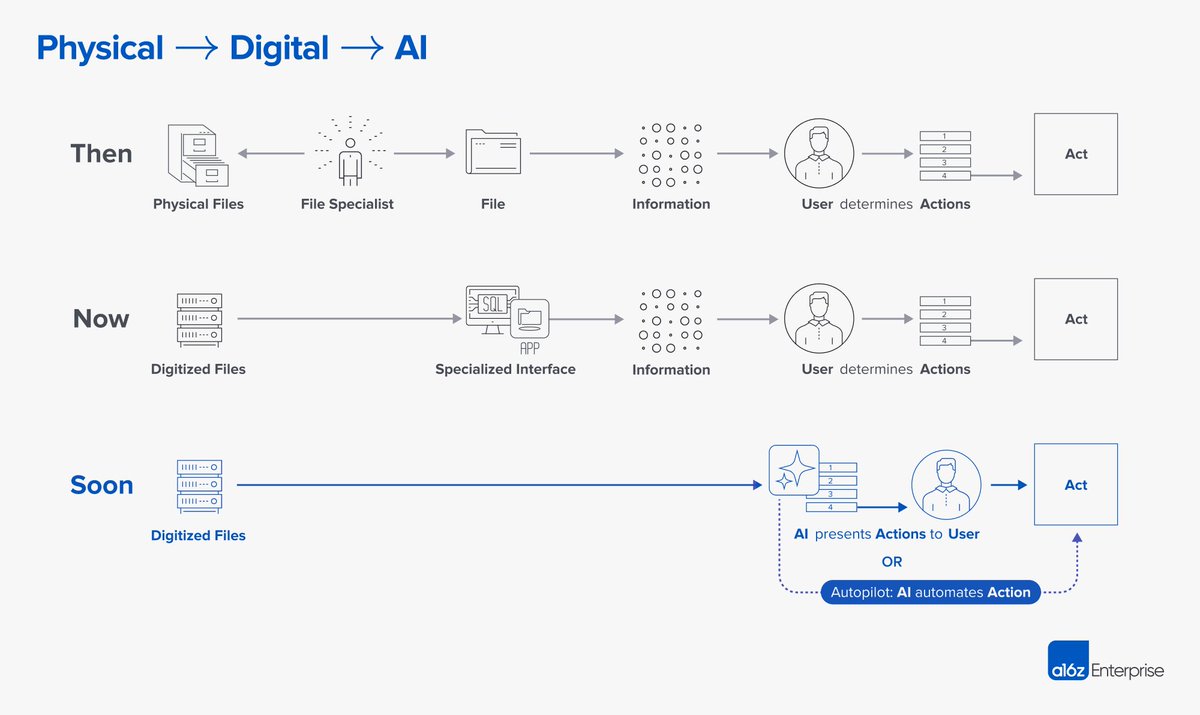
The first era of software took analog files, digitized them, and made them accessible with a specialized interface. Think PeopleSoft for HR files, Quickbooks for ledgers, Epic/Cerner for health…
This has played out for 50+ years as more industries have moved to running on software, not files. Cloud lowered the adoption barrier. Adding financial services to cloud made more markets “big enough” for specialized companies (e.g., Toast, ServiceTitan) to exist.
But the same humans that acted on the analog files now act on the digital files! And sometimes it’s impossible to align hiring and training (of those humans) with business needs.
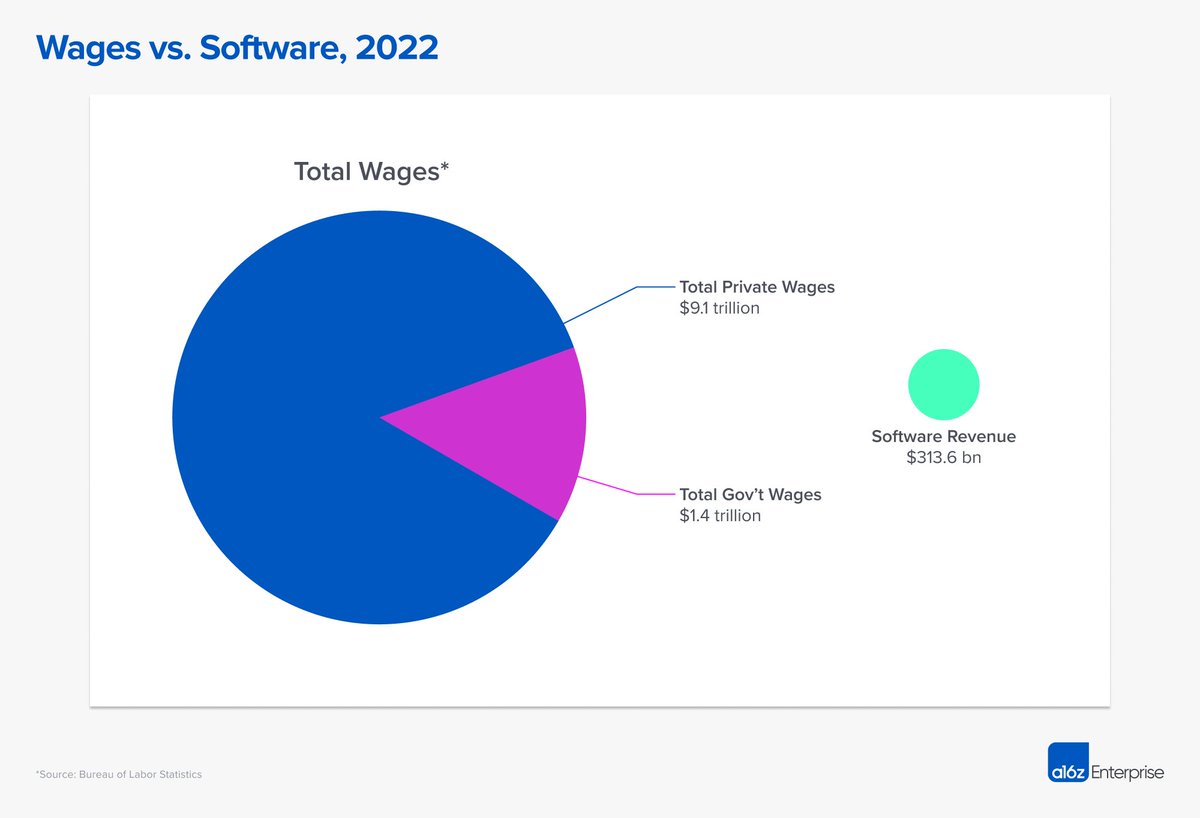
This is what’s exciting about AI. It’s not filling software budget. It’s filling “labor” budget.
Wages in the US alone are $10T+ per year. The worldwide software market is a few hundred billion dollars.
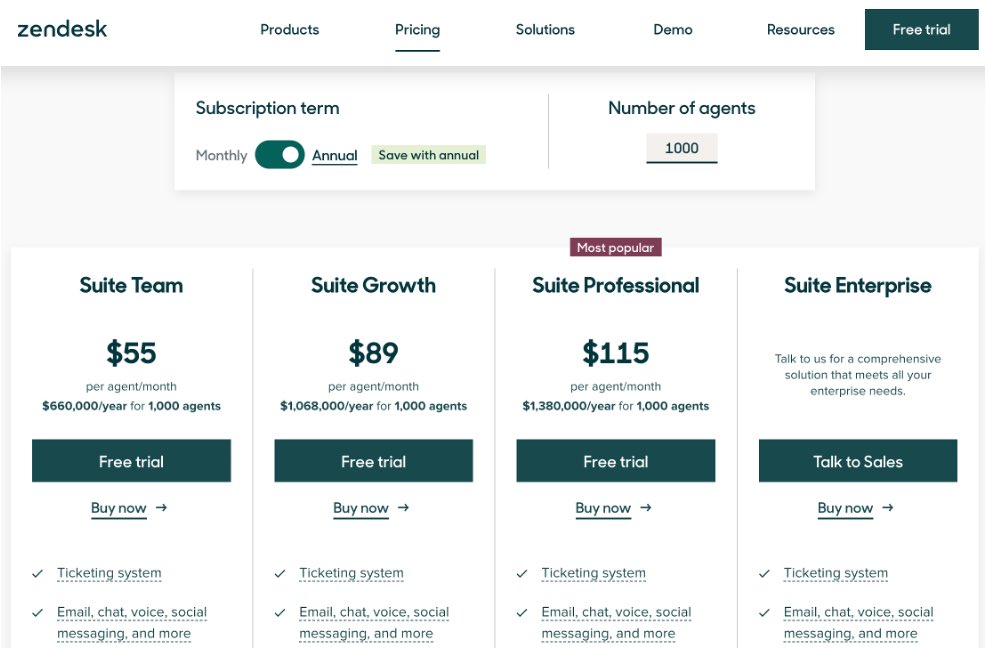
The original “digital filing cabinet” winners have a tremendous amount of potential to add AI, but also have a daunting task of shifting from “per seat” pricing to “per outcome” pricing. Zendesk monetizes per seat. What if a business needs 95% fewer seats because of AI?
Some of the biggest startup outcomes will likely be “net new” industries where a business runs on nothing but Excel…because the software budget was small, the human budget large, and the ability to hire humans was so hard…think compliance officers at a bank.
There’s a saying in economics: “the cure for high prices, is high prices.” As the price goes up, more widgets get manufactured, which increases supply, which lowers the price.
But when it comes to humans and wages, there’s too much latency because of training, licensing, etc.
AI will largely augment employment, and fix many of the “market failures” present with highly skilled yet episodic labor. Imagine: I need your skill for 3 days a year (peak demand), but you need to go to school for 3 years to earn it.
Can’t wait to see the first “incumbent” (in a large software field…like support, CRM, HR, etc) switch from “per-seat” pricing to **per-outcome** pricing.
I’m writing an essay on this now, but consider Zendesk at $115/seat per month…or ~$1.4M/year for 1000 agents:
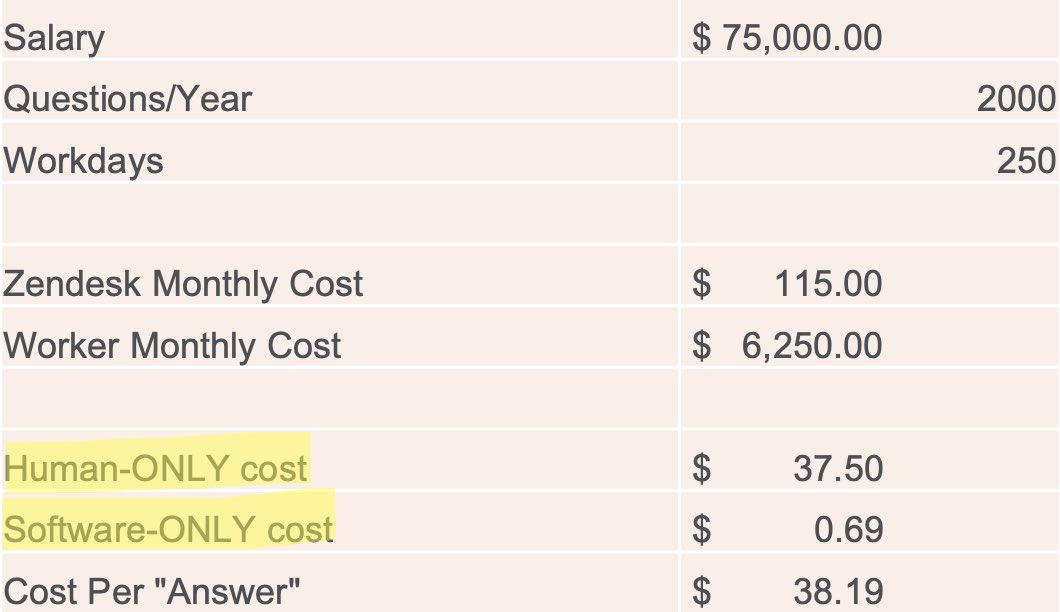
Let’s say an agent is paid all-in $75,000/year and answers 2000 tickets per year.
This makes the human cost of a ticket $37.50, and the software cost $.69.
The human cost obviously massively outstrips the software cost…and unlike software licenses, it can take months to “install” (find, hire, train) a human to occupy that seat. And in many areas there is simply a dearth of qualified humans given licensing latency
In other words, you can’t simply lift wages and produce more workers…if it’s a role that requires licensing or sufficient training (think mortgage brokers, nurses, etc)
Not to mention the fact that it’s hard (and cruel!) to “flex” humans. Southwest Airlines can’t hire tons of humans when bad weather threatens to cancel flights and then fire tons of humans when weather is clear. But software is perfect for this
So: given the rate of improvement in AI for asynchronous support — what will it take for Zendesk to switch from (in the prior example) $115 per seat per month to, say, $10 per successful ticket answered BY Zendesk? Still much cheaper, more flexible, instant provisioning
It’s obviously going to happen, but how should they price this — it’s the ultimate example of value-based pricing? How to have this interact with existing “seats”? How to have teams not feel threatened by their new AI colleagues filling “seats”?
Whole industries will change, and new ones will be created now that software can produce the outcome vs simply be the tool.
Salesforce charges per-seat pricing for salespeople…why not charge per sale?
Maybe Workday can charge for HR “resolutions”
Etc
Before you launch a new product, one of the most counterintuitively important things to do is to plan for how to kill or exit the product. FAST.
This isn’t as simple as it sounds…and it’s crucial for companies with multiple products or consulting work.
My company, TrialPay, was the leading company doing “offers” en lieu of payment. I realized we strategically needed to be in the more commodity payment processing space, more background here: http://www.arampell.org/2015/11/04/distribution-v-innovation/
We built this payment business to 9 figures of payment volume, but didn’t have sufficient focus to make it our top priority, and we were nowhere close to being #1 in the space. (Most value accrues to the #1 or MAYBE top 2-3 players). But our core clients were using it!
This is why a pre-mortem is so important. We used our goodwill and “bundle economics” to cross-sell current customers on what had become a 2nd rate product. If we shut it down, they’d be PISSED and would potentially dump us for our core product!
So what to do? We were honestly stuck. Against the backdrop of massive pressure against our core business, per thread below. We needed to focus on what we were great at. https://x.com/arampell/status/1562557849128931328?s=20
Our only answer was to find a home / new product for our customers. I called the then CEO of Braintree and basically offered our customers and product for free — he said “what’s the catch?” It’s not every day that a competitor (us) voluntarily capitulates…
But our real competition was FOCUS. It was clear we had lost the battle to be #1 in raw payment processing. Dedicating resources to be a distant #8 was more expensive than getting nothing for this asset.
The next step was to gingerly mention this to our clients without having them ditch us for our core, profitable offers product. This was hard. But we made it work.
Being an entrepreneur means being able to make the best of the hand you are dealt but also knowing when and how to switch tables. And switching tables dispassionately — when you have teams and customers “stuck” to the old table — is hard
This is one of the reasons to be VERY cautious about doing consulting work. Building a custom product for a marquee client sounds great to make ends meet, but you can’t kill it! You’ve just added a liability to your balance sheet. You have to support it…forever!
Theoretically you could kill it, but then good luck selling another product to that company. If you need to do a RIF, and you’ve gotten pre-paid for this software, how do you cut the team supporting this product that represents 0% of your future…?
So always, always think about this hidden “liability” on your business. Before you customize, contract, or test something…have a well thought through plan to KILL your new thing. Bake it into all your processes, contracts, code, culture, etc.
Originally posted as a Twitter thread on September 12, 2023
1998: “The Internet is stupid, people won’t buy X over the internet”
2008: “The iPhone is stupid, my BlackBerry works fine”
2010: “Cloud is stupid, on premise is more secure”
BigCo myopia created opportunities for startups.
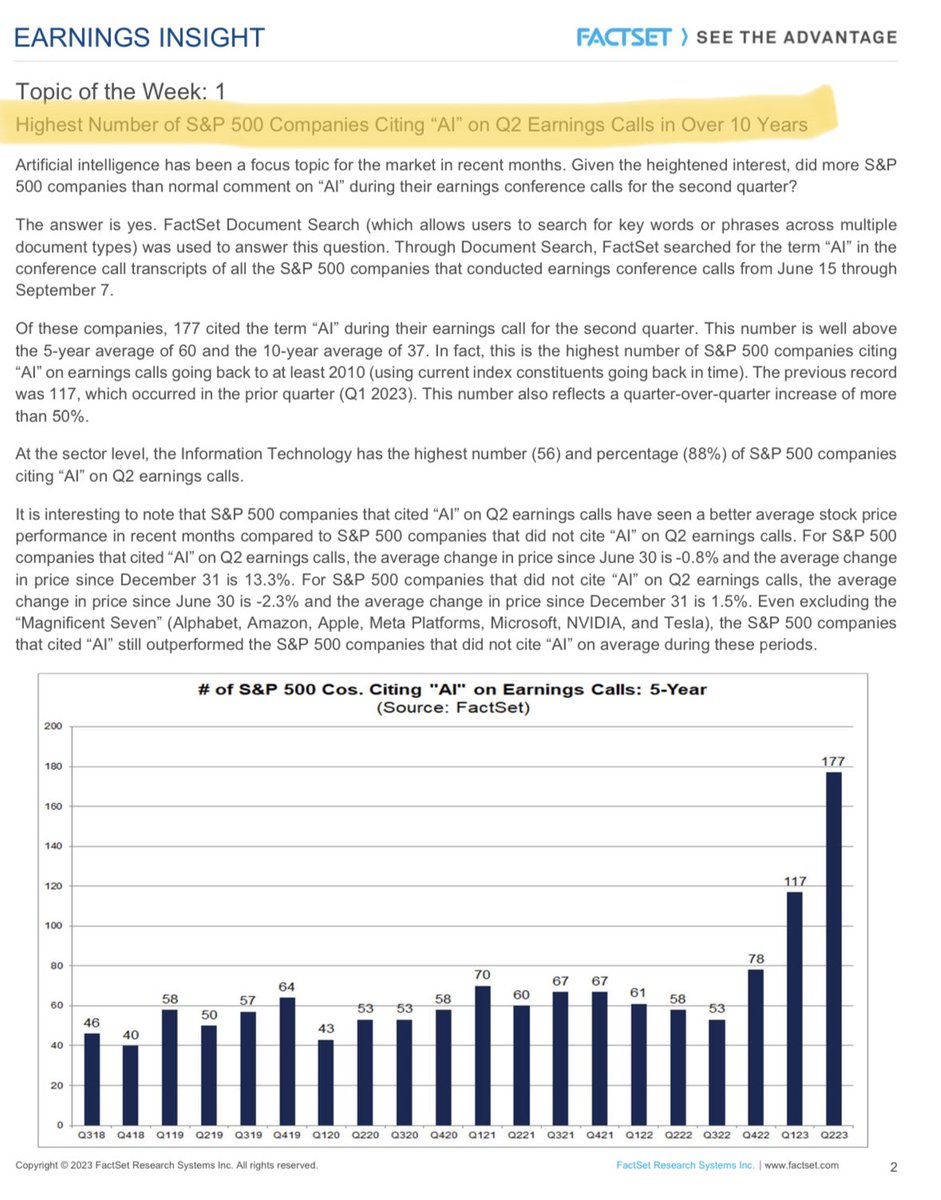
But today, every BigCo is focused on AI:
This is why the “known unknowns” and “unknown unknowns” make for much more interesting markets:
Originally posted as a Twitter thread on September 01, 2023
When to Escalate vs Wait – implications for M&A, deals, dumb policies, etc
When an outsider presents an organization with evidence of “complex wrongdoing” (or mistakes) from within — where I define that term as a form of wrongdoing that *requires* internal corroboration — almost inevitably internal antibodies form to fight off the foreign accusation.
My general theory is that organizations optimize for internal harmony — not shareholder value or customer satisfaction. The CEO will defer to his or her VP, who will defer to his or her Director, etc. “We made a mistake — we should re-evaluate!” rarely comes up because the CEO is unaware of the particulars and policies.
This happens all the time in schools with placements, companies where egregious errors get committed (eg M&A diligence), investment firms where termsheets get pulled, Covid policies that made no sense, etc. Escalation almost never works because of specialization. Very different from “clear to anyone” wrongdoing/mistakes — “that person shot me, here’s a video!”
There’s also a seemingly innate human instinct to not admit a mistake – “saving face” is an almost universal human desire. But within an organization this instinct almost metastasizes and ossifies positions from bottom to top.
I’ve written extensively about TrialPay’s M&A travails:
In one case, an M&A process died when an engineer who didn’t understand our tech said it was “bad” — and subsequently left the company to start a competitor! Everything about it was ridiculous. https://x.com/arampell/status/1562557861145636866
But my mistake (even though I was right!!) was angrily escalating to the top — thereby releasing the full antibody response and ossifying the company’s viewpoint. The wrongdoing and mistakes were simply too complex to present without internal corroboration, which settled down to the same engineer.
I also learned that more data doesn’t really do anything to change most people’s minds. Time is more important. For some reason, humans are capable of changing beliefs when enough time has passed — not when contradictory evidence emerges. You really need both.
Key learnings:
-time > data. It’s frustrating but patience often beats action.
-escalation normally ossifies positions — it’s much harder to fight a strong antibody response than a weak one
-if escalating, make it about the principle – or something that does NOT require internal corroboration of the specifics. How does matter to the top / higher person in a way that doesn’t require looking up the minutia?
I’ve often written about how friction/inertia preserves giant gross profit pools in financial services.
The missing link to change this is what I would call a “consumer signup RPA” — which AI can do
RPA: Robotic Process Automation. Take an “API-less” process and “just do it”
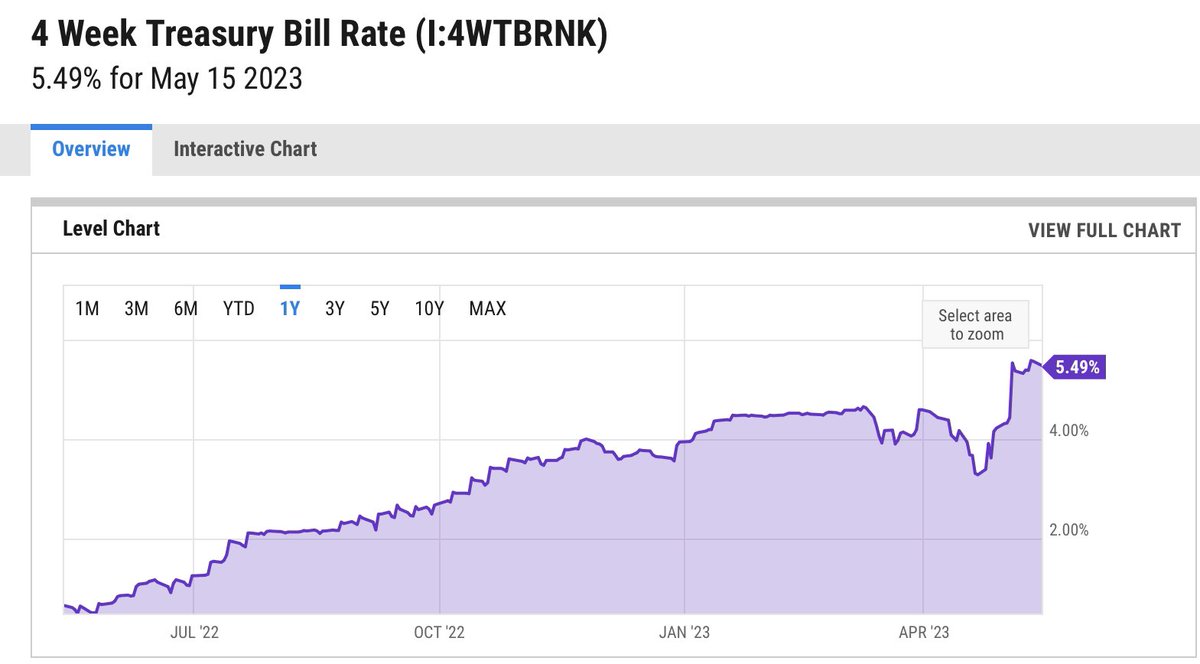
Nowhere is this more true than depository accounts. A 4 week Treasury Bill from the *US Government* pays 5.49% and a 1 year Treasury Bill pays 4.73%.
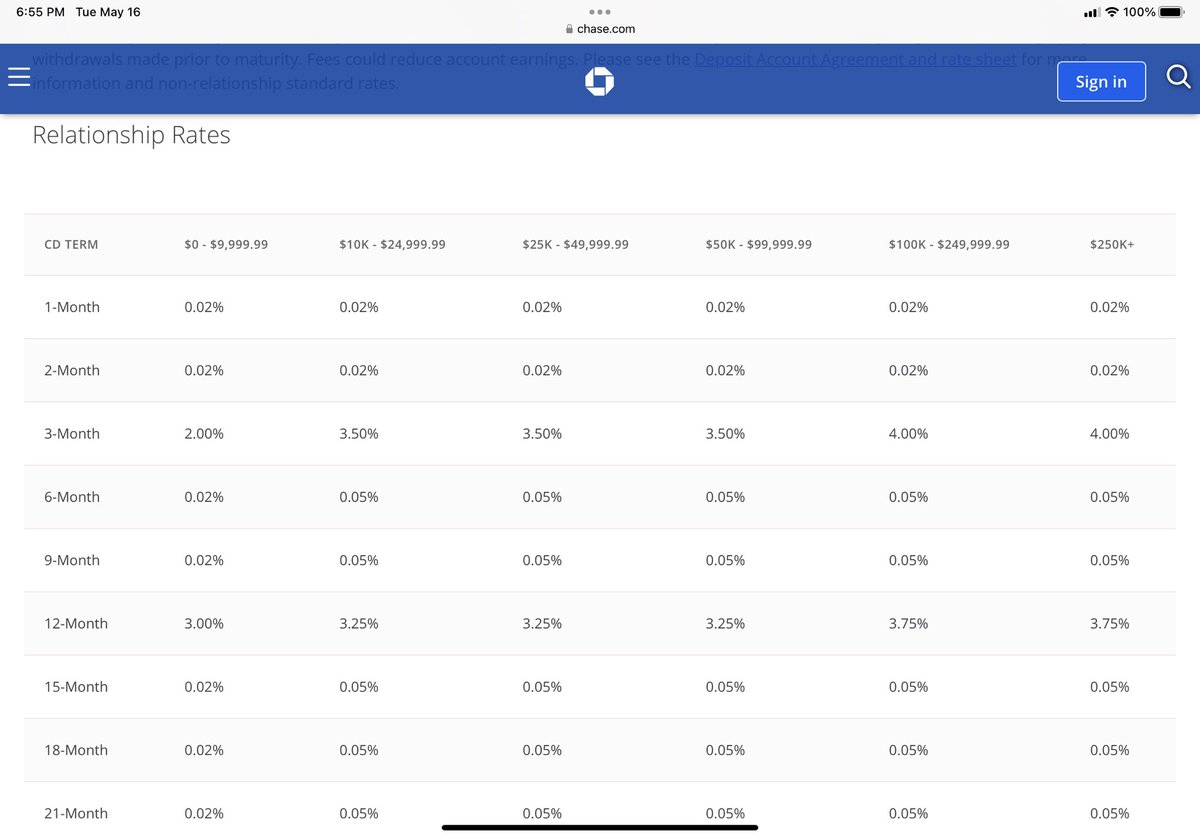
How much does the biggest bank in the US pay for the same…which of course is insured by the same US Government for ONLY up to $250K?
.02% and 3%, respectively…for a higher level of risk. You’d have to be insane to choose a CD with Chase vs a T-bill.
So WHY do consumers leave excess money or buy CDs with Chase? Three reasons:
1. They don’t know what yields are (Chase takes advantage of them)
2. It’s too hard to buy T-bills directly (try signing up for http://treasurydirect.gov)
3. It’s too hard to move money back and forth
The promise of Fintech (and in particular, tools like @Plaid) is that friction/inertia will no longer be an impediment towards consumers switching from the worst services to the best services.
Round One of this was “tools to read” information — let’s import your credit card purchases, or read your checking account number in.
Mobile Wallets have the promise of being a platform for financial services (the App Stores equivalent = financial products). I wrote about this back in 2016:
But AI is also going to transform this, because the incredibly painful (consumer) process of, say, buying short duration T-bills directly from the US government could now be…very easy. Or the seamless movement of money to meet bill pay needs and invest excess cash.
And the missing link for all of this has its technological answer in the form of Generative AI. AI has been used extensively in fintech, but primarily for “scoring” and “approving” things — speeding up backend processes.
But Generative AI is the mirror image: help automatically answer things on behalf of a consumer, bringing a generative robot to a 1990s workflow from a bank (or government) that’s unlikely to embrace, say, RESTful APIs.
And it’s not just about seeking higher yield or lower debt cost, which are particularly salient in today’s higher interest rate environment. Friction/inertia also keep people on their metaphorical financial Flip Phones vs meaningfully better products and experiences
Gen AI also has cost-saving, transformative opportunities for the big guys, too. But if they keep ripping off their customers, they’re finally going to start paying the price as “assistants” make breaking up easy to do…
We no longer live in the “It’s a Wonderful Life” bank era. Fear can spread at the speed of WhatsApp and iMessage and Twitter, and electronic transfers can instantaneously render a bank insolvent.
Branches and branch-centric thinking are anachronisms.
At the same time, banks in 2023 do MUCH MORE than just lend and deposit money. They provide pipes and technology for *everything.* Payments are mostly electronic, not cash. Payroll goes to a payroll company which…has its own bank.
The Great Depression rendered a whole generation skeptical of banks. Money under mattresses was a thing. But that’s before commerce was entirely electronic. Most people can’t live life “cash under a mattress” even if they try. Lots of places won’t even accept cash!
And if you just say, ok, I’ll diversify banks at $250K max cap…what do you do if your business has a $1M payroll run to make and you use ADP/Paychex/etc. Which bank do THEY use? Or: How do you buy something like a >$250K house where the money “sits” somewhere in escrow?
Do we really want to concentrate all US deposits in 4 big banks? They can’t withstand a 50% instant withdrawal event, either. Or concentrate OUT of banks and into short-term t-bills?
When starting a company, can you get to *5 customers*? Who are they? Why will they trust YOU?
As a VC, these are questions I always try to ask (selling B2B). I’ll tell my story of how my company got our first 5, and why 5 seems like a good heuristic of “you’ve got something”
I love the term “productize” — it effectively means turn a “service” or “consulting” project into a repeatable widget. Does a large n of customers need/want the same thing, or *roughly* the same thing with few customizations? Then…it *might* just be productizable
If you get your Uncle or Cousin to use your product, maybe it was a favor…which is a feature (not bug) if it indeed is the SAME product you can sell to a few other strangers. But a lot of times a “few” customers is just a collection of favors and is Fool’s Gold…
Fool’s Gold because it’s just not repeatable and hides brutal market feedback. You can only have so many college roommates, cousins, and uncles. But if you get 5 distinct customers to “agree” on the same set of features, it’s a very good sign and you’re off to the races.
TrialPay started off as something I used for my own freemium software business. “Don’t want to pay $10 for my app? Get it for free if you sign up for Netflix or get a Discover Card or shop at Gap.” It worked great so I decided to turn it into a company…and raise venture $
But a lot of times ideas/companies come in waves — two other companies basically popped up at the same exact time. Identical idea/value prop. Lift Media (@jmurz) and MyOfferPal (later merged/renamed TapJoy). We all pitched the same VCs within weeks in 2006!
I had a key advantage over them in that I still had my software business so could “create” traction — I was my own first customer. Could figure out if things were working. But more importantly, it gave me credibility in “my community” of freemium software developers.
After starting the company, my co-founder @terryangelos and I went to the “Shareware Industry Conference” in Denver…and we signed several customers there, the largest being WinZip. I gave a talk on my results with my own products…so had the credibility and knew this niche
This was so niche that few outside of the industry even knew of this conference…or had the credibility/connections with this somewhat esoteric group of businesses/people. I remember meeting @bradfurber and @allennieman there…at a relatively unknown (but big revs!) company…
But sometimes, particularly when building a “transactional” business (versus “per-seat” where you know # of employees), there are these “diamond in the rough” customers that turn out to be huge. Brad and Allen’s company (Sammsoft) was one of them. Huge client.
My *now* friend @jmurz of Lift Media was super smart, incredibly hard-working, and was building his nearly-identical business…he was my arch-nemesis at the time!!…but we got a big early lead, which later turned into a big fundraising advantage too…
And honestly it was almost entirely because:
A. I had a captive early customer that would do anything I wanted (customer was…me!)
B. I found a bunch of other customers that “looked” like me — no chasm to cross. “I sell $30 Windows software, you sell $30 Windows software”
As we expanded, this was one thing that never ceased to amaze. Companies *across* verticals often have a hard time being the first in their space…getting Skype or Fandango to use us was not really helped by the fact we had WinZip. “Oh, that’s totally different.”
My advice to developing a killer product and go-to-market — and ensuring you don’t end up over-engineering into a void or losing to another competitor — is that you need both a founding team (founders/employees) and a founding *group of customers*
You need some vision, flexibility, and fortitude to make sure YOU are building the product, not your customers — otherwise it’s the Henry Ford “if I asked my customers what they wanted, they would have said a faster horse”
But you also need real market feedback so getting some friendly customers — who are willing to bet on you (kind of crazy to run your business on a money-losing startup!!), ride out some bumps, and give more than an occasional testimonial…is crucial
So sometimes 0->1 is not all that hard (if “1” is your Uncle). Getting 1->5 is actually what’s hard…synthesizing feedback, and building that trust that no 12-months-of-cash-left startup is just “entitled” to. It’s a crucial ingredient to success.
Some ideas on how to do this:
A. Give equity to your early customers or have them invest
B. Have no shame plumbing every connection you can – favors and believers
C. I tend to think the best companies are ones that came out of personal experience / you can be 1st customer
Thanks to @1nternetjack for the idea on this one. And watch this scene from one of the best Simpsons episodes ever, about the perils of *overly* conforming your product to just one customer:
Originally posted as a Twitter thread on January 27, 2023
What is the “Finance” and “Financial Opportunity” of AI?
If “Bit Manipulation” is a key part of your COGS or SG&A, there’s a huge opportunity or huge disruption coming your way (or a PE firm that might just buy you).
Two sections follow: “Known Knowns” and “Known Unknowns”
Known Knowns: There are companies already doing X, and thus there are two opportunities:
-sell a tool to turn “bit-manipulation-by-people” costs -> GPU usage (AI base marginal cost)
-create a vertically integrated company that competes with a legacy player…by doing the above
Financial services (unlike, say, Campbell Soup or Boeing or Fedex) are primarily “bit manipulation” — little atom moving needed!
How do you apply for a mortgage? Insurance? Reinsurance?
A lot of the cost is…movement of bits. Move info from here to there, validate X, etc.
Companies, and people within companies, tend to be extraordinarily slow routers of information. Person X emails Y, who’s on vacation…who upon return asks for more info, and then passes it to Z, etc. Do it more quickly, save money and win share.
There’s a tremendous private equity opportunity here, which is the “finance” opp. Any company might see a *dramatic* difference in bottom line once more of these bit-manipulation functions are automated. It’s like going from seamstress -> loom -> textile factory…for bits.
Next: Known Unknowns. What I’m fascinated with are companies that cannot/do not exist today due to a market failure between what companies/consumers will pay and what people will work for…in the realm of bit manipulation.
For example: “Find all counterfeit listings of my product on Reddit/FB/Twitter/forums, for $100K/year” or “Reach out to unhappy customers and get more information, for $100K year”
There’s probably lots of demand at a given price but impossible to provide service at that price
So there are no “market comparables” or set of companies to look to. It’s just an old fashioned supply/demand curve where there’s no quantity demanded at the price where labor is willing to supply…
Working on an essay on this with some data from existing companies — more to come soon.