BNPL and “Incumbent Does X”

Originally posted as a Twitter thread on June 07, 2022


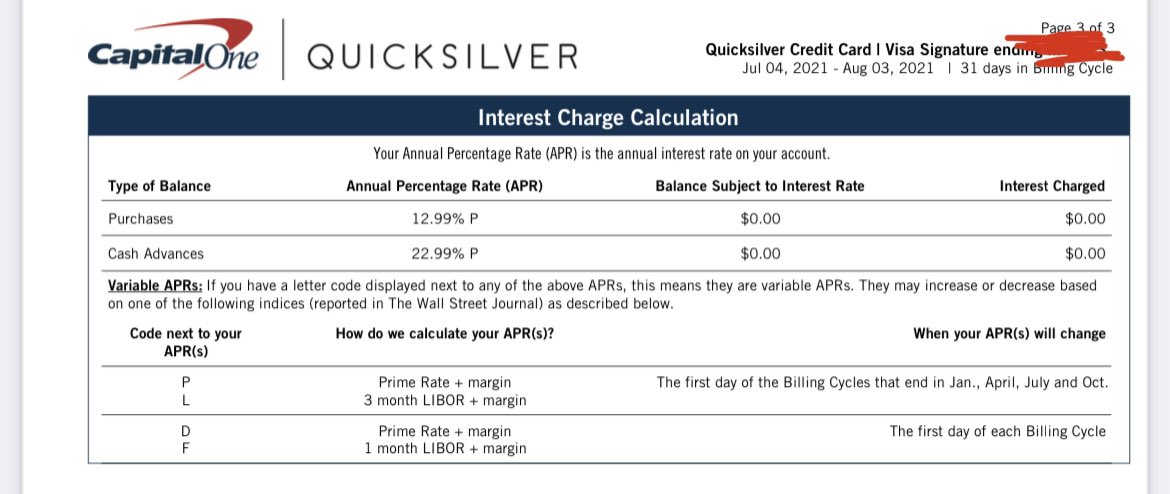
“BigCo X offers installment payments on existing payment rails” is not really competition to a wide set of use cases that Buy Now, Pay Later enables, because without allowing the merchant or manufacturer to lower the interest rate or extend the term, it doesn’t change behavior

For example, Amex has offered *for a long time* a product called “Plan It” which works great and allows any purchase to be turned into a set of installments.

Here’s my Amex bill
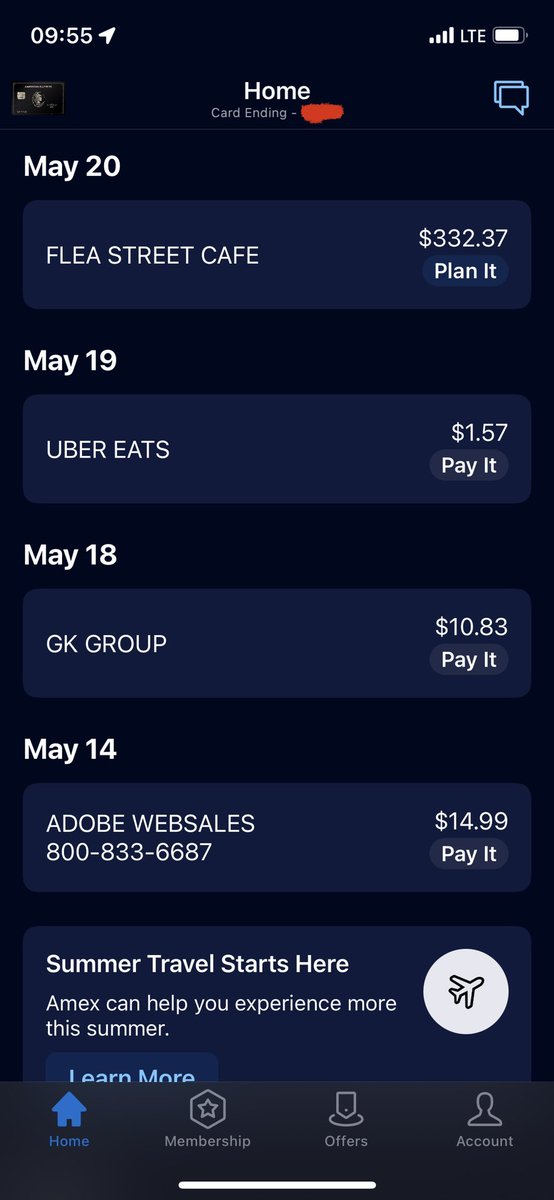
I click on “Plan It” next to my Flea Street payment (great restaurant btw) and can either Split It (with friends, using Venmo or PayPal), Plan It (turn into installments), or even Use Points
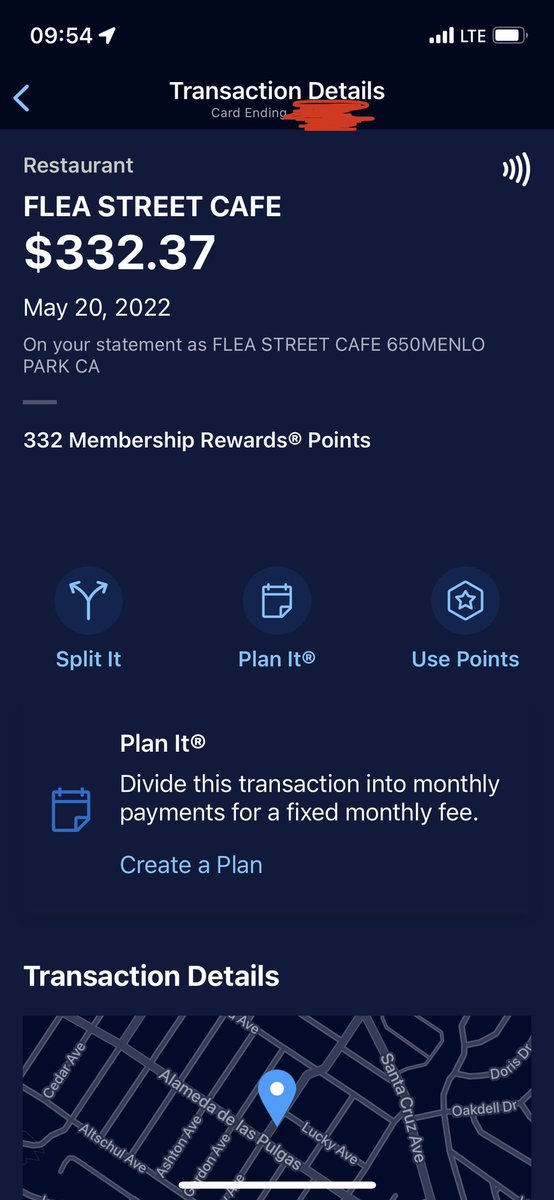
I’m going to use Plan It, which offers me several installment plans — 3, 6 or 12 months. No interest but a monthly “plan fee”
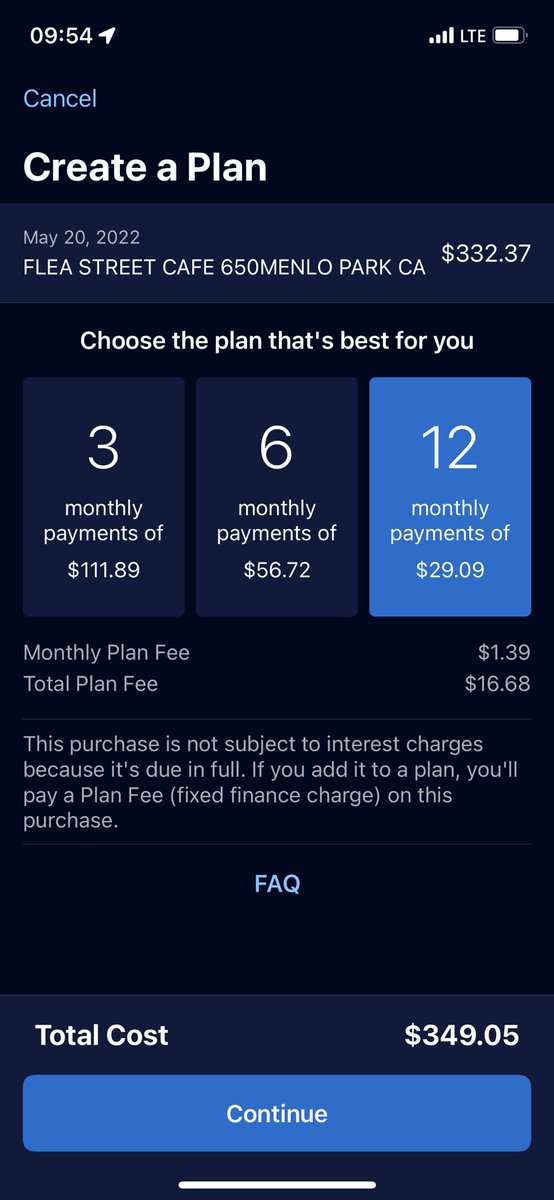
This works great, but to the point at the beginning — it misses the fact BNPL is a *promotional tool used by manufacturers and merchants to sell more stuff* — eg, Toyota often offers and *advertises* 0% financing to induce you to buy (promotion!)…not “post payment planning”

More on this from a thread I wrote in September 2021: https://x.com/arampell/status/1435692945387048964

ApplePay is awesome, and integrating installments to ApplePay makes sense, just like it made sense for Amex, above. But the “consumer + merchant + manufacturer” magic of BNPL happens when merchants/manufacturers can lower rates and extend terms to consumers…

…and can actually integrate those lower rates and extended terms into promotional materials in order to bring customers TO the checkout. It’s “too late” to first show this in the literal checkout line…which is why car manufacturers have run financing promotions for decades.

BNPL “done right” brings this same set of tools to any merchant and even any manufacturer (see long BNPL thread above on manufacturer-sponsored offers), helping unlock sales that otherwise would not happen
Education and Home-Schooling

Originally posted as a Twitter thread on January 02, 2022


Normalizing/destigmatizing home schooling — as well as appending social, athletic and other “non-academic” parts of the school experience — feels both (a) necessary (school closed!) and (b) a solution to the country’s increase in woke nonsense (eg: https://sfist.com/2021/02/10/sf-school-board-votes-to-permanently-end-merit-based-admissions-at-lowell-high/ )

I realize this sadly isn’t practical for many households (single-parent, or both parents at work, etc) where school doubles as child-care. But “remote school” has no child-care and has adopted no advances in INDIVIDUALIZED instruction — something the internet can uniquely do

That’s the worst part of this whole “Zoom school” experience. It could have been a great step forward for 1-1 “mastery learning,” which DRAMATICALLY changes educational outcomes — this has been tested, proven, and known for decades:

https://en.m.wikipedia.org/wiki/Bloom%27s_2_sigma_problem

Instead, Zoom-school got rid of the good — the social experience (learn how to get along with peers in the real world!) — and did nothing to use the unique nature of what 1-1 learning/technology can accomplish. It just moved the mediocre part online, making it even worse…

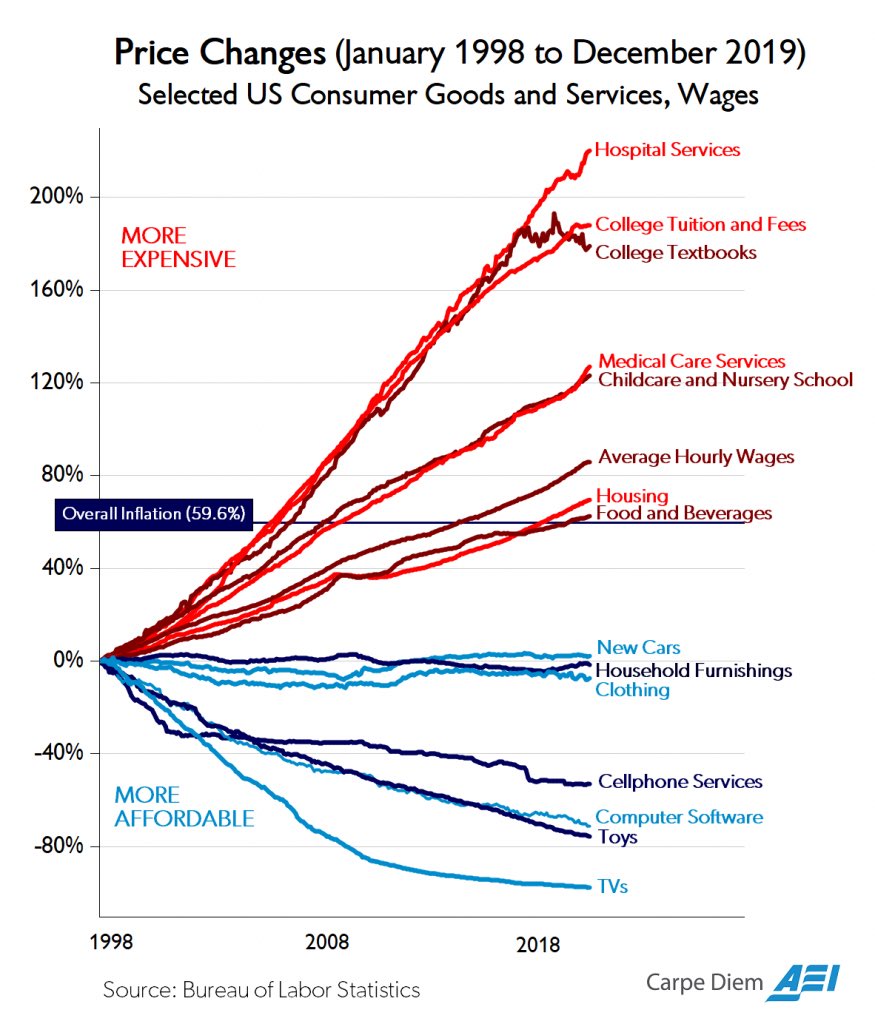
Add in the hyper-inflation of education costs, and we are getting much less result for much more $$$…now with free degraded mental health outcomes given social separation! There’s a free and arguably better version of Zoom school called Khan Academy

Hopefully as credentials get unbundled from education the higher education monopoly will falter… https://x.com/arampell/status/1105667061986914305

But K-12 is far more foundational and less credential oriented. Pedagogy and social interaction matter. The internet has limitless free content, and experts from all over who can offer individualized instruction catered to the EXACT level of each pupil…

I’ve been astonished how much my kids have learned (far in excess of the one-size-fits-most school curriculum) from free online content (eg 3Blue1Brown on YouTube)… and sites like Wyzant that aggregate experts from around the world in ANY topic for 1-1 on-demand instruction

I used to think school choice / vouchers was the solution, and it certainly WOULD be helpful during Covid as public schools shut but private schools stayed open — a huge blow for lower income families. Imagine if this had happened 36 years ago:

https://www.nytimes.com/1985/11/14/us/reagan-proposes-vouchers-to-give-poor-a-choice-of-schools.html

But now I’m much more convinced that a vibrant, technology-first homeschooling option is the counterweight we (parents) really need given the panoply of problems with the established education system/culture (cost, outcome, lower-the-ceiling v raise-the-floor mentality, etc)

Historically, home-schooling had (has?) a stigma attached to it — it’s just not “normal” and how will kids fare without normal social experiences attached?

But this is going to change — both because the offline keeps getting worse (or shut!) and the online — the “strong” form being the online native — keeps getting better. My partner @cdixon applies strong v weak to tech writ large here:

https://cdixon.org/2019/01/08/strong-and-weak-technologies

Online-native education — provided the offline accoutrements are solved! — will also hopefully bring true equality of opportunity to students anywhere and everywhere. That’s a future we should all want to strive for.
Fin.

Intelligent Regulation

Originally posted as a Twitter thread on December 17, 2021


Many of the best entrepreneurs *welcome* intelligent regulation because it prevents the tragedy of the commons — where the only way to “win” is to do underhanded things. I lived this in 2009 with sketchy ads in offer-based payments…and wrote this:
https://techcrunch.com/2009/11/03/tragedy-of-the-social-gaming-commons-a-blueprint-for-change/

Government and platform (yes, some platforms have that much power) regulators do customers *and* entrepreneurs a favor with smart regulation, because it forces companies to compete on who can do the best job for the *customer*

Stochastic Gross Margins of Financial Services

Originally posted as a Twitter thread on November 03, 2021


Many areas of financial services have “stochastic margins” per widget, but hopefully (obviously!) positive margins for the whole batch of widgets sold – unlike most manufacturers, with fixed/declining COGS at scale. This means many things when you build a “financial” business

You might make or lose money on the marginal loan, marginal insurance policy, marginal payment processed, marginal market-making trade. Apple makes the same margin on every iPhone 13 Pro it sells.

In no particular order, here are some things to think about:

Understanding adverse selection v positive selection is crucial. And the “default” (when you are providing pure MONEY) is being *overwhelmed* with adverse selection before the positive selection customers even show up. Bad loans, risky insurance, tainted properties, etc.

ONE FORM of adverse v positive selection is pull v push. In most businesses organic consumer adoption is a godsend. In risk, it is not! Compare people searching for “I need a loan” to people who get “pushed” a loan offer based on their highly desirable, prescreened credit

This is one of many reasons why postal mail works so well (surprisingly!) for lenders. It’s not just the saturation of the channel – it’s push v pull, picking your customers vs trying to pick through the sea of (possibly) adverse selection applicants

So tracking the **channel** against the cohort performance is *crucial* to understand which channels tend to have more of this adverse dynamic, even holding things like credit score or underwriting risk constant. Cohort customers by time AND channel (and other behaviors)

Be highly, highly tuned to “anomalously high” conversion rates. It might mean that you found a great channel, or it might mean you found a motherlode of desperate/bad/fake customers

A life insurance executive once told me that they found that post-midnight advertising on the History Channel was their most cost effective channel, but turned out to be netting very bad, depressed customers — which didn’t show up in medical underwriting but tracked to channel

Another form of adverse selection happens when you are buying/underwriting a subset of financial products without seeing the full set. Think lenders who sell SOME of their loans. The offered products are ipso facto riskier or worse than the retained ones.

The tail REALLY matters – cohorts need to season. If you are selling life insurance, you don’t know if you’re good or bad at underwriting until (sadly) people die. If you’re buying homes…until the VERY last homes sell.

A mistake I see many companies make is they record their early realized gains, and either assume that will continue or (equally bad) hold everything else in the tail at cost. The last trades are almost always the worst — that’s why it took so long to unload them

Promotions are their own form of adverse selection in “deal seekers.” PayPal once ran a giant promo (trying to launch their offline biz) with HomeDepot, and saw massive customer adoption – but all from SlickDeals deal seekers who saw opportunity for profit

so:
-let cohorts season before assuming anything
-understand channels
-always watch for adverse selection
-be vigilant watching for anomalously HIGH conversion rates
-push can outperform pull
-beware underwriting “subsets” of a customer’s business
-beware deal-seeking

iBuying and Marketplaces

Originally posted as a Twitter thread on November 02, 2021


few thoughts on iBuying in light of ZG news:
Amazon started off stocking every book it sold, but the vast majority of revenue is now 3P marketplace/FBA (Fulfilled by Amazon). Once AMZN aggregated consumer demand, it started aggregating other sellers and charging commissions

So iBuying is not simply “let’s take lots of principal risk by playing market maker.” Opendoor is aggregating a lot of inventory, which in turn aggregates consumer demand (direct to OD), which then would allow OD to aggregate 3P supply since supply follows consumer demand

the only way to do this is to buy the homes since, as a principal, Opendoor can choose to withhold from MLS and simply list direct. An agent representing a homeowner could try this but…there’s no strategic value to owner in risking lower price for “strategic value to company”

next: cohort math. The real embarrassment to ZG is that their misfire on this business impugns the accuracy of their apparently not very accurate “Zestimate.” But the reason for the misfire, IMHO, is about how cohorts work and age.

let’s say I buy 1000 homes this month for $300M. Avg price $300K. Between commissions, fixes, cost of capital, etc I might be shooting for 50bps profit at the end. But the last 10 homes to sell will make or break me. Why?

by virtue of the fact that they are my LAST 10 to sell, something must be wrong with them. Termites, ghosts, etc. I might need to discount them by 50% to sell them. But that 50% principal impairment wipes out my WHOLE cohort profit/is not realized until the END of cohort!

so basically:
-there is a lot of strategic value to aggregating supply -> aggregating demand to build a marketplace in the biggest asset class in the world. It’s not dumb to try.
-it is very, very hard to get it working, particularly since it will look good until the very end

Payment Network Effects and Incentives

Originally posted as a Twitter thread on September 27, 2021


There have been many attempts to topple payment network effects by paying users to switch. This almost never works, because (a) more people are motivated by convenience than small amounts of money, and (b) those motivated by money will suck up all the promotional budget ASAP

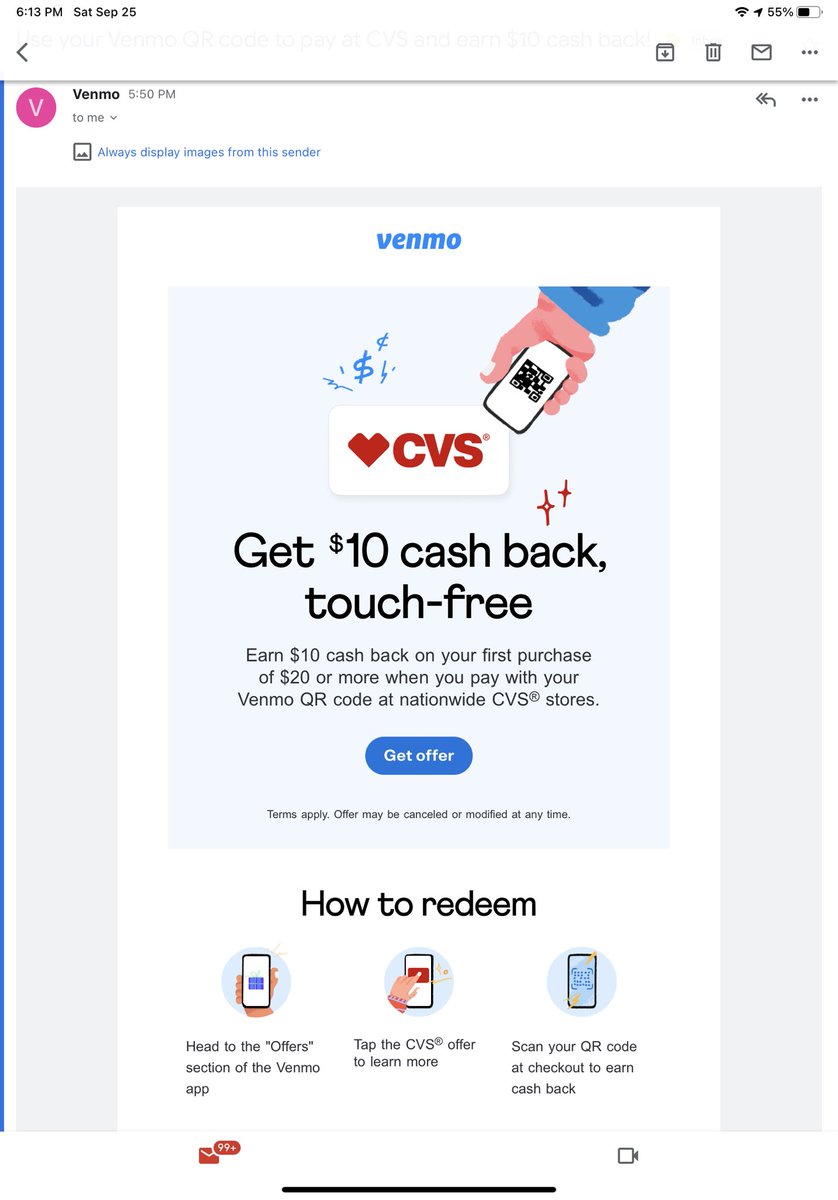
Good case study today is here, with Venmo, straight to my inbox. $10 of $20 at CVS! CVS doesn’t have 50% gross margins, so Venmo is almost certainly paying. But will “normal” people use this? Will it change behavior in a lasting way?

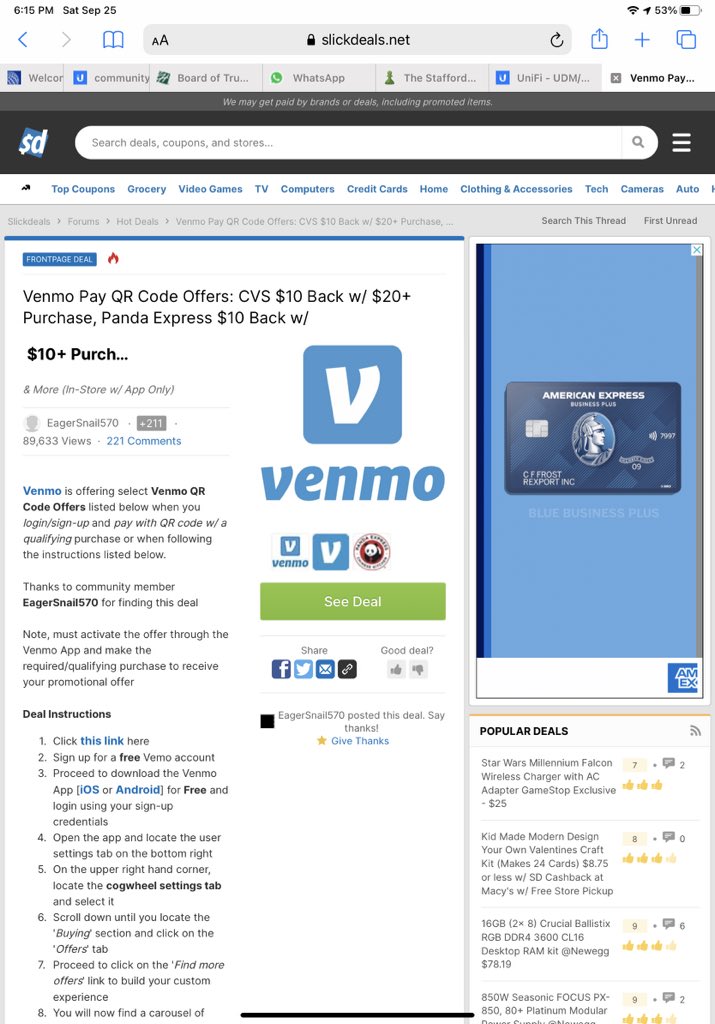
Whenever a promotion like this happens, the “deal hunters” of the internet rejoice! You can even buy a $20 CVS gift card for $10 + sell it on eBay for $15! See here, on Slickdeals…the promotion is capped (100M people can’t use it, that would be $1B!) and gets quickly depleted

PayPal did this with HomeDepot in 2012, in an attempt to jumpstart their offline business. https://www.wsj.com/articles/SB10001424052970203513604577145140658342670

Promotions aplenty (50% off etc), but it didn’t work…at least not in changing behavior. People (the deal seeking people!) pillaged the promotions and moved on.

A good rule of thumb: a new technology will take off “automatically” if it’s 10x better and 1/10th the cost. Payments offline just work, hard to make them 10x better (vs online, where many opportunities since people don’t memorize their credentials…lots of abandoned carts)

So then there’s cost, where you generate merchant excitement with anything that’s 1/10th the cost, but then fail to persuade consumers to adopt it since they lose their rewards. I often describe interchange as a problem of concentrated benefit (banks/V/MA) and diffuse costs…

Saving 2% on your $5 purchase is simply not compelling enough to sign up for a new payment instrument, or switch payment instruments, even though repeated enough times it’s real money. And the merchant might simply try to keep the savings, versus pass on to consumers.

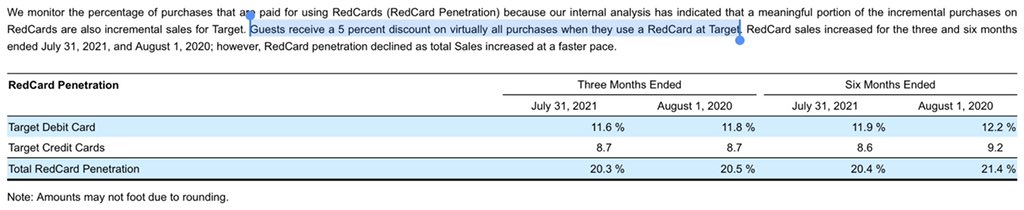
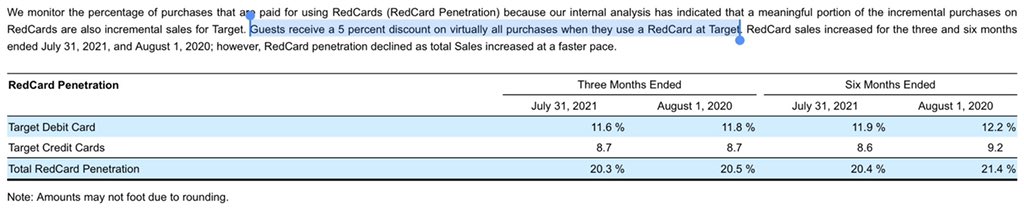
Look at Target. ~$25B in sales, if this were all credit @ ~2% (it’s not) that would be $500M in fees, or a 20% bump to operating income if they eliminated it. Target has something called their RedCard, which now accounts for >20% of sales by…providing 5% (!!) discounts

So Target *did* switch 20% of people over, which is impressive — but would those people stick if the 5% rebate went away? Maybe…but probably not? (NB: Target made $172M last quarter in a profit sharing agreement with TD for the Target Credit Card)

It *is* valuable to become (and pay for) the default payment in a new wallet with repeat usage that’s “set it and forget it.” Uber, Starbucks, United, Amazon…all have “wallets” with stored value, and credentials, that could theoretically be used elsewhere (e.g., AmazonPay).

The reason I find BNPL interesting is, as I stated here, the ability to produce a parallel network that yields more sales and customer utilization “organically”:

https://x.com/arampell/status/1435692945387048964?s=21 https://x.com/arampell/status/1435692945387048964

Changing behavior is tough, and providing discounts and offers generally doesn’t generate the lasting behavior change companies want. Google learned this lesson with Google Checkout, Visa with Visa Checkout, MasterCard with MasterPass, etc.

13/ So the opportunities and questions are: can you *in a lasting way* appeal to convenience vs cost? If so, a one-time incentive *might* be just fine. Otherwise — it’s probably wasted ammunition against the impenetrable fortress of interchange.

Why BNPL is an Early Threat to all of Payments

Originally posted as a Twitter thread on September 08, 2021


Why is “Buy Now, Pay Later” (BNPL) an early threat to trillions of dollars of market cap – Visa (almost $500B), MasterCard ($350B), card issuing banks, acquiring banks/services (Fiserv, FIS, Global Payments, etc)?

2/ Behind every card transaction there are FIVE parties: consumer -> issuing bank -> network (V/MA) -> acquiring bank -> merchant. The middle three get zero data on what items (“SKUs”) are being bought. Short video I made here:

BNPL makes no sense for, say, a $5 transaction at Walgreens. But do you want to get a 2 meter long paper receipt which you need to return that $5 item? Because of the architecture, there’s no way for the issuer to receive that AND the merchant doesn’t want to give it to them

Because the issuer, network, and merchant acquirer do not see SKU-level detail, financing is just “cash advance” and “everything else”
What if a merchant wants to lower the rate for SOME items? (Sell more!) What if a *manufacturer* wants to lower it across merchants? No can do

This what makes BNPL so interesting. It’s a **parallel** network, with SKU level information, that bypasses the issuing bank, card network, and merchant acquirer. It’s just the consumer, the merchant, AND (this is exciting!) a new participant: the product manufacturer!

Let’s say Samsung wants to create an installment payment plan for their new $1000 phone (b/c lower pricing sells more stuff!). How do they do this at, say, Walmart and Target and Amazon? When everyone has a different kind of credit card and those issuers don’t see SKUs? BNPL!

Right now this parallel network is being used for installments / customized financing – the clear product-market need and the hole the “one size fits all because of no SKU-data and five parties” created. But adding SKU-level info and manufacturers is a HUGE unlock for more

There have been many attempts to build a competing payment network (eg MCX: https://en.wikipedia.org/wiki/Merchant_Customer_Exchange) but they failed to address a consumer need. BNPL has both consumer demand and merchant demand, albeit for a subset of transactions

Over time, there’s no reason why any transaction – even the $5 Walgreens one – cannot be run over the BNPL rails, which are signing up merchants and consumers at an aggressive clip. Rather than a financing carrot, it might be a discount carrot, a warranty carrot, etc

Walmart et al created MCX because they hate (understandably so!) paying ~2% interchange fees. But those fees are protected by a very very powerful network effect. Walmart tried playing chicken in Canada — cutting off Visa cards in 2016 — and lost:

https://www.cnbc.com/2016/06/13/walmart-canada-to-stop-accepting-visa-says-fees-too-high.html

So you really need a *ubiquitous parallel network* with *consumer benefit* in order to go cold turkey against the current oligopoly and not lose sales. BNPL is just that. Merchants already use it, consumers already use it, and SKU data passes freely.

As the mobile phone increasingly becomes the consumer wallet, and as merchant payment terminals become smarter, you can also imagine a world where payments (and loans) automatically shift to the lowest cost/highest benefit provider…more here:

Open-loop payments (the V/MA system) are one of the greatest network effects of all time, and have created and *captured* tons of value. The moat is immense. But BNPL and mobile wallets are creating the first market-based (not regulation-based) cracks in the fortress.
FIN

Bretton Woods / End of Gold Convertibility

Originally posted as a Twitter thread on August 15, 2021


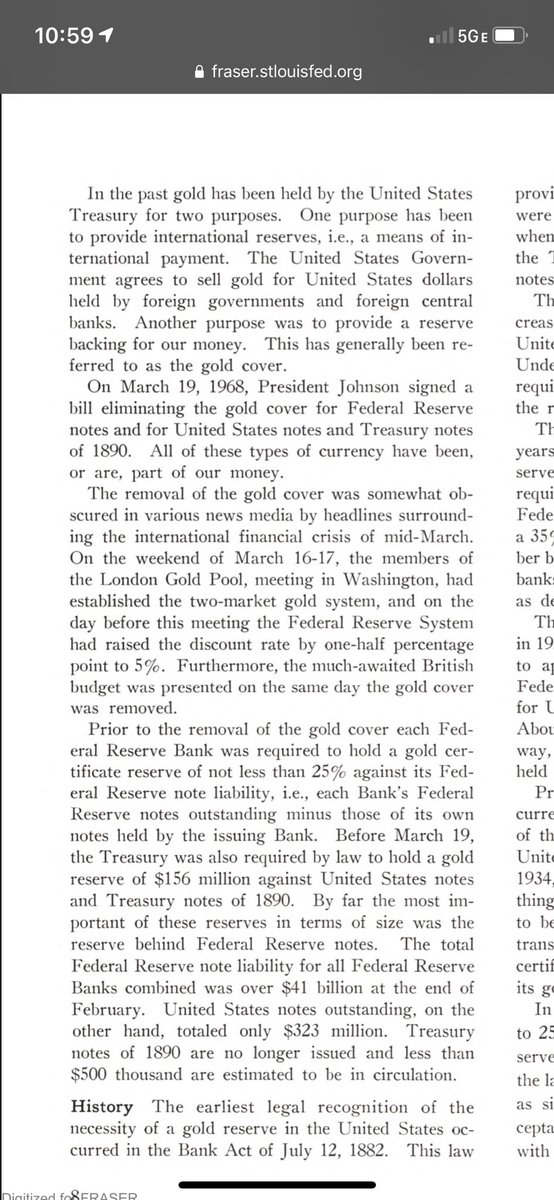
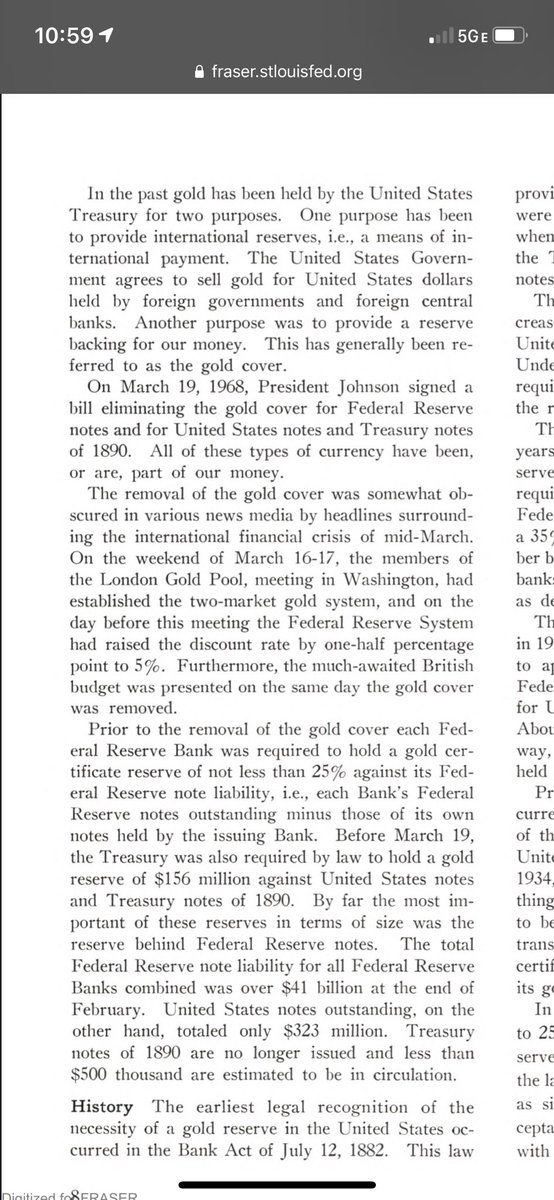
While Bretton Woods and USD gold convertibility formally ended on August 15, 1971, the writing was on the wall for years, particularly once LBJ suspended the 25% Gold Cover for Federal Reserve Notes (and 1890 Treasury Notes) in March 1968:

https://fraser.stlouisfed.org/files/docs/publications/frbrichreview/pages/65585_1965-1969.pdf

And more on the final nail in the coffin, and how this is related to Bitcoin:

https://x.com/arampell/status/1294880378147094530?s=21

Bureaucracy, Wokeness, and Sabotage

Originally posted as a Twitter thread on July 29, 2021


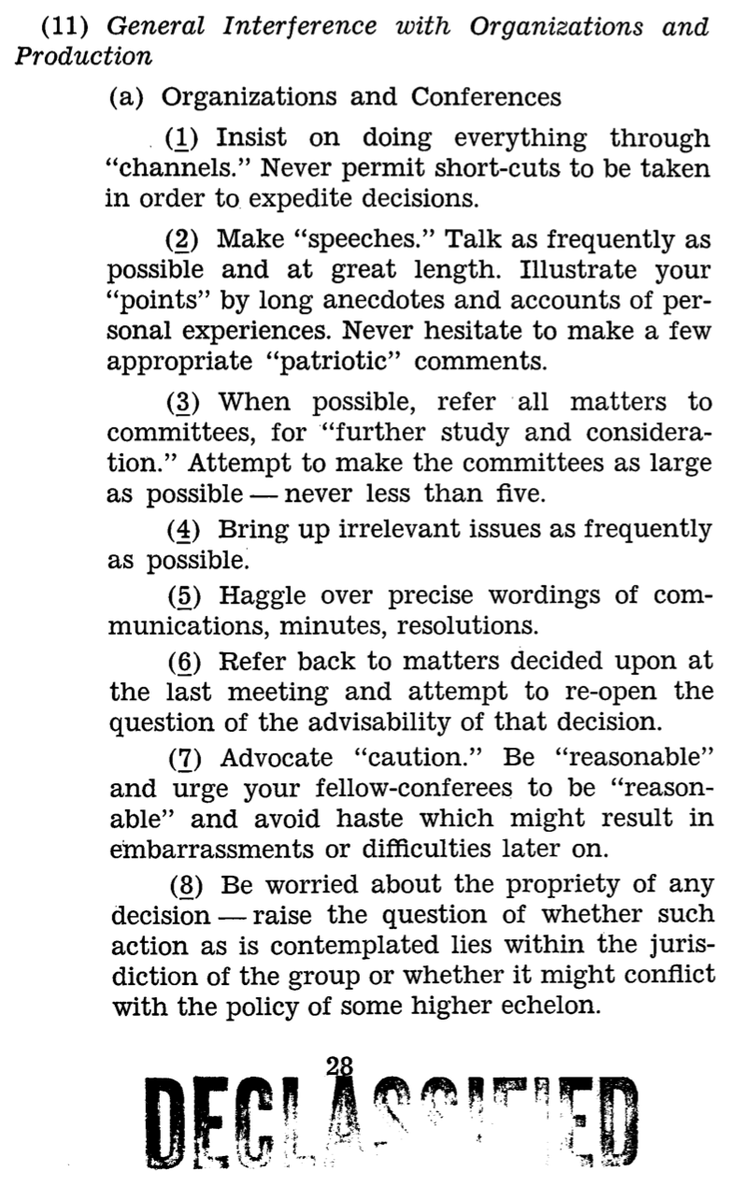
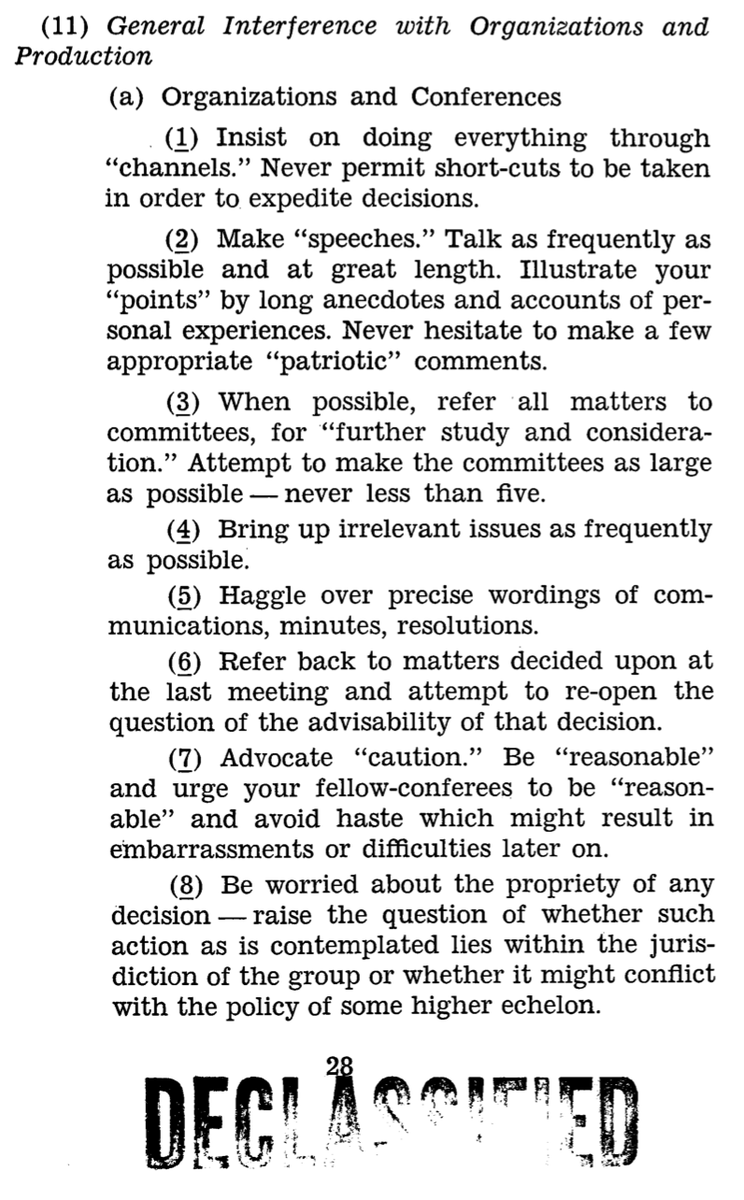
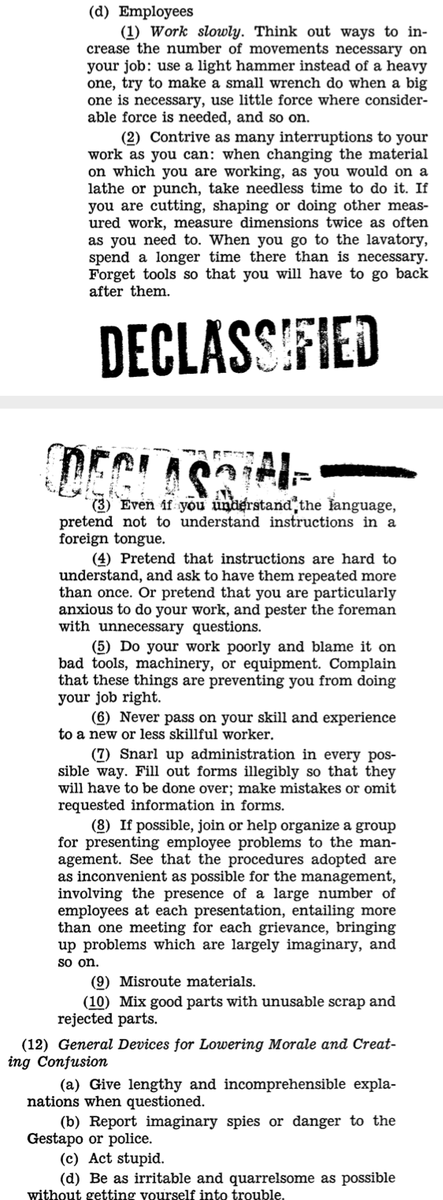
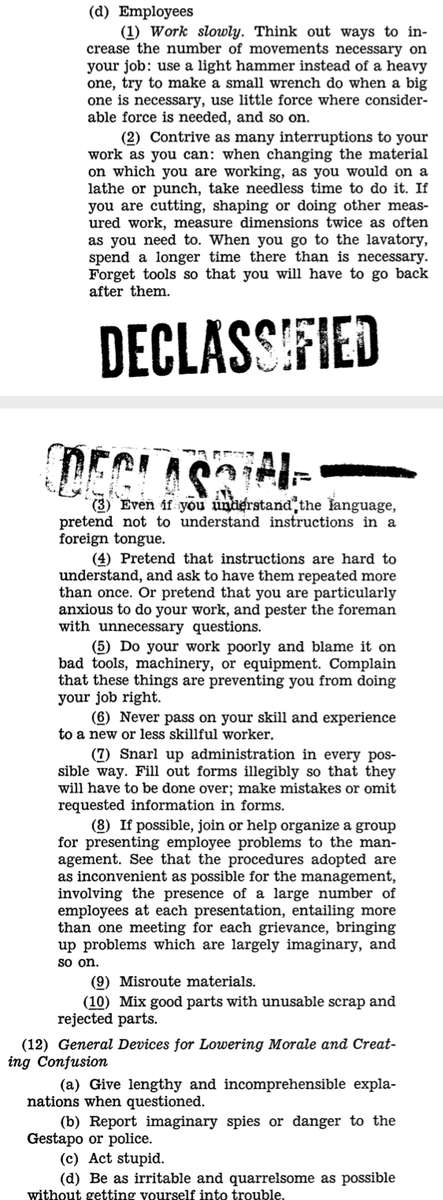
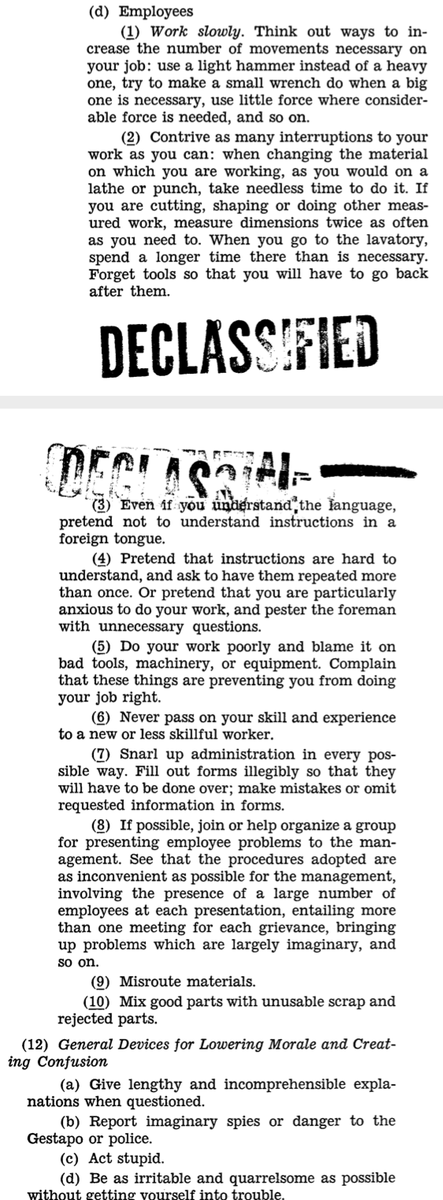
In 1944, the Office of Strategic Services, the predecessor of the CIA, produced a (real) guide to “simple sabotage” that spies and ordinary citizens could use to hurt the Axis powers. It’s remarkable to read given some of the Woke things happening within companies today…

The full declassified guide is here (https://www.gutenberg.org/files/26184/page-images/26184-images.pdf). The first 30 pages are devoted to physical sabotage, but page 32 is where the “wait this is really happening in 2021” starts.

If you’re building a startup, read this — don’t let this happen at your company 🙂

Musings of an optimistic skeptic