Originally posted as a Twitter thread on January 19, 2021
Why I don’t believe in conspiracy theories, summarized in a Ben Franklin quote:
“Three can keep a secret, if two of them are dead.”
When talking about large scale hiding of ANYTHING + the auditability of electronic records + human stupidity, natural path is exposure
It’s why there are not aliens stored in Area 51, it’s why the election wasn’t stolen, and it’s why the idea that Florida is wholesale fabricating numbers is nuts. Occam’s Razor and Ben Franklin.
But a counterpoint to this is: can you trust “consensus but unfalsifiable” conclusions? I’m increasing a No. No experiments, not replicable, but social stigma and no funding to oppose:
Originally posted as a Twitter thread on January 15, 2021
The Internet has many legacies, but its greatest one is disintermediation — taking out the middleman. And the biggest ever disintermediation — of financial services — is coming to an app near you. This is where government should focus: https://a16z.com/2021/01/15/fintechs-final-frontier/
Governments have monopolies on money and law-enforcement (only the gov’t can legally do those two things, crypto aside!). But there’s almost no way for consumers to interact with central banks! Just like there was no way for consumers to buy airplane tickets w/o travel agents
Want to send a wire? Get access to your PPP loan? Earn interest from the Fed (as banks do via “Interest on Excess Reserves”)? Got to be a bank. Consumers have to go through a travel agent, versus direct. Why can’t your SSN or FEIN be an “account” that can send/receive money?
This is not arguing for “postal banking” or any DMV-style nationalization of banking — which is a terrible idea. But monetary and fiscal policies that require intermediation are simply not as effective as “going direct” — which the internet and fintech allow.
Take interest rates and monetary policy in emerging markets. The Central Bank can/does hike rates to prevent capital flight. Doesn’t really work because banks “intermediate” and don’t provide that rate to consumers…who sell the depreciating currency in favor of USD/EUR.
In many emerging markets, banks hardly make unsecured loans to consumers. They just take deposits and loan to the government. Which is bad for the government, bad for their citizens, bad for their economy, bad for their currency.
More here. Fintech alone can’t solve this — but every single Central Bank should be thinking: how do I go direct? And I would love to see companies and tools (painful as the gov’t “sale” may be) that help facilitate this: https://a16z.com/2021/01/15/fintechs-final-frontier/
Originally posted as a Twitter thread on January 10, 2021
The internet drove instant, rich, free communication in a form humans have never before seen. With that comes good and bad.
*Right or wrong*, when the leader of a country is kicked off a massive communication network, it creates a geopolitical risk that will…
…likely undo this trend and create many regional, more siloed networks. It has to. It’s simply too much risk for another country to allow a foreign private company (or the US Govt which controls this particular private company!) to “control” the means of communication.
I had previously written about this re: payment networks (when I was at Visa, we stopped payment processing in Crimea…per US law). Again, right or wrong, friend or foe, it is TOO MUCH GEOPOLITICAL RISK for countries to allow their networks to be domiciled elsewhere. Fin. https://x.com/arampell/status/1158952157137297410
Originally posted as a Twitter thread on December 25, 2020
Real Estate: location location location
Startups: timing timing timing
Obviously none of this is to discount the teams that make real estate projects or startups successful 🙂 But right team + wrong timing or right team + wrong location != success
Originally posted as a Twitter thread on December 02, 2020
Are high salaries the *cause* or *effect* of expensive housing? In NIMBY-prone areas (hello SF!) where supply is artificially constrained, companies anchored to the geography need to pay a high enough wage to attract talent, which then anchors rent/mortgage payments
Prediction: the current remote-work salary adjustment concept, the Marxian “from each according to his abilities, to each according to his location,” will not last. Why pay people more simply because they choose to live in a more expensive area? Pay them more if they are good!
So looking at lower-cost areas, and paying a discount to prevailing SF wages to get to “parity,” is a crutch of sorts to get to a more sensible end-state: pay a prevailing wage to get the talent. And then let’s see what happens to housing prices…
Home prices will always be based on supply and demand, of course – WFH doesn’t change economics. But “desired location to live” is going to drive that more than “high wage employers” — where those wages could conceptually plummet given increase in supply (global worker pool)
Originally posted as a Twitter thread on November 18, 2020
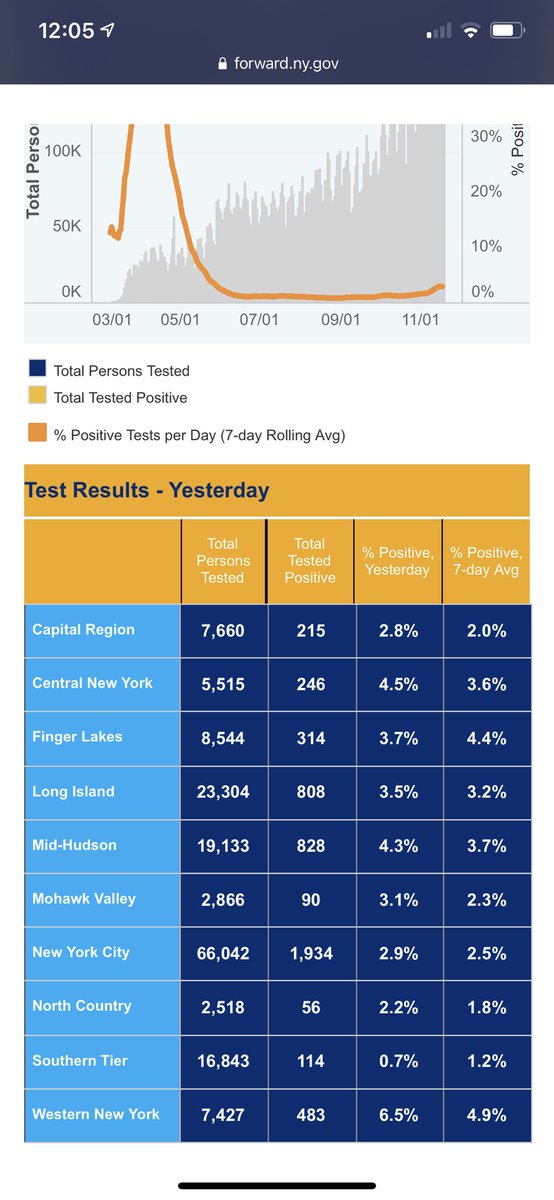
The absurdity of closing ALL SCHOOLS based on the positivity rate of a (presumably selection-biased sick?) less than 1% sample of the population should offend anyone who understands what a fraction is
NYC had 66K tests out of an 8M population. If you only test sick people, you will get a high positivity rate! If you over-test healthy people, you could make Ebola seem pleasant based on its “low positivity rate”
Positivity rate is garbage
Originally posted as a Twitter thread on August 28, 2020
There’s been a lot of misinformation about IPOs — particularly around the narrative of “intentional underpricing” and subsequent IPO pops / “money left on the table.” IPOs aren’t perfect, but the problem isn’t the pop — a sideshow caused by quirky supply/demand imbalances.
The things to fix are aggregating the most demand, blurring the lines between private and public for a seamless transition to being public, and more thoughtful lockup releases, while also ensuring that a company is sufficiently well capitalized.
Many are celebrating SPACs and Direct Listings, which both have their place as valuable tools, as the “death” of the IPO *because* of a misunderstanding of what causes a pop. A price without a quantity is not a price: block sales happen at a discount, M&A at a premium.
But today, an IPO remains the best way to raise a large block of primary capital. It *should* improve, but the way to measure improvement is not pop against low float, but on aggregation of the most demand (*all* investors) in a way that sufficiently capitalizes the company.
There’s a lot more data and examples to back this up in this piece which @skupor and I put together. It’s long but hopefully shows exactly the dynamics and game theory in play around how a company goes public and what’s in a price: https://a16z.com/2020/08/28/in-defense-of-the-ipo/
Originally posted as a Twitter thread on August 16, 2020
Today is August 15, the 49th anniversary of the de facto end of Bretton Woods, creating the fiat currency world we know today. Bitcoin’s birthday is October 31, 2008, but it has a spiritual secondary birthday of today — the widespread beginning of fiat money.
Until August 15, 1971, dollars were backed by gold at a fixed rate of $35/ounce. The dollar was the world’s reserve currency, and underpinning this reserve was this gold backing. Any foreign government could convert their dollars to gold.
At least, they could *conceptually* convert dollars to gold. In reality, by 1971, the US was “writing checks” (printing dollars) that the gold vaults couldn’t “cash” (or metal!) — a run on the gold, so to speak, would metallurgically bankrupt the vaults.
Before 1971, there really wasn’t a notion of purely fiat money with floating exchange rates — or at least not one that was taken seriously. The US was the manufacturing center of the world and dollars were the needed, default currency, backed by gold.
Nixon delivered the following speech on August 15th, announcing this change and codifying it with Executive Order 11615, closing the gold window. It never opened again.
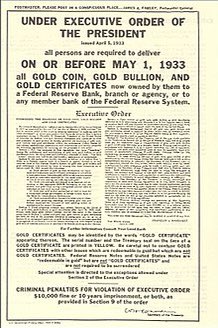
What’s really fascinating is that because gold backed the entire monetary system, owning (non-jewelry) gold was *illegal* from 1933 until 1974. Gold was the settlement ledger for currencies, the true reserve, although the more easily portable/official reserve was the US dollar.
There are many things about a gold standard that make little sense (eg, the supply can increase with a newly discovered mine in South Africa or Russia!) and its inflexibility provides fewer tools for dealing with economic shocks like the Covid one we are dealing with now.
But more so than anything else, gold represented a de facto store of value — and this was *codified* into the financial system until 1971. Seeing as gold now trades at >$2000/ounce, vs $35/ounce in 1971, there’s clearly a divergence between fiat and gold.
And yet gold is: heavy, next to impossible to send around the world (think checks are bad?), hard to divide, and hard to verify. This was NOT a problem before 1971 because the US dollar was none of these things and yet had the backing of/convert ability to gold!
This is why I consider today to be the second birthday of Bitcoin. From 1971-2008, there really wasn’t a financial instrument that had “fixed” dimensions, a reputable store of value but with an easy form of settlement/transmission, which the US dollar until Aug 15 provided.
Given how long it’s been since gold was a reserve currency, and how antiquated gold vaults seem, Bitcoin — for all its flaws — is a logical and superior successor. Particularly given how much money is now being printed by every government, kept in check by…nothing.
There’s an opportunity to turn remote education from a weakness to a strength — from a badly rendered “sage on a stage” (constant in education for 100s of years, but *worse* online!) to individualized instruction. To see why, let’s take a trip to 1984 — not Orwell, but Bloom
Prof Benjamin Bloom wrote a seminal work in 1984 showing that individualized instruction lifted outcomes by 2 standard deviations — outperforming 98% of regular students: http://web.mit.edu/5.95/www/readings/bloom-two-sigma.pdf
But he remarked, it was “too costly for most societies to bear on a large scale”
But the Internet has solved this problem, conceptually! What we need(ed) was a forcing function to abandon the status quo, which Bloom showed is demonstrably worse than individualized tutoring. We potentially have that in Covid, which has incredibly made the status quo *worse*
But Zoom school has none of this. It’s worse in every way than what was already a proven-to-be-suboptimal model for education!
I hope some forward thinking schools will try to go on remote education offense, whereas most are just going on “how do I turn this thing on?” defense.
I encourage everyone to read the Bloom paper. We now have the means (so many great tutoring platforms for a fraction of the cost of private school). We have the motive. And with Covid, we have the opportunity. Fin.